

The Ultimate Guide to Marketing Analytics: Turning Data into Actionable Insights
In an age where consumers interact with brands across countless touchpoints—from social media feeds and search engines to email campaigns and in-store experiences—marketing teams face an escalating challenge: making sense of vast, disparate data streams. Without a clear analytics strategy, you risk drowning in numbers that fail to translate into real ROI improvements. The solution? A structured marketing analytics framework that aligns data collection, analysis, and reporting with your organization’s strategic goals.
1. Defining Marketing Analytics
Marketing analytics is the practice of gathering, processing, and interpreting data to measure marketing performance, optimize budget allocation, and guide strategic decisions. It encompasses everything from simple dashboard metrics to advanced predictive modeling. By integrating data from web analytics platforms, social channels, customer relationship management (CRM) systems, and advertising networks into a unified view, you can:
- Understand customer behaviors and preferences
- Identify high-value segments and growth opportunities
- Quantify the return on ad spend (ROAS) and lifetime value (LTV)
- Forecast future performance and allocate resources efficiently
At its core, marketing analytics transforms raw data into actionable insights that drive measurable business impact.
2. Why a Robust Analytics Framework Matters
Ad hoc reporting may offer momentary clarity, but a repeatable framework ensures consistency, scalability, and alignment across teams. A formal analytics framework provides:
- End-to-end visibility: Track campaigns from initial impression through conversion and retention.
- Data governance: Standardize definitions of key performance indicators (KPIs) to avoid silos and discrepancies.
- Scalability: Incorporate new channels, tools, and datasets as your organization grows.
- Continuous improvement: Use closed-loop feedback to refine strategies and models over time.
Well-designed frameworks reduce manual effort, accelerate insights, and ensure that every stakeholder speaks the same data language.
3. Core Metrics: The Foundation of Any Analytics Program
Before diving into machine learning and attribution modeling, nail down the fundamental metrics that reveal the health of your marketing ecosystem. These include:
- Customer Acquisition Cost (CAC): Marketing + sales spend ÷ number of new customers. Keep this figure low while maintaining quality.
- Customer Lifetime Value (LTV): Net profit per customer over their entire relationship. Aim for an LTV:CAC ratio of at least 3:1. (Investopedia: Lifetime Value)
- Conversion Rate (CR): Percentage of visitors who complete desired actions (purchases, sign-ups). Test messaging and UX to raise CR.
- Return on Ad Spend (ROAS): Revenue from ads ÷ ad spend. Use this to compare channels and optimize budget allocation.
- Churn Rate: Customer attrition time period ÷ total customers. Lower churn through engagement tactics and product improvements.
Accurately tracking these KPIs in real time provides the bedrock for deeper analysis and forecasting.
4. Data Collection: Building a Single Source of Truth
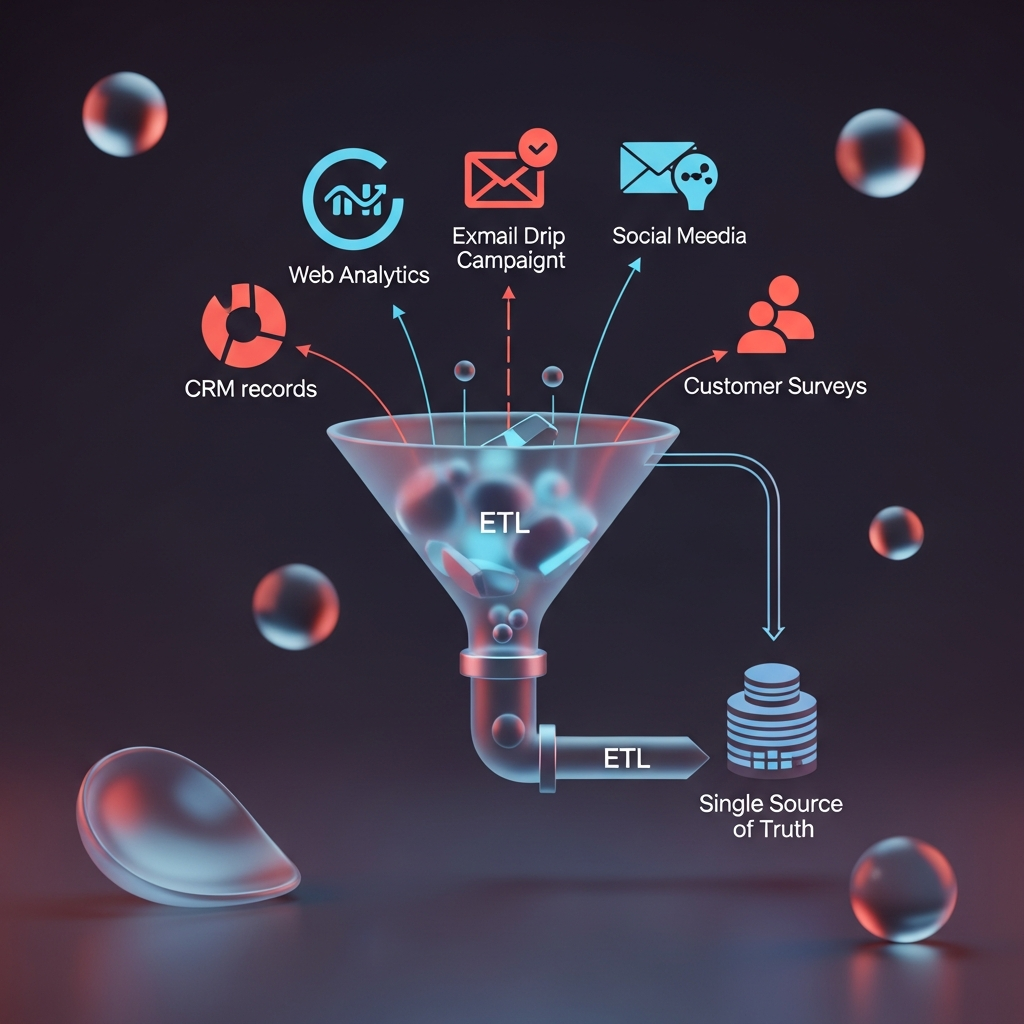
Fragmented data leads to fragmented insights. Centralizing your data ensures consistency and enables cross-channel analysis. Common data sources include:
- Web Analytics Platforms (e.g., Google Analytics, Adobe Analytics): Track page views, user flows, session durations, and acquisition channels.
- CRM Systems (e.g., Salesforce, HubSpot): Store contact information, deal pipelines, lead scores, and support tickets.
- Marketing Automation (e.g., Marketo, Mailchimp): Monitor email sends, opens, clicks, and drip-campaign performance.
- Social Media Insights (e.g., Facebook Insights, Twitter Analytics): Evaluate engagement, reach, and audience demographics.
- Qualitative Feedback: Surveys, focus groups, Net Promoter Score (NPS) studies (SurveyMonkey NPS Guide), and user reviews.
Use an ETL (extract, transform, load) tool or a data warehouse platform (e.g., Google BigQuery, Amazon Redshift) to consolidate these disparate streams into a single repository.
5. Data Governance: Ensuring Accuracy and Consistency
Strong governance policies protect data integrity and prevent “spreadsheet creep.” Key elements include:
- Data Dictionary: A centralized reference of definitions for each metric (e.g., what counts as a “session,” “lead,” or “subscription”).
- Access Controls: Role-based permissions ensure that only authorized users can edit critical datasets.
- Data Quality Checks: Automated alerts for missing values, duplicates, or outliers.
- Versioning and Audit Trails: Track changes to data models, dashboards, and reports.
Implement governance alongside your analytics rollout to avoid rework and mistrust down the line.
6. Data Visualization: Communicating Insights Effectively
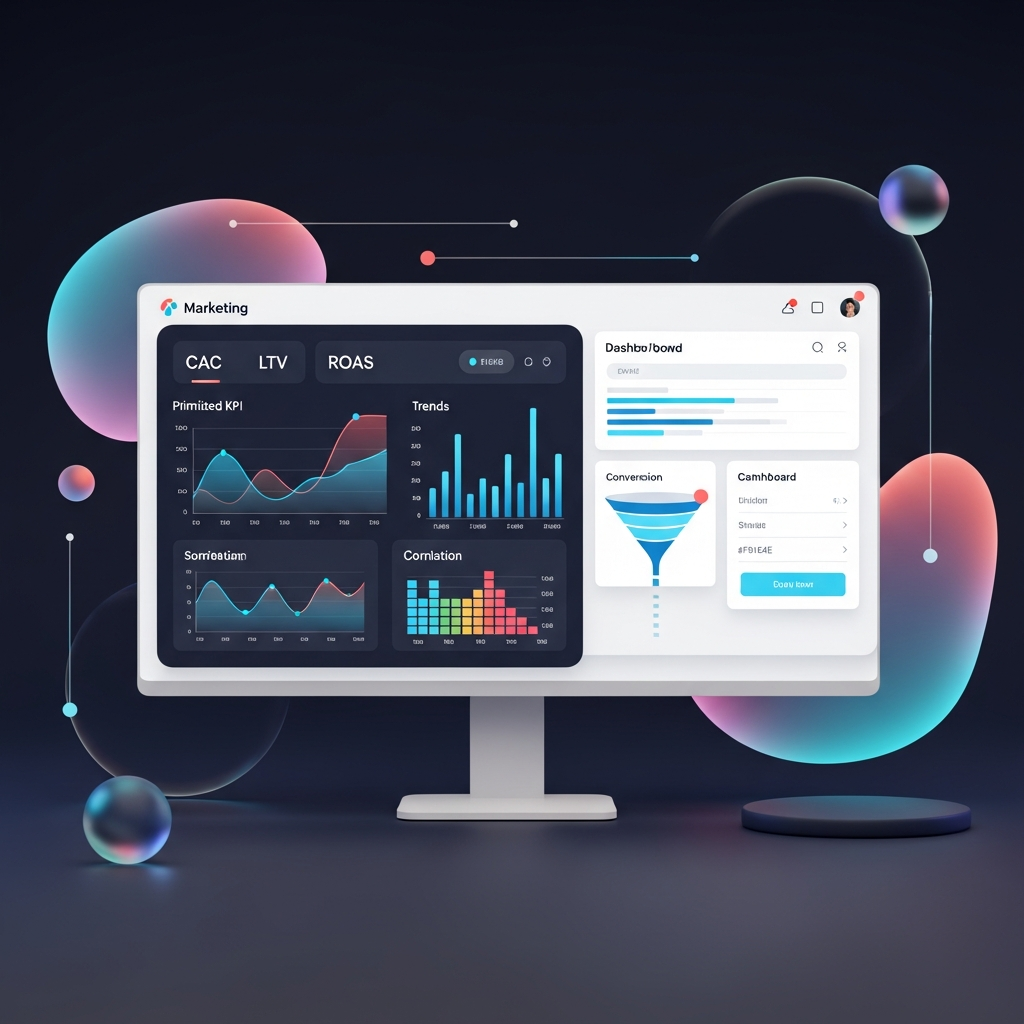
Even the most sophisticated analysis is wasted if stakeholders can’t interpret the results. Visualization best practices include:
- Prioritize KPIs: Place your primary metrics (e.g., CAC, LTV, ROAS) at the top of any dashboard.
- Select Appropriate Chart Types: Line charts for trends, bar charts for comparisons, heatmaps for correlation matrices, and funnel visuals for conversion paths.
- Enable Drill-Downs: Allow users to click on a high-level number to explore the underlying data and dimensions.
- Maintain Simplicity: Focus on storytelling—limit the number of visual elements to avoid overwhelming your audience.
- Automate Distribution: Schedule regular reports (daily, weekly, or monthly) via email or Slack channels to keep teams aligned.
Tools like Tableau, Microsoft Power BI, and Looker offer drag-and-drop interfaces and embedded analytics to mainstream data intelligence.
7. Advanced Techniques: Predictive Analytics and Machine Learning
Once you’ve built a reliable data pipeline and reporting mechanism, turn your focus to predictive and prescriptive analytics:
- Regression Analysis: Quantify how changes in budget or targeting variables affect conversions. Useful for media mix modeling. (McKinsey on Marketing Analytics)
- Clustering and Segmentation: Identify homogeneous customer groups based on behavior, demographics, or psychographics. Tailor messaging and offers to each segment.
- Classification Models: Predict likelihood to purchase, unsubscribe, or churn using logistic regression, decision trees, or random forests.
- Time Series Forecasting: Employ ARIMA, Prophet, or LSTM models to project future sales, web traffic, or campaign performance.
- Natural Language Processing (NLP): Analyze open-ended survey responses, social media comments, and product reviews for sentiment and emerging themes.
Leverage open-source libraries (scikit-learn, PyTorch, TensorFlow) or cloud-based AI services (Amazon SageMaker, Azure ML) to scale your model development.
8. Implementing Your Analytics Strategy: A Step-by-Step Approach
- Set Clear Objectives: Align analytics goals with business outcomes—whether that’s market expansion, improved retention, or higher profitability.
- Audit Your Data Landscape: Map existing data sources, identify gaps (e.g., offline purchase data, call-center records), and prioritize consolidation.
- Choose the Right Tech Stack: Balance cost, scalability, and ease of integration. Popular combinations include Google Analytics + BigQuery + Looker, or Adobe Experience Cloud + Azure Synapse + Power BI.
- Build Cross-Functional Teams: Encourage collaboration between marketing, IT, and data science units. Regular stand-ups and shared OKRs foster alignment.
- Develop Governance Policies: Document data definitions, access permissions, and change-management processes.
- Design and Test Dashboards: Start with a Minimum Viable Dashboard (MVD) focused on top priorities. Gather feedback, iterate, and roll out additional views.
- Train Stakeholders: Conduct workshops on data literacy, dashboard navigation, and decision-making frameworks.
- Monitor and Iterate: Use A/B testing, multi-armed bandits, and closed-loop feedback to refine campaigns and models. Review performance monthly to stay agile.
9. Overcoming Common Challenges
Marketing analytics isn’t a frictionless journey. Here’s how to tackle the biggest roadblocks:
- Data Silos: Break down departmental walls by creating shared dashboards and data lakes. Invest in data-integration platforms like Fivetran or Stitch.
- Inconsistent Metrics: Use a governing body or data council to maintain and update the data dictionary.
- Resource Constraints: Start small with a pilot project that demonstrates quick wins. Use open-source tools to reduce licensing costs.
- Executive Buy-In: Present clear ROI cases: show how a 5% improvement in conversion rate can translate into hundreds of thousands of dollars.
- Data Privacy and Compliance: Adhere to GDPR (GDPR.eu), CCPA (California Attorney General), and industry regulations. Implement consent management platforms and encryption at rest/transit.
10. Case Study: Driving 30% Revenue Growth with Analytics
Consider a mid-market e-commerce retailer that struggled with rising Customer Acquisition Costs in the 2020 holiday season. By implementing the following steps, they achieved a 30% YoY revenue lift:
- Consolidated web and CRM data into BigQuery for unified analysis.
- Defined standardized definitions for “site visitor,” “cart abandonment,” and “repeat customer.”
- Built an interactive Looker dashboard tracking CAC, LTV, and ROAS by channel and campaign.
- Launched predictive churn-prediction models to trigger email win-back flows for high-value customers at risk of leaving.
- Optimized ad budgets weekly based on real-time ROAS insights, shifting spend from underperforming channels to top-performers.
As a result, the retailer reduced CAC by 12%, increased LTV by 18%, and ultimately boosted overall revenue by 30% during the peak season.
Conclusion
Marketing analytics is not a one-time project—it’s a continuous journey of data-driven learning, optimization, and cross-functional collaboration. By establishing a solid framework that encompasses data governance, centralized infrastructure, clear KPI definitions, and advanced analytics techniques, your organization can convert raw data into strategic assets. Whether you’re just beginning your analytics transformation or looking to scale predictive capabilities, the principles outlined here will guide you toward sustainable growth, sharper decision-making, and demonstrable ROI.
Ready to unlock the full potential of your marketing data? Start by auditing your current processes, rally your stakeholders around unified goals, and invest in the right technology stack. With a disciplined approach, you’ll turn data chaos into actionable insights and gain a competitive edge in today’s crowded marketplace.
For further reading:
- Gartner: Marketing Analytics Insights
- Deloitte: Analytics and Information Management
- Data.gov: U.S. Government Open Data
Word count: approximately 2,150 words
 Donald Abel