
Understanding how your marketing efforts perform isn’t just important; it’s essential. Welcome to the era of digital marketing analytics, where every click, share, and conversion is a datapoint waiting to unlock insights for your business.
Whether you’re a startup or a seasoned company, mastering marketing analytics is crucial to making smarter decisions, personalizing customer experiences, and driving ROI. This guide will break down everything you need to know about digital marketing analytics, their benefits, and how to effectively implement them in your marketing strategy.
What Are Digital Marketing Analytics?
Digital marketing analytics refers to the collection, measurement, and analysis of data generated by your online marketing efforts. This includes everything from website traffic to social media interactions and email campaign performance.
The goal? To understand what’s working (and what’s not) so your marketing strategies can be optimized for better results.
Key Areas of Digital Marketing Analytics
- Website Analytics: Track metrics like page views, bounce rates, and conversion rates.
- Social Media Analytics: Understand engagement, reach, and follower growth on platforms like Facebook, Instagram, and LinkedIn.
- Email Marketing Analytics: Monitor open rates, click-through rates (CTR), and unsubscribe rates.
- Paid Advertising Analytics: Measure ROI and performance across Google Ads, Facebook Ads, or promoted posts.
- SEO Analytics: Tools like Google Analytics and Ahrefs help track organic traffic and keyword performance.
Why Are Marketing Analytics Important?
Relying on guesswork in your marketing strategy is a thing of the past. Here’s why marketing analytics matter:
1. Understand Customer Behavior
By analyzing data, you can learn how customers interact with your business, what they’re searching for, and why they convert (or don’t). This can lead to more personalized, targeted campaigns.
2. Improve ROI
Marketing analytics allow you to pinpoint which efforts are yielding the most results. This ensures your budget is spent wisely, whether you’re investing in ads, content, or social media.
3. Make Data-Driven Decisions
Rather than basing decisions on intuition or outdated trends, analytics empower you to act on facts. Whether it’s determining the best time to post on Instagram or which product categories are thriving, the data doesn’t lie.
4. Boost Customer Experience
When you track customer journeys and pain points, you can refine experiences, from personalized emails to optimized website design.
5. Measure Campaign Success
Identify which KPIs matter to your goals (e.g., lead generation, sales, downloads) and track them in real-time to define success clearly.
Key Metrics in Digital Marketing Analytics
Each area of marketing has unique metrics to track. Here’s an overview:
Website Metrics
- Traffic Sources: Organic, referral, social, direct traffic
- Bounce Rate: Percentage of visitors who leave without interacting
- Average Session Duration: How long visitors stay on your site
- Conversion Rate: Visitors completing a specific goal (e.g., signing up)
Social Media Metrics
- Engagement Rate: Likes, comments, shares, and clicks
- Follower Growth: New audience acquisitions over time
- Reach: How many users saw your content
- Click-Through Rates (CTR): Percentage of viewers who clicked a call-to-action
Email Marketing Metrics
- Open Rate: Percentage of recipients who open your email
- Click-Through Rate: How many clicks a link/button in your email
- Unsubscribe Rate: People opting out of your emails
Paid Advertising Metrics
- Cost-Per-Click (CPC): The Amount spent for each click on your ad
- Return on Ad Spend (ROAS): Revenue generated vs. ad spend
- Impressions: Total ad views
Role of Data Visualization in Marketing Analytics
Data visualization plays a crucial role in transforming complex marketing data into clear, actionable insights. Charts, graphs, dashboards, and heatmaps help marketers quickly understand performance trends, identify anomalies, and communicate results to stakeholders. Instead of analyzing raw spreadsheets, visual tools make patterns easier to spot, such as sudden traffic drops or spikes in conversion rates. Platforms like Google Looker Studio and Tableau simplify reporting and improve decision-making speed. Effective data visualization ensures teams stay aligned and focused on metrics that truly impact business outcomes.
Customer Journey Mapping Through Analytics
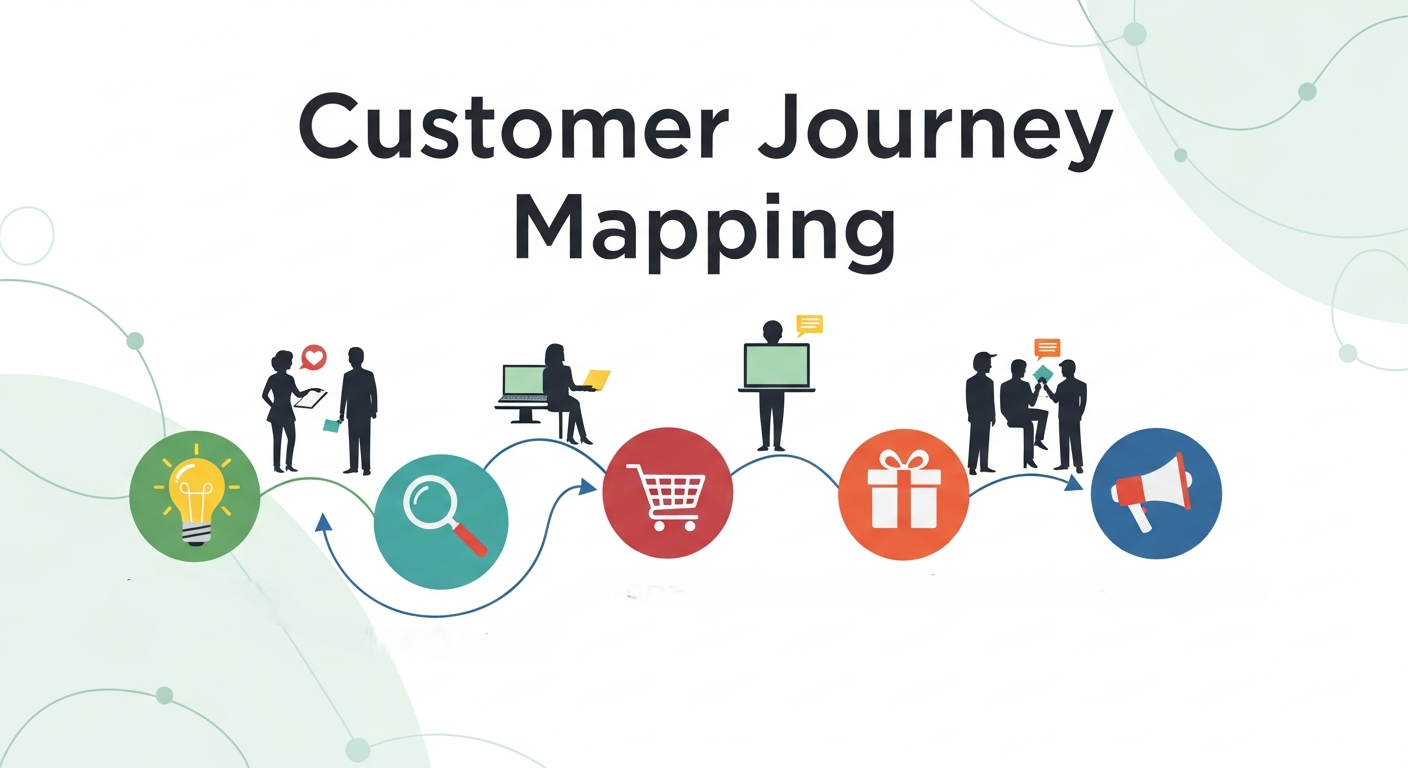
Marketing analytics allows businesses to map the entire customer journey—from first interaction to final conversion. By tracking touchpoints across channels such as social media, email, search, and paid ads, marketers can identify where customers drop off or engage most. This insight helps optimize messaging, timing, and channel allocation. Understanding customer journeys also enables personalized experiences, increasing satisfaction and conversion rates. When analytics guide journey mapping, marketing strategies become more cohesive and customer-centric.
Attribution Models in Digital Marketing Analytics
Attribution models help marketers understand which channels contribute most to conversions. Whether it’s first-click, last-click, linear, or data-driven attribution, each model provides a different perspective on customer interactions. Without attribution analysis, businesses may misallocate budgets and undervalue high-performing channels. Marketing analytics platforms allow teams to test and compare attribution models, ensuring fair credit distribution across touchpoints. Choosing the right model leads to smarter investments and more accurate performance evaluation.
Predictive Analytics for Marketing Growth
Predictive analytics uses historical data, machine learning, and AI to forecast future marketing outcomes. Marketers can anticipate customer behavior, identify high-value leads, and predict campaign performance before launch. For example, predictive models can estimate customer lifetime value or forecast churn risks. This proactive approach allows businesses to optimize strategies in advance rather than reacting after results decline. Predictive analytics turns marketing data into a powerful planning tool for sustainable growth.
Integrating Marketing Analytics Across Channels
Modern marketing happens across multiple platforms, making integration essential. Combining website, social media, email, and paid advertising data into a unified dashboard provides a complete performance overview. Integrated analytics eliminate data silos and reveal cross-channel insights, such as how social media influences website conversions. Tools like HubSpot and Google Analytics help centralize data for easier analysis. Cross-channel integration ensures consistency, accuracy, and more informed marketing decisions.
Data Privacy and Ethical Analytics Practices
As data collection increases, ethical analytics practices become more important than ever. Marketers must comply with privacy regulations such as GDPR and ensure transparent data usage. Ethical analytics focus on collecting only necessary data, securing user information, and respecting consent. Trust plays a major role in long-term brand success, and mishandling data can damage reputation. Responsible data practices protect both businesses and customers while maintaining compliance and credibility.
Turning Insights into Actionable Strategies
Collecting data alone is not enough—success comes from acting on insights. Marketing analytics should guide strategy changes, content optimization, budget reallocation, and campaign improvements. For example, high bounce rates may signal poor landing page design, while strong email CTRs may highlight winning messaging. Teams that consistently apply insights outperform competitors who only report metrics. Actionable analytics bridge the gap between data and real business results.
Building an Analytics-Driven Marketing Culture
An analytics-driven culture empowers teams to base decisions on evidence rather than assumptions. This involves training staff, encouraging data literacy, and promoting regular performance reviews. When analytics become part of daily workflows, teams collaborate more effectively and align with business goals. Leadership support is critical to fostering this mindset. Over time, a data-first culture improves accountability, innovation, and overall marketing performance.
Real-Time Analytics for Faster Marketing Decisions
Real-time analytics allows marketers to monitor campaign performance as it happens. Instead of waiting days or weeks for reports, teams can instantly see how users are reacting to ads, emails, or social media posts. This immediate feedback makes it easier to pause underperforming campaigns, adjust budgets, or refine messaging on the spot. Real-time data is especially valuable during product launches, seasonal promotions, or high-spend ad campaigns. Faster insights lead to faster decisions, giving businesses a competitive edge.
Role of A/B Testing in Marketing Analytics
A/B testing is a powerful method supported by marketing analytics to determine what works best. By comparing two versions of a webpage, email, or advertisement, marketers can identify which elements drive higher engagement or conversions. Analytics track performance differences such as click-through rates and conversion rates. Over time, consistent A/B testing leads to optimized user experiences and higher ROI. It removes guesswork and replaces assumptions with proven, data-backed decisions that continuously improve marketing effectiveness.
Measuring Customer Lifetime Value (CLV) with Analytics
Customer Lifetime Value (CLV) measures the total revenue a business can expect from a customer over time. Marketing analytics help calculate CLV by analyzing purchase history, engagement frequency, and retention rates. Understanding CLV allows marketers to focus on high-value customers and allocate budgets more effectively. It also supports personalized marketing and long-term relationship building. When CLV insights guide strategy, businesses move from short-term gains to sustainable growth.
Best Tools for Marketing Analytics
The right tool is often the secret weapon in a successful digital marketing strategy. Here are some top options:
- Google Analytics: Perfect for tracking website performance, visitor behavior, and traffic sources.
- HubSpot: A comprehensive platform for marketing, sales, and CRM data.
- SEMRush: Best for SEO and keyword performance tracking.
- Hootsuite: Monitor and manage social media engagement and campaigns.
- Google Ads Manager: Essential for tracking ROI on PPC campaigns.
- Hotjar: Understand user behavior with heatmaps and session recordings.
Steps to Master Marketing Analytics
Step 1. Identify Your Goals
Are you looking to generate leads, increase sales, or build brand awareness? Knowing your goals will steer your analytics strategy.
Step 2. Define Your KPIs
Track specific, actionable metrics tailored to your goals—for example:
- If your goal is brand awareness, prioritize traffic sources and reach.
- For lead generation, track conversion rates and CPC.
Step 3. Set Up Tracking and Tools
Integrate analytics software like Google Analytics into your website and social platforms. UTM parameters can also track campaign-specific performance.
Step 4. Analyze Your Data Regularly
Set aside time weekly or monthly to review your metrics. Look for trends, patterns, and areas needing improvement.
Step 5. A/B Test Your Strategies
Experiment with different email subject lines, landing page designs, or ad creatives to find what resonates most with your audience.
Step 6. Optimize Based on Insights
Adjust your strategy according to your data. Low engagement on Instagram? Change the type of content you post. High bounce rate on a webpage? Rework the layout or add compelling CTAs.
Challenges and How to Overcome Them
Even with the best tools in hand, digital marketing analytics come with challenges. Here’s how to tackle them:
Challenge 1. Data Overload
Solution: Focus only on the metrics that align with your goals. Don’t fall into the trap of tracking “vanity metrics” that don’t drive outcomes.
Challenge 2. Misinterpreting Data
Solution: Use visualization tools like Google Data Studio to make data easier to understand. Combine human insight with the raw data to avoid assumptions.
Challenge 3. Siloed Data
Solution: Invest in platforms like HubSpot or Salesforce, which centralize data into one dashboard for streamlined analysis.
Future Trends in Marketing Analytics
Stay ahead of the curve by adopting these trends:
- AI-Powered Analytics: Leverage artificial intelligence for predictive insights, like forecasting future purchasing behaviors.
- Privacy-First Analytics: Implement GDPR-compliant practices to ensure your data collection remains ethical.
- Real-Time Analytics: Use tools like Adobe Analytics to analyze metrics in real time for quick adaptations to campaigns.
Take the Guesswork Out of Marketing
Digital marketing analytics are the key to being proactive, not reactive, in an increasingly competitive landscape. By measuring what matters, you can fine-tune your campaigns, improve ROI, and deliver tailored experiences for your audience.
Frequently Asked Questions (FAQ)
What are digital marketing analytics?
Digital marketing analytics involve collecting and analyzing data from online marketing channels such as websites, social media, email campaigns, and paid ads to evaluate performance and improve results.
Why are marketing analytics important for businesses?
Marketing analytics help businesses understand customer behavior, measure ROI, optimize campaigns, and make data-driven decisions instead of relying on guesswork.
What are the most important metrics to track in digital marketing?
Key metrics include website traffic, conversion rate, bounce rate, engagement rate, click-through rate (CTR), cost-per-click (CPC), and return on ad spend (ROAS).
Which tools are best for digital marketing analytics?
Popular tools include Google Analytics, HubSpot, SEMRush, Hootsuite, Google Ads Manager, and Hotjar, depending on your marketing goals.
How often should marketing data be analyzed?
Ideally, data should be reviewed weekly or monthly to spot trends, identify issues early, and continuously optimize campaigns.
What is the difference between vanity metrics and actionable metrics?
Vanity metrics like likes or impressions look impressive but may not drive business outcomes, while actionable metrics directly impact goals such as leads, sales, or conversions.
Can small businesses benefit from marketing analytics?
Yes. Even small businesses can use basic analytics tools to understand customer behavior, improve targeting, and maximize limited marketing budgets.
How does AI impact marketing analytics?
AI enhances marketing analytics by enabling predictive insights, automation, real-time optimization, and deeper understanding of customer patterns.