

Market analysis tools have revolutionized how businesses understand their industries and customer behavior. These tools provide actionable insights that are invaluable in making data-driven decisions, ensuring that companies can truly thrive in competitive environments. Wondering what these tools are and how they can work for your business? This guide dives deep into the world of market analysis tools, covering their features, benefits, and best practices for selecting the right one.
From understanding their importance to discovering the latest trends in market analysis technology, you’re about to gain all the insight you need to make confident and strategic business decisions.
Why Are Market Analysis Tools Critical for Business Success?
Success in any industry demands a deep understanding of market dynamics. This is where market analysis tools come into play. But why are they so important?
1. Identifying Opportunities and Gaps:
Market analysis tools can help identify untapped opportunities and market gaps, giving businesses the edge to innovate where competitors may overlook.
2. Customer Behavior Insights:
These tools enable businesses to understand customer preferences, trends, and pain points. Knowing your audience is foundational to crafting targeted strategies.
3. Mitigating Risks:
Launching a product in a new market or adjusting your business strategy comes with risks. Market analysis tools provide crucial data to minimize uncertainty and make informed choices.
Different Types of Market Analysis Tools
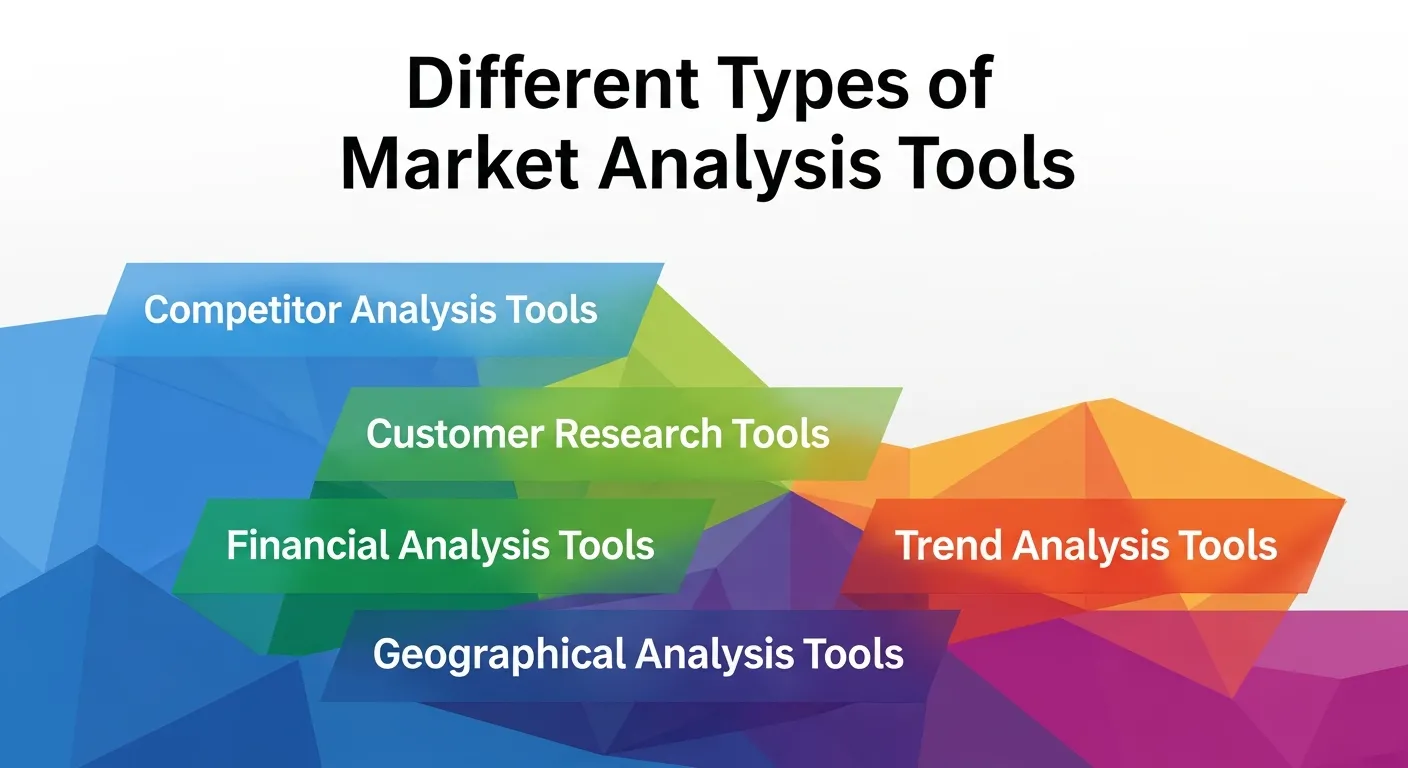
Market analysis tools cater to various aspects of business growth. Here are the main types you’ll encounter and their specific purposes:
1. Competitor Analysis Tools
These tools, like SEMrush and SpyFu, help you monitor competitor strategies in areas like SEO, PPC, and content marketing. You’ll understand what works for them and how to outpace their efforts.
2. Customer Research Tools
Customer analysis platforms like Qualtrics and SurveyMonkey provide insights into behavior, preferences, and satisfaction levels through surveys and data collection.
3. Financial Analysis Tools
Tools like Tableau and Microsoft Power BI enable you to track financial data, predict trends, and evaluate the ROI of your campaigns or investments.
4. Trend Analysis Tools
Platforms such as Google Trends and Statista identify emerging trends in your industry, helping you stay ahead of the curve.
5. Geographical Analysis Tools
Tools such as Esri’s ArcGIS help businesses leverage location-based insights, ideal for local market segmentation and expansion strategies.
Key Features and Benefits of Market Analysis Tools
What exactly makes these tools so indispensable? Here are the standout features and benefits you should look for when choosing one:
1. Automation & Efficiency
No more manually scrolling through countless reports. Automated tools gather, analyze, and visualize data in just a few clicks.
2. Real-Time Insights
Markets can change rapidly. Tools that offer real-time analytics enable businesses to adapt quickly to shifting conditions.
3. Customizable Dashboards
A powerful market analysis tool should provide dashboards you can edit to fit your specific KPIs and business goals. For example, you might focus on customer engagement metrics, while someone else prioritizes churn rates.
4. Predictive Analytics
Tools like IBM Watson Analytics can predict future trends based on historical data. This can be incredibly valuable for businesses entering new markets or launching new products.
5. Data Visualization
Graphical representations of data make it easier for teams to identify patterns and share findings with stakeholders.
6. Integrations
Seamless integration with other tools such as CRMs, ERPs, or marketing platforms ensures that data flows freely across all workflows.
Role of Advanced Analytics Tools in Business Strategy

Advanced analytics tools empower businesses to go beyond basic reporting by uncovering deep insights hidden within complex datasets. When combined with market analysis tools, they enable predictive modeling, scenario planning, and real-time forecasting that support smarter strategic decisions. These tools analyze historical trends, customer behavior, and operational metrics to identify growth opportunities and minimize risks. Businesses can anticipate demand fluctuations, optimize pricing strategies, and improve customer targeting with greater accuracy. By integrating advanced analytics tools into their workflows, organizations gain a competitive advantage, allowing them to adapt quickly to market changes. This strategic use of analytics strengthens long-term planning, improves operational efficiency, and ensures that business decisions are both data-driven and future-focused.
Importance of Dashboard Tools and Performance Metrics
Dashboard tools metrics play a vital role in simplifying complex data into easy-to-understand visual insights. Integrated with market analysis tools, dashboards provide real-time access to KPIs, enabling businesses to track performance at a glance. From sales trends and customer acquisition rates to conversion metrics and campaign ROI, dashboards help decision-makers stay informed and proactive. Customizable dashboards allow teams to monitor metrics aligned with their specific goals, improving transparency and accountability across departments. By leveraging powerful dashboard tools metrics, businesses can identify performance gaps early, optimize processes, and make faster strategic adjustments. This real-time visibility ultimately leads to improved efficiency, smarter decisions, and sustainable business growth.
Enhancing Growth with Marketing and Analytics Tools
Marketing and analytics tools work together to transform raw data into actionable growth strategies. When combined with market analysis tools, they provide valuable insights into customer journeys, campaign performance, and engagement trends. Businesses can track which marketing channels generate the highest ROI, optimize content strategies, and refine audience targeting. These tools also help identify customer preferences, enabling personalized marketing campaigns that boost engagement and conversions. By aligning marketing and analytics tools, organizations can reduce wasted ad spend, increase brand visibility, and build stronger customer relationships. This integrated approach ensures continuous optimization, leading to improved campaign outcomes and consistent long-term growth.
Unlocking the Power of Marketing Analytics Tools
The power of marketing analytics tools lies in their ability to deliver precise, data-driven insights that enhance campaign effectiveness. Integrated with market analysis tools, these platforms help businesses monitor real-time performance, customer behavior, and conversion trends. Marketers can measure campaign impact, identify optimization opportunities, and predict future outcomes with higher accuracy. Advanced analytics features enable segmentation, personalization, and predictive modeling, allowing brands to engage customers more effectively. By leveraging the power of marketing analytics tools, organizations can create targeted strategies that improve customer experience, increase retention, and maximize ROI. This data-driven approach ensures that marketing efforts remain agile, competitive, and results-focused.
Data Security and Privacy in Market Analysis Platforms

As businesses increasingly rely on market analysis tools, data security and privacy have become critical priorities. These platforms handle vast amounts of sensitive customer and business data, making robust security measures essential. Modern tools employ encryption, secure authentication protocols, and compliance frameworks to ensure data protection. Additionally, privacy-focused analytics ensure businesses adhere to global data regulations such as GDPR and CCPA. By prioritizing security, organizations can build trust with customers while minimizing risks associated with data breaches. Reliable market analysis tools not only deliver insights but also safeguard data integrity, enabling businesses to operate responsibly and confidently in data-driven environments.
Best Practices for Maximizing Tool Performance
To fully leverage market analysis tools, businesses should adopt best practices that enhance performance and usability. Start by clearly defining objectives and aligning tools with strategic goals. Regular training ensures teams understand advanced features and analytics capabilities. Integrating tools with CRM, ERP, and marketing platforms creates seamless data flows for deeper insights. Continuous monitoring of dashboard tools metrics enables proactive decision-making. Regular audits help identify inefficiencies and optimization opportunities. By following these best practices, organizations can extract maximum value from analytics platforms, ensuring consistent improvements in operational efficiency, customer engagement, and overall business growth.
Choosing the Right Market Analysis Tool for Your Business
With so many available options, selecting the right tool can be daunting. Here are key steps to guide your decision:
Step 1. Define Your Objectives
What problem are you trying to solve with a market analysis tool? For example, are you looking to understand competitors, track customer behavior, or forecast financial performance?
Step 2. Assess Your Budget
While there are free options available like Google Analytics, advanced tools often come at a premium. Weigh the costs against potential ROI.
Step 3. Evaluate Scalability
Startups and small businesses may not need enterprise-level tools initially. However, choosing a scalable tool ensures seamless growth as your company flourishes.
Step 4. Check Support and Training
Look for tools with a robust support team. Training resources like tutorials or webinars are additional perks that can ease onboarding.
Step 5. Test Drive Before Committing
Many platforms offer a free trial or demo. Use this time to evaluate how well the tool aligns with your needs.
Challenges in Implementing Market Analysis Tools

While market analysis tools deliver powerful insights, businesses often face challenges during implementation. These challenges range from data integration complexities to skill gaps and budget limitations. Successfully overcoming these obstacles ensures maximum value from analytics investments and smooth operational workflows.
Common Challenges Businesses Face
- High implementation and subscription costs
- Data silos across multiple platforms
- Lack of skilled analytics professionals
- Complex tool interfaces and steep learning curves
- Data quality and consistency issues
Challenges and Solutions Table
| Challenge | Impact on Business | Practical Solution |
|---|---|---|
| High Costs | Budget strain | Start with scalable or freemium tools |
| Data Integration | Fragmented insights | Use tools with strong API integration |
| Skill Gaps | Low adoption | Invest in training programs |
| Complex Interfaces | Slower workflows | Choose user-friendly platforms |
| Poor Data Quality | Inaccurate decisions | Implement data cleaning processes |
How Market Analysis Tools Drive Competitive Advantage
Market analysis tools empower organizations to outperform competitors by enabling faster decision-making, deeper customer insights, and smarter strategic planning. By continuously monitoring trends, performance metrics, and customer behavior, businesses gain the agility needed to adapt and innovate.
Key Competitive Advantages
- Faster market response through real-time insights
- Enhanced customer targeting and personalization
- Improved campaign optimization
- Strategic product positioning
- Reduced operational risks
Competitive Impact Comparison Table
| Business Area | Without Market Analysis Tools | With Market Analysis Tools |
|---|---|---|
| Decision Speed | Slow | Real-time |
| Market Awareness | Limited | High |
| Customer Targeting | Broad | Precision-based |
| Campaign ROI | Moderate | High |
| Strategic Planning | Reactive | Proactive |
Case Studies: Success Stories with Market Analysis Tools
Case A – Competitor Advantage in E-Commerce
An e-commerce company leveraged SEMrush to uncover competitor keyword strategies and customer behavior. By refining their SEO framework, they boosted traffic by 75% in six months.
Case B – Predicting Retail Trends
A retail giant used IBM Watson to predict purchasing trends during peak holiday seasons, leading to a 20% increase in profitability by strategically managing inventory.
Case C – Understanding Customer Feedback
A SaaS startup deployed Qualtrics to gather detailed customer feedback about a product. Adjustments made based on survey insights reduced churn rate by 30%.
The Future of Market Analysis Technology

The market analysis industry continues to evolve as new technologies emerge. Here’s what lies ahead:
1. AI-Driven Analytics
Artificial Intelligence will play a bigger role in automating data collection and generating actionable insights with minimal human intervention.
2. Edge Computing for Real-Time Data
Future tools are likely to adopt edge computing to process data faster and locally without depending on centralized servers.
3. Rise of Augmented Analytics
Platforms like Tableau are already starting to implement augmented analytics, using machine learning to guide users in the data exploration process.
4. Focus on Sustainability Metrics
With growing interest in ESG (environmental, social, and governance), future tools may incorporate metrics focused on sustainable business practices.
Turn Data into Decisions Today
Market analysis tools are no longer just for large enterprises with dedicated data teams. They’re accessible, scalable, and increasingly user-friendly, making them essential for businesses of all sizes.
If you’re ready to unlock new growth opportunities and streamline your decision-making processes, the next step is clear. Research the tools highlighted in this post and test-drive the ones that align best with your objectives.
Remember, staying competitive in a fast-paced business environment means making informed decisions powered by the best tools available. Take the first step today, and watch your business thrive.
Frequently Asked Questions (FAQs)
1. What are market analysis tools?
Market analysis tools are digital platforms that help businesses collect, analyze, and interpret data to understand market trends, customer behavior, and competitive dynamics for better decision-making.
2. Why are market analysis tools important for business growth?
Market analysis tools provide actionable insights that help businesses identify opportunities, reduce risks, optimize strategies, and achieve sustainable growth through data-driven planning.
3. What are the best market analysis tools for beginners?
Popular beginner-friendly tools include Google Analytics, SEMrush, SurveyMonkey, Power BI, and Tableau, offering easy-to-use dashboards and powerful analytics features.
4. How do digital analytics tools improve marketing performance?
Digital analytics tools track user behavior, campaign performance, and engagement metrics, allowing marketers to refine strategies, boost conversions, and maximize ROI.
5. What is the difference between market analysis tools and marketing analytics tools?
Market analysis tools focus on overall market trends, competition, and customer insights, while marketing analytics tools primarily measure campaign performance and audience engagement.
6. How can small businesses benefit from market analysis tools?
Small businesses can use market analysis tools to understand customers, monitor competitors, optimize budgets, and make smarter strategic decisions without heavy investments.
7. Are market analysis tools suitable for all industries?
Yes, market analysis tools are widely used across industries including retail, e-commerce, healthcare, finance, SaaS, manufacturing, and digital marketing.
8. What features should I look for in top marketing analytics tools?
Look for real-time analytics, customizable dashboards, predictive insights, automation, integrations, data security, and user-friendly reporting features.
9. How often should businesses use market analysis tools?
Businesses should use market analysis tools continuously to monitor performance, track trends, and adjust strategies in real time for better results.
10. Can market analysis tools improve customer experience?
Yes, by analyzing customer behavior and preferences, market analysis tools help businesses personalize experiences, improve engagement, and increase satisfaction.
 Rosemary Barker