
Hyper-Personalization at Scale—A Practical Roadmap for Marketers
Introduction
In today’s saturated marketplace, consumers are exposed to thousands of marketing messages each day. Generic campaigns no longer cut through the noise—brands must adopt hyper-personalization to drive meaningful engagement and growth. Hyper-personalization goes beyond demographic or time-based triggers: it leverages real-time data streams, AI-driven predictions, and automated orchestration to deliver the right message, on the right channel, at the right moment. According to McKinsey & Company, companies that excel at personalization generate 40% more revenue than their peers (https://www.mckinsey.com/business-functions/marketing-and-sales/our-insights/the-value-of-getting-personalization-right).
This guide outlines a step-by-step approach to implement hyper-personalization at scale—covering data architecture, analytics methods, channel activation, measurement, and governance.
1. The Evolution of Personalization
1.1 From Segments to Individuals
- Historical Segmentation: Groups users by static attributes (e.g., 18–24 years old, urban dwellers). Good for campaigns with large audiences but limited precision.
- Dynamic Segmentation: Incorporates behavioral signals—page views, email clicks, cart events—to refresh segments nightly or hourly.
- True Hyper-Personalization: Maps each customer’s unique journey in real time, combining:
- First-party data: On-site behavior, email engagement, mobile app usage.
- Second-party data: Partner insights such as co-marketing interactions.
- Third-party data: Contextual signals like weather, local events, or public holidays.
1.2 Why It Matters Now
Recent research by the Data & Marketing Association shows personalized emails deliver 29% higher open rates and 41% higher click-through rates compared to non-personalized blasts (https://thedma.org/). Customers increasingly expect brands to anticipate their needs—failure to do so risks churn and negative word-of-mouth.
2. Building a Unified Data Ecosystem
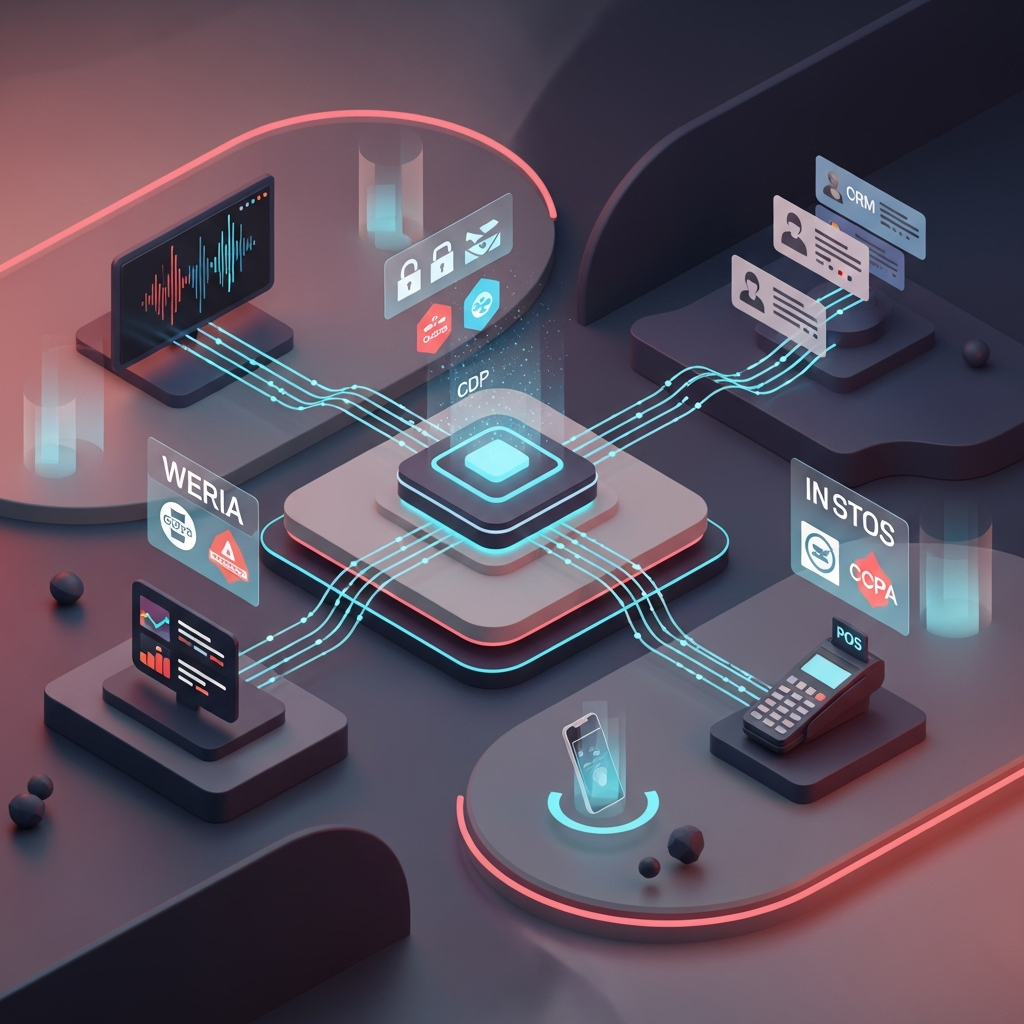
A robust data infrastructure is the backbone of hyper-personalization. Without centralized, high-quality data, predictive models and real-time triggers cannot function effectively.
2.1 Customer Data Platforms (CDPs)
Use a CDP to ingest and unify data from multiple sources:
- Web analytics (Google Analytics, Adobe Analytics).
- CRM and email platforms (Salesforce, HubSpot).
- Mobile SDKs and in-app events.
- POS and offline interactions.
A mature CDP creates persistent, unified customer profiles, capturing lifetime value metrics and micro-moments.
2.2 Real-Time Streaming and Event Processing
Near-zero latency is crucial. Implement an event streaming layer using Apache Kafka or AWS Kinesis to funnel user actions—page views, form submissions, video plays—into downstream systems. This allows real-time enrichment and triggers within milliseconds.
2.3 Data Quality and Governance
Establish data-governance policies aligned with GDPR (https://gdpr.eu/) and CCPA. Key elements:
- Consent management: Only process data for which users have explicitly opted in.
- Anonymization and encryption: Protect PII at rest and in transit.
- Access controls: Role-based permissions to restrict data access.
3. Machine Learning Models & Predictive Analytics
Once you have a solid data foundation, advanced analytics can unlock deep personalization opportunities.
3.1 Micro-Segmentation with Clustering
Use unsupervised learning techniques—K-means, DBSCAN, or hierarchical clustering—to discover hidden customer cohorts based on behavioral vectors: product affinities, browsing patterns, and engagement cycles. Micro-segments enable targeted content strategies beyond broad buckets.
3.2 Propensity Modeling
Build supervised learning models to predict user propensities for specific actions:
- Purchase likelihood.
- Churn risk.
- Upsell or cross-sell responsiveness.
Common algorithms include logistic regression, random forests, and gradient boosting machines. Evaluate model performance using cross-validation and AUC/ROC metrics.
3.3 Next-Best-Action and Reinforcement Learning
Deploy reinforcement-learning frameworks or multi-armed-bandit algorithms to dynamically allocate offers or content. These approaches learn from user responses in near real time, continually optimizing which creative, price point, or message resonates most.
Example tools: TensorFlow Agents, Vowpal Wabbit.
3.4 AI-Driven Content Personalization
Natural Language Generation (NLG) engines can tailor headlines, email copy, and product descriptions based on user context. Solutions like AWS Personalize or Adobe Sensei dynamically assemble text, imagery, and calls-to-action aligned to user preferences.
4. Real-Time Channel Activation
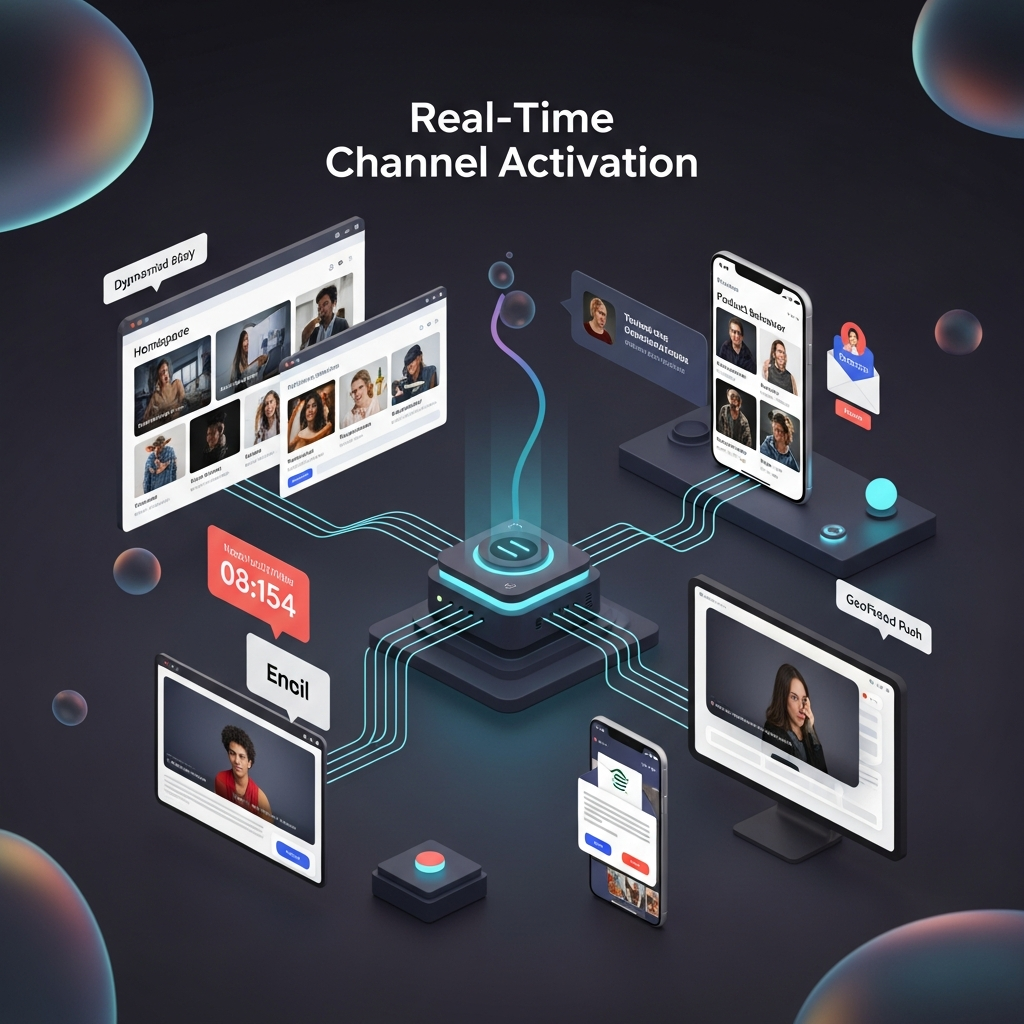
Analytics insights are only valuable when executed with speed and precision across channels.
4.1 Website and In-App Personalization
Integrate your decision engine via API or tag manager. Personalize at the point of entry:
- Homepage banners that reflect recent search queries.
- Product carousels prioritized by predicted interest.
- In-app messaging triggered by session duration or feature discovery.
4.2 Email and SMS Orchestration
Use dynamic content blocks or AMP for Email to render tailored product grids, discount codes, and countdown timers. Real-time triggers—cart abandonment, back-in-stock notifications—drive urgent engagement.
4.3 Push Notifications and In-App Messaging
Leverage geofencing and inactivity windows to re-engage dormant users. For example, send a “We miss you” offer if a frequent user hasn’t opened the app in 7 days.
4.4 Programmatic Advertising
Sync your customer segments with demand-side platforms (DSPs) like The Trade Desk. Serve personalized display or social media ads that align with each user’s predicted interests and browsing history.
5. Measurement & Experimentation Frameworks
Continuous testing and rigorous measurement are vital for validating ROI and discovering high-impact personalization tactics.
5.1 A/B and Multivariate Testing
Design experiments to isolate specific personalization variables:
- Creative elements: imagery, copy, CTAs.
- Timing: session vs. lifecycle triggered messages.
- Offer structure: free shipping vs. discount code.
Ensure randomization integrity and adequate sample sizes to achieve statistically significant results.
5.2 Incrementality and Holdout Groups
Use controlled holdout groups to measure the causal lift from personalization. Uplift modeling techniques can quantify how much incremental revenue or engagement hyper-personalization drives above a non-personalized baseline.
5.3 Attribution Models
Adopt multi-touch attribution or time-decay models to assess each touchpoint’s contribution. Integrate offline data—store visits, call-center interactions—to build a unified picture of customer journeys (https://www.w3.org/TR/tracker-privacy/).
5.4 Key Metrics to Track
- Conversion lift: difference in purchase rates between test and control.
- Engagement depth: session duration, pages per session, repeat visits.
- Customer lifetime value (CLV): changes in retention and average order value.
- ROI and payback period: cost of data infrastructure vs. revenue uplift.
6. Governance, Privacy & Ethical Considerations
As hyper-personalization relies on rich data, brands must prioritize trust and compliance.
6.1 Regulatory Compliance
Stay current with GDPR, CCPA, and emerging global regulations. Implement data-subject rights management (access, deletion requests) to maintain transparency (https://www.pewresearch.org/).
6.2 Ethical Use of AI
Establish guardrails to prevent bias in predictive models. Regularly audit model outcomes for adverse impact on protected classes (age, gender, ethnicity). Adopt frameworks from the EU AI Act and the U.S. National Institute of Standards and Technology (NIST).
6.3 Privacy-First Design
Embrace privacy by design: minimize data collection to what’s strictly necessary, use on-device processing for sensitive signals when possible, and offer clear opt-out mechanisms.
7. Pitfalls & Tips for Sustainable Scaling
Hyper-personalization projects often fail when teams try to boil the ocean. Consider these best practices to avoid common traps:
7.1 Start with High-Impact Use Cases
Rather than orchestrating 10 channels at once, pilot one channel or lifecycle stage with a clearly defined business objective—e.g., reducing cart abandonment by 15% on your desktop site.
7.2 Invest in Data Hygiene
Duplicate or stale profiles erode trust in your system and deliver poor experiences. Build automated routines to detect and merge duplicates, reconcile identity across devices, and purge outdated records.
7.3 Balance Automation with Human Oversight
Fully automated campaigns are efficient but can go awry—example: a “happy anniversary” message triggered after a return order. Implement human review checkpoints for high-value segments or sensitive triggers.
7.4 Guard Against Over-Personalization
Hyper-personalization becomes intrusive when every page and push notification changes based on micro-signals. Limit frequency and set thresholds—e.g., no more than three dynamic offers per session.
7.5 Cross-Functional Collaboration
Align marketing, IT, legal, and analytics teams. Regular stand-ups and clear RACI matrices ensure swift issue resolution and continuous innovation.
Conclusion
Hyper-personalization at scale is now a strategic imperative. Brands that master the interplay of unified data, advanced analytics, and real-time orchestration will differentiate themselves in crowded markets. By establishing robust governance and rigorous measurement practices, you can responsibly harness personalization to boost engagement, loyalty, and revenue. Begin with focused pilots, monitor incremental gains, and scale thoughtfully—transforming your marketing engine into a precision instrument that delights customers and drives sustainable business growth.
 Donald Abel