
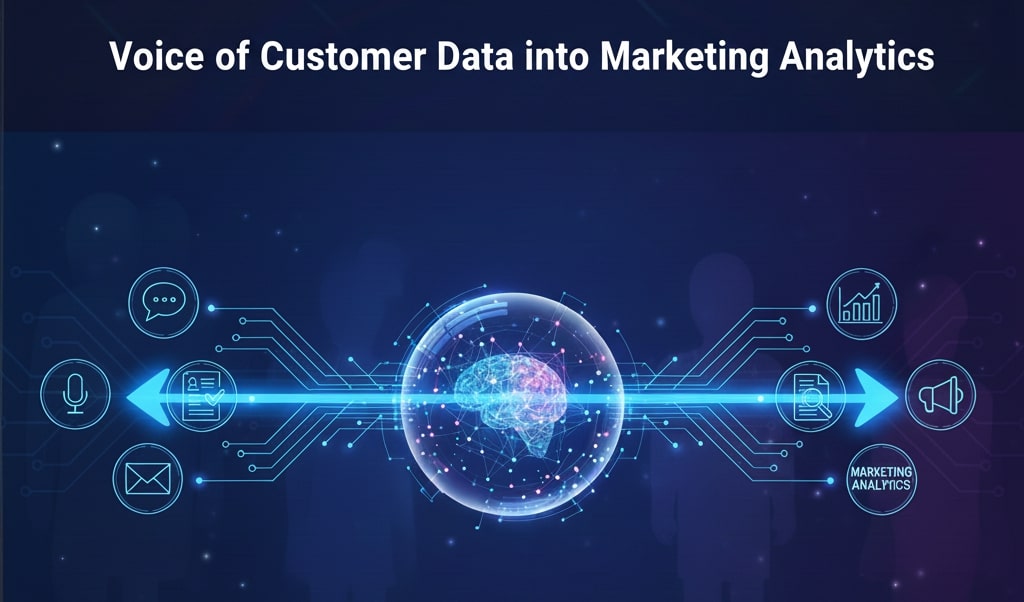
Voice of Customer (VoC) data is a vital resource for businesses seeking to understand not just what customers do, but why they do it. It includes unstructured or semi-structured feedback from surveys, reviews, social media, and support interactions, offering insights into customer opinions, preferences, and pain points. Integrating VoC with marketing analytics helps organizations move beyond surface-level metrics like clicks or conversions and gain a holistic view of customer motivations.
In today’s data-driven landscape, marketers strive not only to collect quantitative metrics but also to understand the qualitative voice of customers. By weaving Voice of Customer (VoC) insights—such as feedback from surveys, reviews, and social media—into marketing analytics, organizations can make more informed decisions, refine messaging, and deliver personalized experiences. This guide walks you through the why, what, and how of integrating VoC data seamlessly into your analytics workflow to unlock actionable intelligence and drive superior ROI.
What Is Voice of Customer (VoC) Data?

Voice of Customer data refers to unstructured or semi-structured feedback collected directly from your audience, reflecting opinions, preferences, pain points, and satisfaction levels. Common sources include:
- Customer surveys and NPS scores
- Social media comments and mentions
- Product or service reviews and ratings
- Customer support tickets and chat logs
While traditional analytics focuses on clicks, conversions, and engagement rates, VoC captures the nuance behind those actions, enabling a holistic understanding of customer motivations.
Why Integrate VoC into Marketing Analytics?
Infusing VoC into analytics yields multiple benefits:
- Richer Customer Insights: Goes beyond quantitative metrics to reveal emotional drivers and expectations.
- Enhanced Personalization: Leverages real feedback to craft targeted messages, offers, and journeys.
- Improved Product-Market Fit: Identifies feature gaps and pain points directly from user voices.
- Higher Retention: Demonstrates responsiveness to feedback, boosting loyalty and advocacy.
Step-by-Step Guide to Integrating VoC with Marketing Analytics
1. Define Clear Objectives
Begin by outlining what you aim to discover or improve. Objectives might include reducing churn, increasing upsell rates, or refining ad copy. Clear goals guide your data collection and analysis strategy.
2. Audit Existing Data Sources
Inventory all VoC channels—surveys, support logs, social listening tools—and map quantitative analytics platforms such as Google Analytics, CRM, and marketing automation systems. Determine integration points and data gaps.
3. Standardize and Cleanse Data
VoC data is often unstructured text. Use natural language processing (NLP) and text-mining techniques to clean, categorize, and tag feedback. Normalize rating scales and ensure consistent taxonomy across sources.
4. Choose the Right Integration Tools
Select platforms or middleware that support both structured and unstructured data. Popular options include customer data platforms (CDPs), BI tools with text analytics modules, or specialized VoC platforms with API connectivity.
5. Develop Unified Dashboards
Create dashboards that blend VoC metrics (sentiment scores, topic frequencies) with traditional KPIs (conversion rates, ROI). Use visual cues—heat maps, sentiment gauges—to highlight correlations and anomalies.
6. Implement Sentiment and Topic Analysis
Deploy sentiment analysis to quantify emotions behind feedback and topic modeling to group related comments. Tag insights by campaign, product line, or customer segment for granular analysis.
7. Correlate Feedback with Behavioral Metrics
Overlay VoC insights onto customer journeys. For example, link negative survey feedback to drop-off points in your funnel or associate high sentiment scores with increased lifetime value. Identify causal relationships and test hypotheses.
8. Iterate and Optimize
Treat integration as an ongoing process. Continuously refine your taxonomy, retrain NLP models, and update dashboards based on emerging trends, new channels, and shifting customer expectations.
Action Planning Based on VoC Insights
Collecting VoC data is only valuable if it leads to meaningful action. Organizations should analyze recurring complaints, suggestions, and compliments to identify priority areas for improvement. For example, if multiple customers report difficulty navigating a website, an actionable plan could involve redesigning the user interface and testing improvements. Establishing clear goals, assigning responsibilities, setting deadlines, and tracking progress ensures that insights transform into tangible enhancements in product quality, customer support, and marketing campaigns. Regular reviews of action plans also help organizations learn from past initiatives and continuously refine their processes.
Integrating VoC Across Departments
Voice of Customer data is most effective when it’s shared across the entire organization. Marketing teams can use insights to craft personalized messaging, while product development teams can identify gaps in features or usability. Customer support can proactively address recurring pain points, and sales teams can tailor pitches to meet customer expectations. Cross-department collaboration ensures that every team is aligned with actual customer needs, creating a unified strategy that improves overall customer experience. Regular interdepartmental meetings and shared dashboards can facilitate knowledge transfer and collective problem-solving.
Measuring the Impact of VoC Programs
To prove the value of VoC initiatives, organizations need to define and track key performance indicators. Metrics such as Net Promoter Score (NPS), customer satisfaction (CSAT), churn rate, repeat purchase frequency, and lifetime value can demonstrate how acting on feedback affects business outcomes. By connecting VoC-driven actions to measurable results, companies can quantify ROI, justify resource allocation, and refine future strategies. Continuous tracking and reporting also enable the organization to respond to trends faster and make data-driven decisions with confidence.
Leveraging Emerging Technologies for VoC
Advances in technology are transforming how VoC data is captured and analyzed. Artificial intelligence and machine learning can uncover hidden patterns and predict customer behavior, while chatbots and voice analytics enable real-time collection and interpretation of feedback. Text-mining and sentiment analysis tools allow organizations to process large volumes of unstructured data efficiently, identifying trends that may be invisible to manual analysis. Leveraging these tools not only enhances the speed and accuracy of insights but also empowers businesses to anticipate customer needs before issues escalate, staying ahead in competitive markets.
Building a Continuous Feedback Loop
Effective VoC programs establish an ongoing cycle of listening, analyzing, acting, and monitoring. By continuously gathering customer input through surveys, reviews, and support interactions, businesses can detect emerging issues early and adjust strategies in real time. The feedback loop also reinforces trust, showing customers that their opinions lead to visible changes. Over time, this continuous approach fosters a culture of customer-centricity, ensures that products and services remain relevant, and strengthens long-term relationships with the audience.
VoC as a Driver of Customer Loyalty
Customers are more likely to stay loyal when they feel heard and valued. By responding proactively to VoC insights, companies demonstrate that they prioritize customer satisfaction and adapt offerings based on real needs. Personalized experiences, improved products, and enhanced service quality all contribute to stronger emotional connections with the brand. Over time, this fosters advocacy, repeat business, and higher lifetime value. Companies that consistently act on customer feedback not only improve loyalty metrics but also develop a reputation as genuinely customer-focused, which can be a significant competitive advantage.
Personalization Through VoC Insights
By analyzing the feedback and preferences expressed by customers, businesses can deliver highly personalized experiences. This goes beyond simply addressing customers by name—it involves tailoring content, product recommendations, promotional offers, and communication channels based on individual preferences and behaviors. Personalization driven by VoC data ensures that marketing messages resonate with specific segments, increasing engagement and conversion rates. When customers feel that a company understands and anticipates their needs, it fosters trust and strengthens the overall relationship.
Predictive Analytics Using VoC Data
VoC data can be combined with predictive analytics to forecast customer behavior and future trends. By examining patterns in feedback, sentiment shifts, and recurring issues, companies can anticipate churn, identify upselling opportunities, and proactively address potential complaints. Predictive models allow businesses to make strategic decisions with foresight rather than reacting to problems after they occur. This proactive approach minimizes risks, enhances customer satisfaction, and can significantly improve overall operational efficiency.
Enhancing Product Development with VoC
VoC insights are invaluable in guiding product and service development. Customer feedback often highlights feature gaps, usability challenges, and unmet needs that internal teams may overlook. By integrating these insights into the development process, companies can design products that align more closely with user expectations. Additionally, iterative testing and incorporating feedback loops during prototyping ensure that the final product meets real customer needs, reducing costly post-launch revisions and enhancing market success.
Competitive Benchmarking Through VoC
Analyzing VoC not only helps understand your own customers but also offers insights into competitor performance. By monitoring public reviews, social media discussions, and customer sentiments related to competitors, organizations can identify strengths and weaknesses in the market. This competitive intelligence informs strategic decisions such as positioning, pricing, and feature development. Benchmarking against competitors allows companies to differentiate themselves and create offerings that better resonate with their target audience.
Real-Time Decision Making with Live VoC Data
With the rise of real-time data collection tools, businesses can act on customer feedback almost instantly. Live monitoring of support tickets, social media comments, and chat interactions allows organizations to identify and resolve issues before they escalate. Real-time VoC enables dynamic adjustments to campaigns, customer journeys, and service delivery, improving customer satisfaction and responsiveness. Companies that leverage live insights can build agility into their operations, ensuring they stay relevant and responsive in rapidly changing markets.
Driving Cultural Change Towards Customer-Centricity
Embedding VoC insights into organizational culture transforms the way a company operates. By emphasizing customer voices in strategic planning, decision-making, and day-to-day operations, businesses cultivate a customer-centric mindset across all departments. Employees understand the importance of customer satisfaction and are encouraged to make decisions that prioritize user experience. Over time, this cultural shift not only improves loyalty and retention but also drives innovation, as teams proactively seek ways to delight customers and exceed expectations.
Best Practices for VoC-Driven Analytics

- Cross-Functional Collaboration: Involve marketing, product, and customer success teams to ensure feedback informs all touchpoints.
- Real-Time Monitoring: Implement alerts for sudden sentiment shifts or recurring complaints to enable rapid response.
- Data Privacy Compliance: Anonymize personal data and follow GDPR or CCPA guidelines when processing feedback.
- Actionable Reporting: Focus on insights that lead to clear actions—whether updating messaging, reconfiguring user flows, or training support teams.
Tools & Technologies to Consider
A robust VoC integration stack may include:
- Text Analytics Platforms: MonkeyLearn, Lexalytics, AWS Comprehend
- Customer Data Platforms (CDPs): Segment, Tealium, mParticle
- Business Intelligence Tools: Tableau, Power BI, Looker with NLP extensions
- Survey & Feedback Tools: Qualtrics, SurveyMonkey, Medallia
Case Study: Improving Retention with Integrated Feedback
A SaaS provider noticed a spike in support tickets complaining about onboarding complexity. By integrating these VoC insights with in-app behavior data, the company pinpointed a confusing signup flow. They redesigned the experience, added guided prompts, and updated their knowledge base. Within two months, churn decreased by 15% and NPS improved by 12 points, demonstrating the power of combined qualitative and quantitative analysis.
Conclusion
Integrating Voice of Customer data into your marketing analytics transforms raw numbers into human-centric insights. By following a structured approach—defining objectives, auditing sources, cleansing data, and deploying the right tools—you’ll uncover trends that drive more personalized campaigns, improve customer satisfaction, and yield higher ROI. Start small with a single feedback channel, iterate rapidly, and scale your integration to build a truly customer-centric analytics ecosystem.
Ready to elevate your analytics strategy? Begin capturing and analyzing VoC today to turn every customer voice into a strategic advantage.
Frequently Asked Questions (FAQ)
1. What types of VoC data are most valuable for marketing analytics?
Surveys, NPS scores, social mentions, customer reviews, chat transcripts, and support tickets are all highly valuable. The best sources depend on your goals—for example, surveys for satisfaction insights or support tickets for product issues.
2. Do I need advanced AI tools to analyze VoC data?
Not necessarily. While NLP and sentiment analysis tools help automate and scale analysis, smaller teams can start with manual coding, tagging, and categorization. You can adopt AI tools as you grow.
3. How often should VoC data be updated?
Real-time or near real-time is ideal, especially for fast-moving industries. At a minimum, review VoC data weekly or monthly to detect trends and shifts early.
4. What is the biggest challenge in integrating VoC with analytics?
The primary challenge is dealing with unstructured text and inconsistent formats. Standardizing terminology, cleaning data, and choosing compatible tools are critical first steps.
5. How do I prove the ROI of VoC-driven analytics?
Track metrics such as reduced churn, improved NPS, increased conversion rates, higher customer lifetime value, or reduced support volume. Tie VoC insights to measurable actions and outcomes.
6. Can VoC insights be used for personalization?
Absolutely. VoC reveals preferences, sentiment, and motivations that can inform tailored messaging, offers, and product recommendations.
7. Is VoC analysis only for large organizations?
No. Small businesses benefit significantly from VoC integration because it helps them understand customer needs more deeply and stay competitive.
 Rosemary Barker