
Affiliate marketing is really on fire and not without good reason. It’s a way for some people and businesses to make money by promoting products or services online. But how does it work?
If you’re an aspiring entrepreneur, a content creator, or are simply interested in the topic, this guide will cover the basics of affiliate marketing and help you get in on the action.
By the time you finish reading this article, you’ll know who the main players are, how the affiliate marketing model works, and then some ground rules on getting started now.
What is Affiliate Marketing?
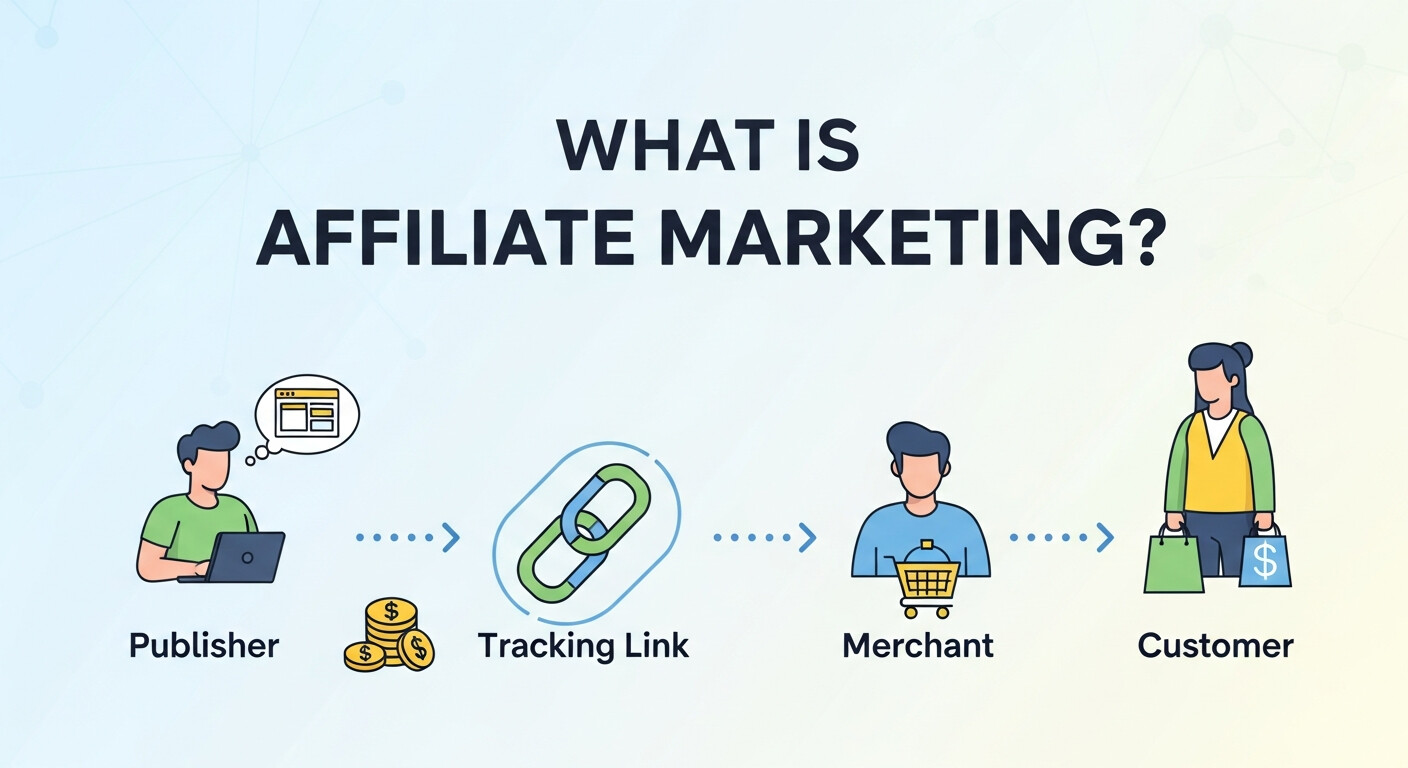
Affiliate marketing is a type of performance-based marketing model in which the affiliate (a person or company) promotes a product or service that another person or company provides. The affiliate receives a commission each time a sale or other specified action (e.g. a new sign-up or a form submission) takes place on the ‘seller’s’ site through the unique affiliate link.
It’s as if there were a trio of lead players in this three-way partnership.
The Merchant (Advertiser)
This is the person or company that makes the product or service available. Examples are Amazon, Shopify or generally all sorts of SaaS like Canva.
The Affiliate (Publisher)
A marketer who promotes the merchant’s products to their audience via web, blog, social media, or email.
The Customer (Consumer)
The buyers or people who do something that you desire (you would like) through the affiliate’s advertising efforts.
Here’s a brief rundown on how affiliate marketing works:
- The retailer gives affiliates special referral links or codes.
- The partner shares these links on their channels.
- If a user clicks your link and buys a product, the affiliate will be credited and receive a commission.
Three-way! The seller receives sales and exposure, the affiliate makes cash, and the customer finds a product that fits their needs. If you’ve ever wondered how affiliate marketing works in practice, this example shows the mutual benefits clearly.
Why Affiliate Marketing Works
Why does affiliate marketing work? Because it fits the way modern consumers shop.
Most people consider recommendations from bloggers, influencers, and respected websites more trustworthy than traditional ads.
“Attracting customers is where the true value is… When businesses partner with affiliates who have already earned the trust of an audience they want to reach, they gain credibility that resonates with that audience.”
For the affiliates, it’s attractive because they don’t have to make or own a product. They don’t do any actual work, but instead concentrate on marketing and driving traffic, which makes it a scalable and low-risk business model. And that’s a big part of how does affiliate marketing work effectively across different industries.
Affiliate Marketing Basics – What Every Beginner Should Know
Marketing and driving traffic basics is essential before jumping into this online business model. Affiliate marketing works best when you focus on helping your audience solve problems through useful recommendations. Instead of selling directly, affiliates earn by guiding buyers toward trusted products. For it for beginners, success depends on choosing the right niche, building audience trust, and applying SEO-driven content strategies.
Key Basics of Affiliate Marketing
- No product creation or inventory required
- Earn commissions through referral links
- Works via blogs, YouTube, email, or social platforms
- Income grows with traffic and authority
- Requires consistency and content quality
Beginner Affiliate Marketing Channels
| Platform | Difficulty Level | Best For |
|---|---|---|
| Blog / Website | Medium | Long-term passive income |
| YouTube | Medium | Product reviews & tutorials |
| Instagram / TikTok | Easy | Short-form promotions |
| Email Marketing | Medium | Relationship-based selling |
| Paid Ads | Hard | Fast traffic (needs budget) |
This affiliate marketing guide approach helps beginners start with low risk while building scalable online income over time.
How Does Affiliate Marketing Work Step by Step

Step 1: Find a Niche
A good niche Your niche is the bedrock of your success in affiliate marketing. Your niche will be something that you’re interested in, have knowledge of, or the audience that you want to target. It niches are commonly in the health and wellness, technology, fashion, finance and travel spaces.
For instance, if you’re a health and wellness guru, you might join affiliate programs for exercise equipment, protein powders or gym memberships.
Learning how it work in different niches will help you choose the most profitable one.
Step 2: Sign Up for an Affiliate Program
In order to start making a profit, you must first join an affiliate program or affiliate network. These networks link entrepreneurs and merchants and offer tools to measure the work of the entrepreneurs.
A few popular affiliate networks are:
-
Amazon Associates: This affiliate program is one of the biggest, most well-known, and best paying on Amazon, and you get commissions on any product the giant merchant sells.
-
ShareASale and CJ (formerly Commission Junction): These are marketplace platforms that puts anyone in contact with hundreds of companies offering an affiliate program in any industry you can imagine.
-
ClickBank: Best for digital-based products like an ebook or online course.
-
Rakuten Advertising and Impact: Best for advertising long-established brands.
Once you’ve signed up for an affiliate program (there are thousands of affiliate programs around), you receive a special link called the “affiliate link.” This link has your unique affiliate ID and it links to your specific affiliate account. And that’s another glimpse into how does affiliate marketing work from a technical point of view.
Step 3: Get the Word Out About Your Affiliate Products
The engine of affiliate marketing is promotion. Affiliates use different techniques to promote their links and generate traffic to the merchant. There are a few fun (not convoluted) promotional ideas:
-
Blog posts and reviews: With money-making opportunities on the line, you’ll want to write detailed product reviews or tutorials to build trust and drive clicks from readers.
-
Social Media Posts – Highlight affiliate products in an interesting and relevant manner on Instagram, TikTok, or Twitter.
-
YouTube Videos: Make video reviews or “how-to” videos with the affiliate products.
-
Email Marketing: Integrate your affiliate links into your emails for a more personal touch.
-
Paid Ads: Use something like Google Ads or Facebook Ads to advertise your affiliate links, this requires a bit of an up front investment though.
The more you explore how does affiliate marketing work across different content formats, the better you’ll promote your offers.
Step 4: Monitor Performance
By tracking your results, you learn what works and what falls flat. Different affiliate programs and networks offer dashboards that you can log into to see these key metrics:
-
Click-through rates (CTR)
-
Conversion rates
-
Earnings per click (EPC)
-
Total sales and commissions
For more sophisticated understanding, incorporate use of Google Analytics to monitor the performance of links or A/B test your strategy.
This ongoing analysis reveals how does affiliate marketing work at scale and what strategies bring the best results.
Step 5: Get Paid
Getting paid is the best thing about affiliate marketing! Payouts depend on the program:
-
Pay-Per-Sale (PPS): You get the commission for every sale you refer.
-
Pay-Per-Click (PPC): You get paid for each click you generate (very rare).
-
Pay-Per-Lead (PPL): Get paid for driving targeted actions (like sign-ups or form submissions).
Commission is generally transferred at end of each month by means of PayPal, bank wire or any other method that is established by you to possess an affiliate program.
Knowing when and how to get paid completes your understanding of how does affiliate marketing work financially.
Hints To Success In Affiliate Marketing

Affiliate marketing is easy to get into, but hard to succeed in. Here are some tips for keeping it up long term:
-
Stay Real: Advertise only what you truly endorse, or what you have used. This fosters trust and leads to conversions.
-
Get to know your Audience: Personalize your promotions to fit your target audience’s unique style and preferences.
-
Be regular: This means posting regular content to keep your readers interested and engaged.
-
Capitalize on SEO: SEO your blog posts, videos, or any social media content with appropriate keywords to drive organic traffic.
-
Keep up with shifts in consumer behaviour and marketing trends that change with time and take action to join the trend.
A long-term approach is vital when understanding how affiliate marketing works in real-world business settings.
Common Affiliate Marketing Mistakes and How to Avoid Them
Many beginners fail in affiliate marketing not because the system doesn’t work, but because they follow the wrong strategies. Understanding how affiliate marketing works in real life means avoiding shortcuts and focusing on value-driven promotion. Instead of chasing quick profits, successful affiliates prioritize audience trust, SEO, and consistent publishing, which allows them to promote affiliate links effectively and generate sustainable income over time.
Common Affiliate Marketing Mistakes
- Promoting too many products at once
- Ignoring SEO and keyword research
- Choosing high-competition niches blindly
- Copying others instead of adding value
- Expecting instant income
Smart vs Wrong Affiliate Marketing Approach
| Wrong Approach | Smart Approach |
|---|---|
| Spam links everywhere | Create helpful content |
| Promote random products | Promote relevant offers |
| Skip SEO | Optimize for search |
| Chase fast money | Build long-term assets |
| Ignore analytics | Track performance |
Avoiding these mistakes allows affiliate marketing beginners to grow steadily while building credibility and sustainable income streams.
Benefits of Affiliate Marketing
When it comes to making money online,it is arguably the easiest way to get started. Here’s why:
-
Low Startup Costs: You don’t have to create a product and deal with shipping.
-
Scalable: There is no ceiling on how many products or services you can promote.
-
Flexibility: Work from anywhere with whatever hours you want.
-
Passive Income: After your content ranks and receives notice, it creates money if you don’t create any additional work.
That’s how does affiliate marketing work for people seeking freedom, income, and scalability.
Affiliate Marketing, the GTIN, and You: Debunking the Misconceptions
Affiliate marketing is profitable, but it’s not a “get rich quick” scheme. Here, we get a few myths busted:
-
You Don’t Need Large Traffic: Even a small loyal audience can get you good sales.
-
It’s Not Just for Influencers: Of course, anyone can succeed with the right strategy, whether you’re a blogger, a video creator, or an entrepreneur.
-
Fast Riches Don’t Happen Often: Affiliate marketing doesn’t pay off quickly.
A grounded understanding of how it works helps you avoid falling for myths and misinformation.
Drive Your Way To Affiliate Marketing Success
Affiliate marketing is an awesome way to earn passive income, and who wouldn’t be interested in this!?! If you understand how it works and make it work the best you can then you can make it work for you.
Hay Day hack and Hay Day cheats are the newest thing for those who want to climb up the ranks in the game in no time. Begin with a small and get edgy on your promotions… watch your effort pay.
Frequently Asked Questions (FAQ)
1. What is Affiliate Marketing and how does it work?
Affiliate marketing is a performance-based online business model where you promote products or services using special tracking links. When someone purchases through your affiliate link, you earn a commission. This system benefits all parties: businesses gain customers, affiliates earn income, and buyers discover helpful products. It’s one of the most popular ways to generate passive income online today.
2. Is affiliate marketing suitable for beginners?
Yes, affiliate marketing for beginners is ideal because you don’t need to create products or manage inventory. You simply focus on content creation and promotion. With basic digital marketing skills, consistent effort, and patience, anyone can start. Many beginners launch with blogs, YouTube, or social media platforms and gradually build traffic and commissions over time.
3. How much money can I make with affiliate marketing?
Affiliate marketing income varies widely depending on niche, traffic quality, and strategy. Some beginners earn a few hundred dollars monthly, while experienced affiliates make thousands. Success depends on consistency, SEO, audience trust, and product relevance. It’s not instant money, but with a long-term approach, it can become a reliable source of online income.
4. Do I need a website to start affiliate marketing?
A website is not required, but it helps greatly. You can promote affiliate links through YouTube, email marketing, or social media. However, having a blog allows you to publish SEO content, build authority, and earn passive income over time. For serious affiliate marketers, a website is a powerful long-term asset.
5. Which affiliate programs are best for beginners?
Popular affiliate marketing programs for beginners include Amazon Associates, ClickBank, ShareASale, CJ Affiliate, and Rakuten. These platforms offer thousands of products across multiple niches and provide tracking dashboards. They are easy to join and perfect for learning affiliate marketing basics while experimenting with different offers and audiences.
6. How long does it take to earn from affiliate marketing?
Most beginners start seeing results within 2–6 months if they publish quality content consistently and apply SEO strategies. Affiliate marketing is not a get-rich-quick system. It requires patience, testing, and optimization. Over time, your content gains visibility, traffic grows, and commissions become more stable.
7. Is affiliate marketing free to start?
Yes, affiliate marketing can be started with little or no money. You can use free platforms like social media or YouTube. Optional costs include domain names, hosting, or paid ads if you want to scale faster. Overall, it’s one of the lowest-risk online business models available today.
8. Can I do affiliate marketing without showing my face?
Absolutely. Many successful affiliates run blogs, faceless YouTube channels, or Pinterest accounts. You can write reviews, create tutorials, or publish comparison content without appearing on camera. What matters most is providing helpful information and building trust with your audience.
9. Is affiliate marketing still profitable in 2026?
Yes, affiliate marketing remains profitable as online shopping continues to grow worldwide. Businesses rely on affiliates to reach targeted audiences, while creators monetize content through product recommendations. Success now depends on quality content, SEO, transparency, and audience trust. With the right strategy, it still offers strong earning potential