
Advertising continues to move from an art to an insights and analytics-led practice. Ready to move on to the next level with your marketing? Mastering marketing analytics is no longer optional; it’s a requirement for success in today’s marketing arena. Whether you’re evaluating website traffic, analyzing the success of a sales team, or determining which Facebook posts drive the most engagement or revenue, analyzing data is impossible without good data sorting skills.
Know What Marketing Analytics Is and Why It Is So Important?
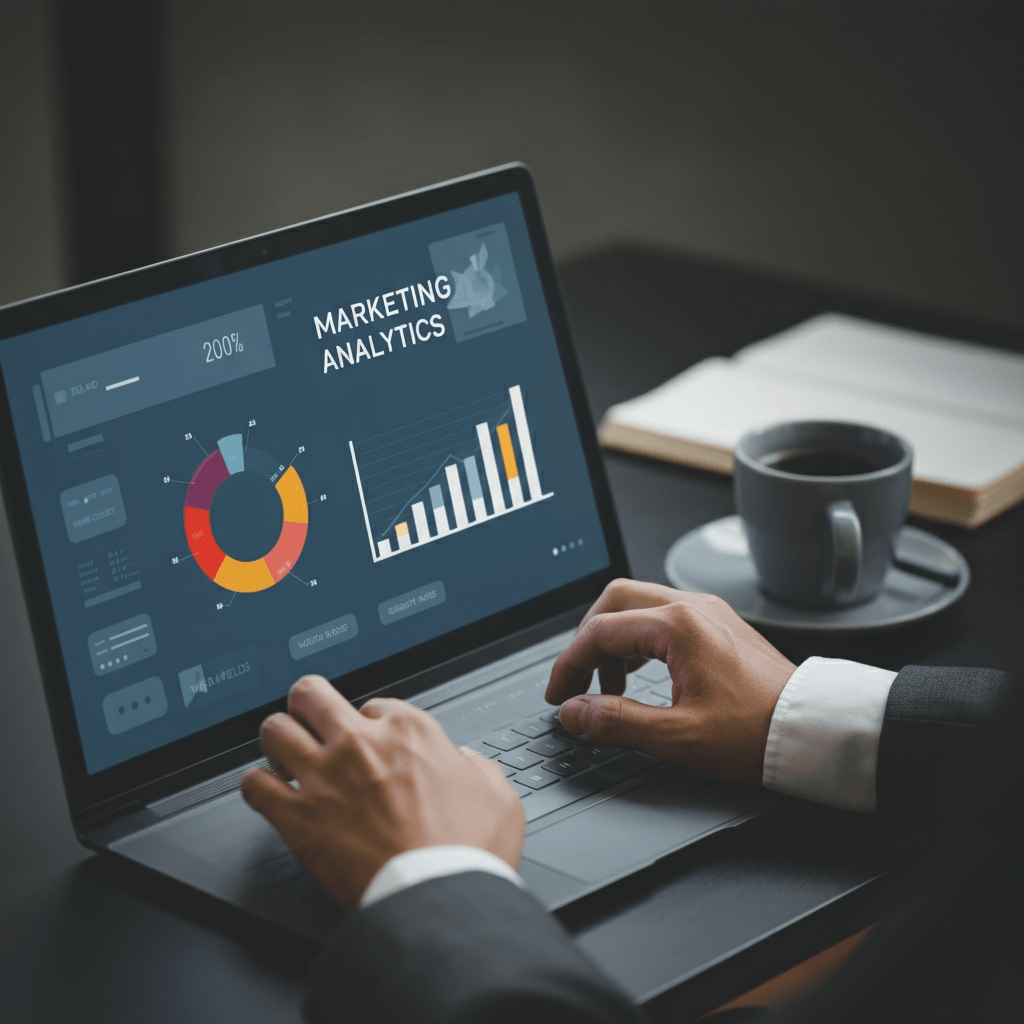
Marketing analytics are studies that aid marketers and analysts in understanding the effectiveness of their marketing activities. But it is more than a numbers cruncher, it is about turning data into actionable insight and helping us refine strategy, reach them on the audience level, and meet our business objectives.
Whether this means tracking user behavior on your site, assessing the performance of your ad campaigns, or getting the ‘deep-down dirt’ on your customers’ wants and needs, a marketing analytics master can gather raw data and spin it into strategic gold.
The Golden Age of Marketing Analytics: Why It Matters to Be a Master of It
Better ROI: Marketers who use data to drive their strategy have a better ROI because they invest most of their marketing efforts in high-performing channels.
Improved Decision-Making: Armed with powerful insights, you’re empowered to forecast trends, allocate budgets with precision, and determine which campaigns to cut or double down on.
Better Customer Understanding: Analytics enable you to know how a customer behaves and provide a customized experience.
Essential Metrics & KPIs All Marketing Analytics Masters Need to Track
You need to monitor the correct KPIs (Key Performance Indicators) to analyze effectively. Here are some important metrics to begin with:
Sales and Conversion Metrics
-
Cost of Customer Acquisition (CAC): The cost of acquiring a new customer.
-
Conversion Rate: The number of visitors who take a desired action on your site, like filling out a form or buying a product.
-
Customer Lifetime Value (CLV): Your predicted earnings and the expected purchasing behavior of a single customer over their lifetime.
Engagement Metrics
-
Bounce Rate: The percentage of visitors who “bounce” away from your website.
-
Click-Through Rate (CTR): The percentage of people who click on any links or CTAs.
-
Time on Page: The Amount of time the user spends on your content, which signifies relevance.
Social Media and Campaign Metrics
-
Reach and Impressions: Find out how many eyes gaze upon your social media content and how many times it’s been shown.
-
Engagement Rate: Measure how engaged your audience is by checking out your likes, shares, and comments.
Analytics Must-Have Tools and Platforms
You need the right tools and platforms to become a master of marketing analytics. Here are some of your best options:
-
Google Analytics: A tool every digital marketer needs in their toolbelt. Google Analytics is designed to help you learn more about website traffic, user behavior and conversion.
-
SEMrush: Quite suitable for SEO and digital ad services, SEMrush provides competition research, keyword strategy, and bottom-line tracking to rank well on SERPs.
-
Tableau: Tableau has been the answer if you’ve struggled with visualizing data. It transforms complicated data sets into intuitive and immersive charts.
-
HubSpot: HubSpot combines CRM with email marketing and analytics to be able to track the entire journey of the customer.
-
Hootsuite or Sprout Social: Tools like the following, focused on social media, can help measure reach, engagement, and schedule content better.
Methodology: Visual Data and Reporting Methods
Numbers are important, of course, but decision-makers often require visual clarity to interpret what an insight means for their business quickly. Here’s how you can excel at reporting up data and visualization:
Pick the Right Chart or Graph
-
Represent data over time with line graphs.
-
Compare sets of data with bar charts.
-
Use pie charts to demonstrate percent distribution.
Simplify Complex Information
Don’t bury your audience in too much information. Summarize the most important takeaways and provide a clear conclusion.
Interactive Dashboards
Products like Tableau and Power BI enable dynamic dashboards that allow team members to play with data in real time.
Advanced Analytics for Optimization
Now that you have understood the fundamentals of good marketing, it is time to listen to other strategies that can elevate your marketing efforts.
Predictive Analytics
Use machine learning to predict customer behavior, suggest products, and reduce churn. Predictive analytics can, for example, predict holiday season spikes in demand.
Attribution Modeling
This method identifies which marketing channels are contributing to conversions. Sophisticated attribution models, such as time-decay or data-driven attribution, offer detailed information.
A/B Testing
Data experimentation is key to becoming an analytics master. Utilize A/B testing to test multiple versions of campaigns, creative, or email content to see what works best.
Case Studies Marketing Analytics in Action 233

Craving inspiration from the real world? The most successful companies that are making use of analytics include the following:
-
Netflix and Recommender Systems: Netflix‘s marketing analytics drives user retention and engagement by recommending movies and shows through its historical user data and predictive algorithms.
-
Nike’s Campaign Optimization: Ultimately, by understanding customer behavior during ad campaigns, Nike has been able to optimize its targeting and messaging so every dollar is spent effectively.
-
Amazon’s Customer Insights: At its heart, Amazon is a data-driven machine. They predict which products customers want to purchase and which products will become irrelevant.
Emerging Areas and Trends in Marketing Analytics
The landscape of marketing analytics is always changing. To stay ahead, here are trends:
-
AI-Based Marketing Analytics: AI will have a greater role in automating mundane tasks of analysis while revealing the underside of the truth.
-
Voice Search Tracking: With the advent of intelligent assistants, having a good voice search metrics strategy will be key to understanding consumer intent.
-
Greater Emphasis on Privacy: As users require more data control, analytics platforms have to follow privacy laws such as GDPR and CCPA.
Your Journey to Marketing Analytics Mastery
Learning marketing analytics is an ongoing journey. It demands you to remain on-point at all times, including design tools, trends, and activities as well as integrating them into your campaigns. Start small using the basic metrics, invest in the right platforms, and apply ninja tactics as you grow.
Feeling overwhelmed? Start your adventure today with powerful marketing tools (like Google Analytics or Tableau) and strive to transform insights into actionable decisions.
Stay updated with cutting-edge trends and insights in account-based marketing news and innovations.