
Understanding marketing analytics is the cornerstone of modern business success, transforming raw data into a strategic roadmap for growth, customer retention, and high-impact decision-making in a digital-first world.
This guide explores the depths of marketing analytics, covering essential KPIs like CAC and ROI, top-tier tools such as Google Analytics and Tableau, and actionable steps for implementation. Discover how AI-driven trends and consumer journey mapping create a data-driven competitive edge for your brand.
Understanding Marketing Analytics: The Deep Dive
In today’s global business environment, data has become as valuable as oil. Yet, raw data alone is meaningless without analysis. Marketing analytics involves collecting, managing, and interpreting data to evaluate the effectiveness of marketing efforts, such as SEO, social media, or paid advertising. It helps businesses identify trends, measure ROI, and uncover opportunities for improvement. By transforming raw information into actionable insights, marketing analytics bridges the gap between creative campaigns and measurable results, enabling smarter decisions that drive growth, optimize budgets, and enhance overall business performance.
The Strategic Value of Marketing Analytics Data
To truly excel, businesses must move beyond “gut feelings.” Marketing analytics data allows teams to see exactly where their money is going and which channels—be it SMS marketing, outbound email marketing, or viral marketing on TikTok—are actually converting. By understanding marketing analytics, you shift from reactive planning to proactive strategy.
Key Performance Indicators (KPIs) to Monitor
Success in the digital realm is quantified by metrics. Without these, you are essentially flying blind.
| KPI | Description | Why It Matters |
| Website Traffic | Total visits, unique users, and page views. | Measures brand awareness and reach. |
| Conversion Rate | % of visitors who complete a goal. | Gauges the effectiveness of your sales funnel. |
| CAC | Cost to Acquire a Customer. | Ensures your marketing spend is sustainable. |
| ROI | Return on Investment. | The ultimate measure of profitability. |
| CLV | Customer Lifetime Value. | Predicts long-term revenue per user. |
| Brand Equity KPIs | Sentiment, reach, and preference. | Measures the health of your brand architecture. |
Customer Journey Analytics
Understanding marketing analytics requires looking at the entire path a customer takes. Customer journey analytics tracks touchpoints from the first time someone sees a “coming soon” social post to the final checkout. This helps in building brand consistency across all platforms.
Leading Marketing Analytics Tools
To master the data, you need the right arsenal. Here are the industry leaders:
- Google Analytics: The gold standard for advanced web analytics. It helps in measuring SEO success and understanding user flow. Visit Google Analytics.
- HubSpot: Perfect for inbound marketing and CRM integration. It excels at email marketing analytics.
- SEMrush: An essential tool for competitive brand analysis and keyword research. Visit SEMrush.
- Tableau: The leader in data visualization, turning complex marketing analytics data into readable dashboards.
- Adobe Analytics: Provides deep insights into mobile app marketing analytics and multi-channel attribution.
Implementing Marketing Analytics
Implementing marketing analytics involves collecting, analyzing, and applying data to improve campaigns. By tracking customer behavior, campaign performance, and ROI, businesses can make informed decisions. Proper implementation ensures that insights guide strategy, optimize budgets, and enhance targeting, turning raw data into actionable actions that drive measurable marketing success.
Step 1: Define Objectives and Brand Positioning
Before diving into numbers, define your brand positioning strategy. Are you a luxury brand focused on luxury brand marketing strategy, or a CPG (Consumer Packaged Goods) brand focused on volume? Your goals (e.g., increasing brand awareness) dictate your data needs.
Step 2: Customer Journey Mapping
Utilize customer journey mapping to identify where data collection points exist. This includes tracking integrated marketing efforts across social, email, and web.
Step 3: Tool Selection & Integration
Choose tools that offer digital payment solutions tracking and CRM synchronization. For those in specialized fields, chemical market analytics or event marketing analytics tools may be necessary.
Step 4: Data Collection and Brand Monitoring
Use brand monitoring services to track mentions and sentiment. This is crucial for brand crisis management and maintaining brand safety in digital marketing.
Step 5: Analysis, AI, and Trend Forecasting
Apply AI-driven trend forecasting to predict the next big move. Whether it’s predictive trend marketing or identifying a micro trend, data allows you to act before the competition.
The Evolution of Branding in Analytics
Understanding marketing analytics isn’t just about clicks; it’s about the soul of the brand.
- Brand Personality and Voice: Analytics can measure if your brand voice strategy resonates with the audience through engagement metrics.
- Ethical and Sensory Branding: Modern consumers demand ethical branding. Tracking transparency metrics helps build brand resilience strategies.
- Co-Branding and Partnerships: Partnership marketing with video analytics ensures that both parties in a co-branding venture are gaining equal value.
The Future: AI, Privacy, and Viral Trends
The future involves mastering video analytics and navigating the dark side of viral marketing. While viral content marketing can provide a “game-changing advantage,” it must be balanced with sustainable marketing to avoid brand cannibalization.
As we move forward, digital reputation management and personal reputation management will become automated, powered by trend marketing AI data strategies. Businesses must also prepare for brand adaptation strategies as global markets shift toward sonic branding and emotional marketing.
The Psychology of Trend Marketing and Viral Loops
Understanding marketing analytics requires more than just looking at spreadsheets; it requires an understanding of human behavior. Why does a specific piece of content trigger a “viral loop”?
The Viral Marketing Funnel
Unlike traditional funnels, a viral marketing funnel is self-sustaining. When you use viral marketing psychology, you are tapping into social currency and emotional triggers.
- Marketing FOMO (Fear Of Missing Out): Using analytics to track real-time engagement allows brands to create “limited-time” triggers that drive immediate action.
- The Psychology Behind Viral Content: Data shows that content evoking high-arousal emotions (awe, anger, or amusement) is shared more frequently. By mastering video analytics, you can see exactly at which second a viewer drops off or hits the “share” button.
Viral vs. Sustainable Marketing
While viral content marketing strategies provide short-term spikes, understanding marketing analytics helps you balance this with sustainable marketing. You don’t want a “one-hit wonder” brand; you want brand longevity challenges addressed through consistent, data-backed storytelling.
Specialized Analytics: From Mobile Apps to Chemicals
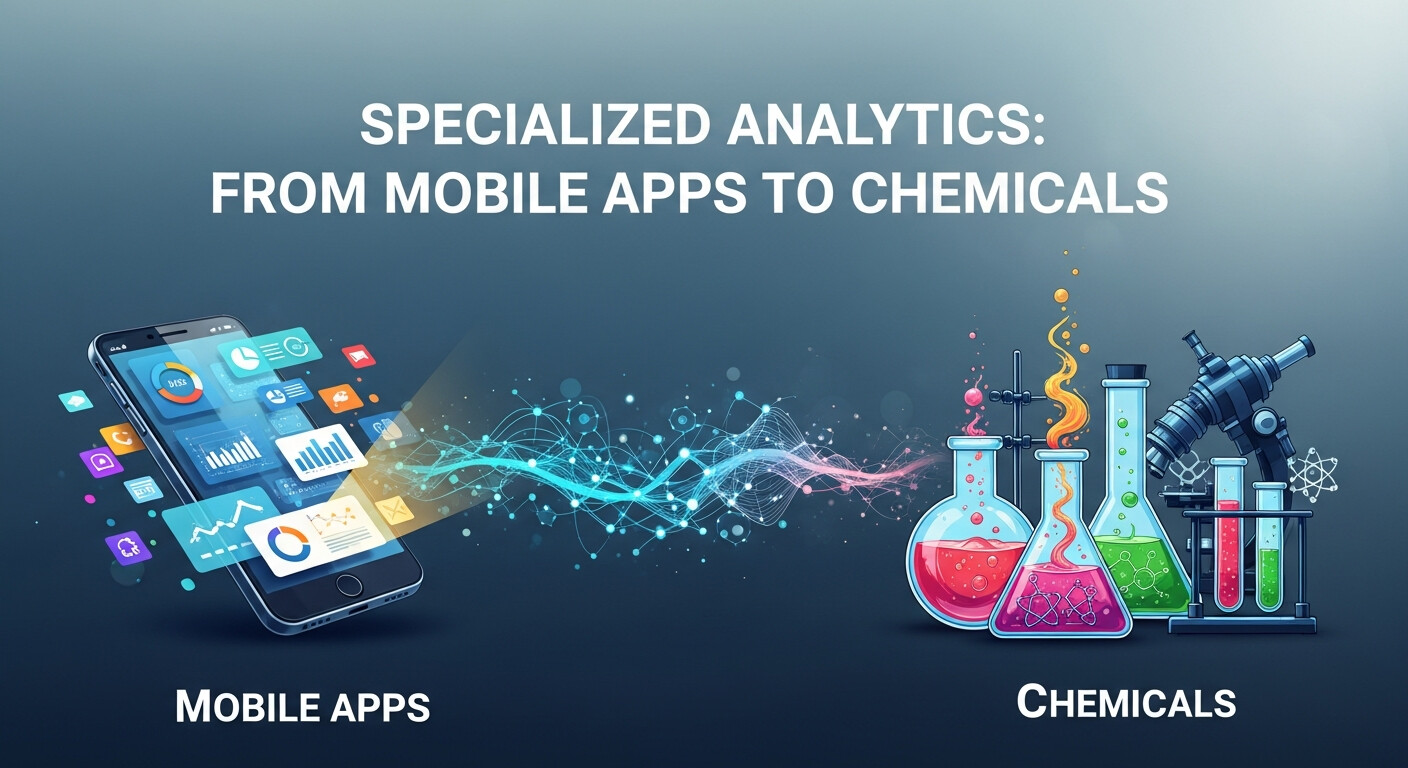
Specialized analytics applies data-driven insights to specific industries, offering tailored solutions for unique challenges. From tracking user behavior in mobile apps to optimizing chemical production processes, these analytics help businesses make smarter decisions. By focusing on industry-specific metrics, companies can improve efficiency, predict trends, and enhance product performance. Whether it’s app engagement, supply chain optimization, or safety compliance, specialized analytics transforms raw data into actionable strategies, ensuring measurable results and giving businesses a competitive edge in their niche markets.
Marketing analytics isn’t a “one size fits all” field. Different industries require specialized marketing analytics data to thrive.
Mobile App Marketing Analytics
For brands in the app space, the focus shifts to:
- App Install Attribution: Which ad led to the download?
- In-App Behavior: Using heatmaps to see where users click.
- Push Notification ROI: Analyzing how SMS marketing and push alerts drive daily active users (DAU).
Chemical Market Analytics
In B2B sectors like the chemical industry, analytics focus on long-cycle lead generation. Understanding marketing analytics here involves tracking global supply chain shifts and using predictive trend marketing to anticipate demand based on macroeconomic indicators.
Luxury Brand Marketing Strategy
In the luxury sector, high volume isn’t the goal—exclusivity is. Analytics for luxury brands focus on:
- Brand Perception in Marketing: Monitoring high-net-worth individual (HNWI) sentiment.
- Sensory Branding: While harder to measure, digital proxies like “time spent on high-res gallery pages” help gauge the effectiveness of visual storytelling.
Advanced Branding Frameworks and Resilience
A brand is a living entity, and analytics serve as its pulse monitor.
Brand Archetypes and Storytelling
Using a brand archetypes framework, marketers can categorize their brand (e.g., The Hero, The Outlaw, The Sage). Understanding marketing analytics allows you to see if your audience actually perceives you this way. If your brand voice strategy is “The Sage” but your data shows your primary demographic is looking for “The Explorer,” there is a misalignment that needs a brand refresh.
Brand Crisis Management & Resilience
When a PR disaster strikes, brand monitoring services become your most important tool.
- Real-time Sentiment Analysis: How fast is negative content spreading?
- Negative Content Management: Using SEO and reputation management to suppress harmful links while promoting positive brand storytelling.
- Brand Resilience Strategies: Data-driven insights from past crises help build a “playbook” for future stability.
The Technical Edge: SEO, Links, and Infrastructure
Behind every successful data-driven strategy is a robust technical foundation.
Measuring SEO Success
SEO is no longer just about ranking #1. Advanced web analytics now look at:
- Search Intent: Are users finding what they actually need?
- Ethical Link Building: Using guest posting services and ethical link building to grow domain authority without triggering search engine penalties.
- Video SEO: As YouTube becomes the second-largest search engine, video analytics market trends show that optimizing video metadata is non-negotiable for brand awareness.
The Role of Managed Services
Many enterprises outsource the “heavy lifting” to specialized agencies. This includes:
- Wikipedia Page Management: Ensuring brand history is accurately and neutrally represented.
- White-Label SaaS Development Services: Creating custom analytics dashboards for clients.
- Payment Gateway Solutions: Integrating digital payment solutions data directly into marketing CRM to calculate the exact ROI of a campaign.
Conclusion
Mastering and understanding marketing analytics is an ongoing journey of refinement. By integrating advanced tools, tracking the right KPIs, and staying ahead of AI-driven trends, you empower your brand to navigate the complexities of the digital marketplace. Start by auditing your current data today—your future competitive edge depends on the insights you uncover right now.
Frequently Asked Questions
What is the first step in understanding marketing analytics?
The first step is defining clear business objectives. Without knowing what a “win” looks like—whether it’s increased brand awareness, lead generation, or sales—you can’t measure success. Setting goals first ensures analytics focus on meaningful metrics that drive real business outcomes.
How does a marketing analytics certificate help my career?
A marketing analytics certificate equips you with formal training in interpreting data, using SQL, and mastering tools like Tableau. It signals to employers that you can translate analytics into actionable marketing strategies, enhancing your career prospects and establishing you as a skilled digital marketing professional.
What is the difference between inbound and outbound marketing analytics?
Inbound marketing analytics focuses on content that draws users in, such as blogs, SEO, and social media. Outbound analytics tracks push tactics like cold emails or ads. Each requires different KPIs: engagement and organic growth for inbound, and conversion and reach for outbound campaigns.
Why is Customer Lifetime Value (CLV) so important?
CLV measures the total revenue a customer generates over time, highlighting the value of retention. Acquiring new customers is more expensive than keeping existing ones. Understanding CLV helps marketers allocate resources effectively, optimize loyalty programs, and improve long-term profitability.
How can I measure the success of a viral marketing campaign?
To measure viral campaign success, track social metrics like share rate, mention velocity, and the “k-factor,” which shows how many new users each existing user brings. These metrics reveal content reach, virality, and engagement, helping marketers replicate or improve future campaigns.
What are “Marketing Analytics Hacks” for small businesses?
Small businesses can maximize impact using free tools like Google Search Console or social media insights. Focusing on micro trends and niche targeting allows smaller brands to compete effectively without a massive budget, leveraging smart, data-driven marketing strategies to boost visibility and engagement.
How do privacy laws (like GDPR) affect marketing analytics?
Privacy laws limit invasive tracking and emphasize transparency. Marketers now rely on first-party data and probabilistic modeling to measure performance. Compliance ensures brand trust while still allowing valuable insights into consumer behavior, campaign effectiveness, and customer journey analytics.
What is Brand Architecture in the context of analytics?
Brand architecture defines the hierarchy of brands within a company. Analytics evaluate whether sub-brands strengthen or dilute parent brand equity. By assessing performance and perception, companies can optimize branding strategies, ensuring each brand contributes positively to overall market positioning and consumer recognition.
What is the role of AI in trend marketing?
AI trend marketing scans social media and news to predict emerging topics. Machine learning identifies patterns before they go viral, allowing brands to produce timely, high-impact content. This proactive approach maximizes engagement, enhances brand relevance, and positions companies as trend leaders in their niche.
How does sentiment analysis impact brand perception?
Sentiment analysis measures whether online mentions are positive, negative, or neutral. It helps brands understand public perception, manage reputation, and address crises quickly. Insights guide marketing and PR strategies, ensuring messaging resonates with audiences while mitigating potential brand damage efficiently.
 Rosemary Barker