
Marketing Data Analysis is no longer optional but essential for business success. Companies that master Marketing Data Analysis gain a significant edge over competitors by turning raw data into actionable insights. It helps boost revenue, enhance customer experience, and guide strategic decisions. In this blog, we’ll cover the basics, highlight key benefits, and show how businesses—whether marketers or entrepreneurs—can integrate Marketing Data Analysis into their strategy effectively.
What Is Marketing Data Analysis?
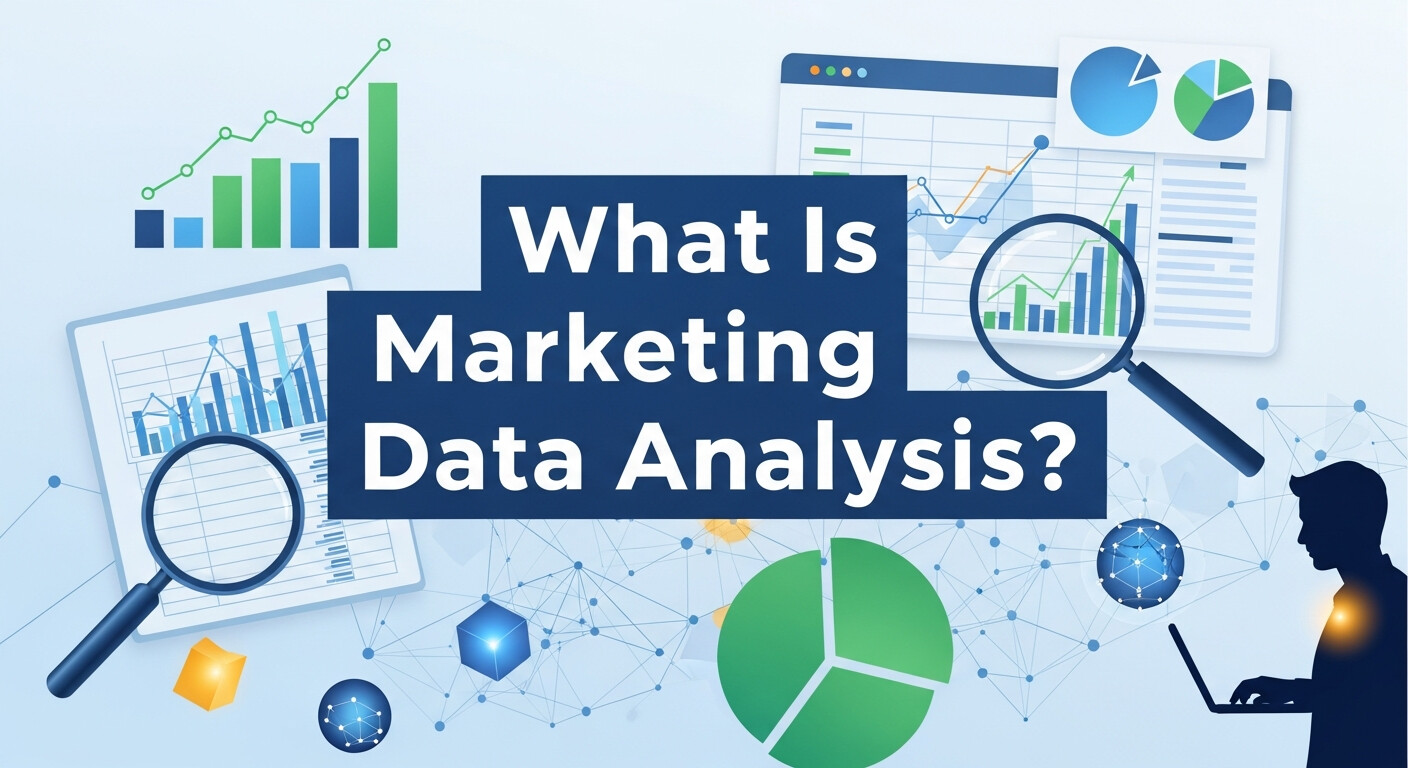
Marketing data analysis is the management and interpretation of data from marketing channels to identify trends, anomalies, patterns, and opportunities for actions that contribute to business growth. It’s about taking what we know of qualitative and quantitative information to gain insights on consumer behavior, test campaigns, and improve marketing.
For a broader perspective on optimizing your data strategy, explore our guide on Master Data with Marketing Analytics, which dives into tools and techniques for better campaign performance.
Common types of marketing data analyzed include:
- Website analytics (e.g., traffic, bounce rates, and session lengths)
- Social media metrics (e.g., engagement rates, impressions, and click-throughs)
- Email marketing performance (e.g., open rates, conversion rates)
- Customer demographics and purchasing patterns
- Advertising efficiency (e.g., ROI on paid search or social ads)
Why is Marketing Data Analysis Essential?
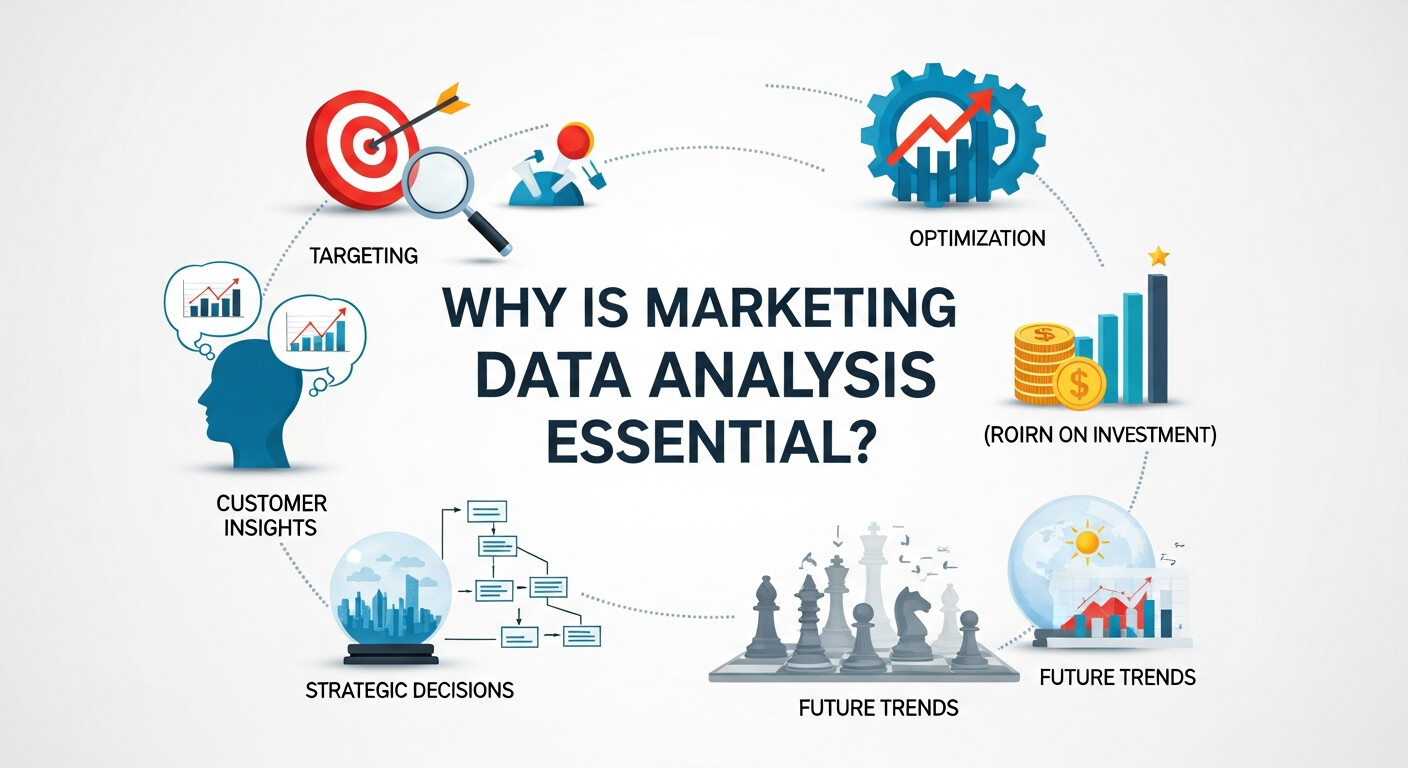
Marketing data analysis is so much more than tracking a campaign’s performance; it enables businesses to make informed decisions and tailor their strategies for success. Here’s how it helps:
1. Improves Campaign Optimization
Ever wondered why some campaign works wonders while some simply bomb? Data analysis can show you what works (and doesn’t), optimizing everything from ad creatives to audience targeting.
Example: If your data reveals a low open rate for your most recent email campaign, A/B testing subject lines can help you determine what’s capturing your audience’s interest.
2. Enhances Customer Experience
Customer insights derived from marketing data allow businesses to refine how users interact with their brand. Knowing your audience’s preferences, behaviors, and pain points makes it possible to deliver hyper-personalized experiences.
Example: E-commerce companies can recommend products based on customers’ browsing and purchasing histories, driving engagement and sales.
3. Maximizes ROI
Every marketing dollar counts, and analyzing your campaigns helps ensure those dollars aren’t wasted. With proper data analysis, you can allocate resources toward strategies that deliver the highest returns rather than investing in low-performing channels.
Example: If paid search is driving three times the ROI of display ads for your business, data ensures that you redirect the budget accordingly.
4. Enables Better Decision-Making
Actionable data is the foundation of sound business decisions. By leveraging marketing analytics, you move from guesswork to evidence-based decision-making.
Example: A business might notice that sales peak on Fridays. Using this information, they could time promotions to coincide with this trend and maximize conversions.
5. Identifies Market Trends
Marketing analytics platforms can identify trends and forecast shifts in the market well before they become mainstream, giving you the edge over competitors.
Example: A spike in “plant-based protein” searches could signal an opportunity for your business to introduce a vegan-friendly product line.
Key Benefits of Marketing Data Analysis
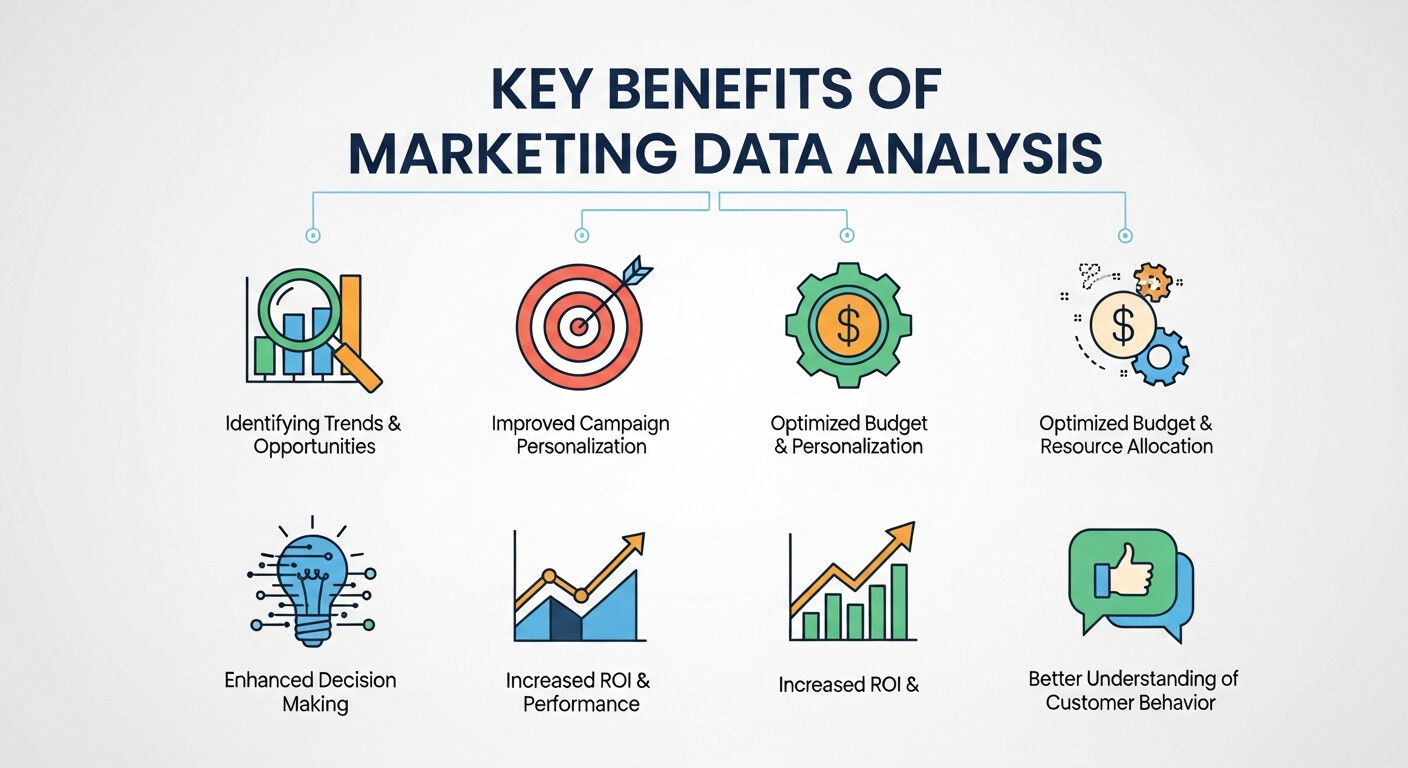
Marketing data analysis allows businesses to turn raw data into actionable insights that improve strategies, optimize campaigns, and enhance customer experience. By leveraging marketing analytics, companies can identify trends, measure performance, and make informed decisions that maximize ROI. Regardless of business size, these insights provide a competitive advantage and help tailor offerings to meet customer expectations more effectively.
Benefits of Marketing Data Analysis:
- Optimizes marketing campaigns by identifying what works and what doesn’t
- Enhances customer experience with personalized interactions
- Identifies market trends early for better strategic planning
- Improves ROI by allocating resources efficiently
- Supports evidence-based decision-making rather than guesswork
Table: Benefits of Marketing Data Analysis
| Benefit | Description | Example |
|---|---|---|
| Campaign Optimization | Improves effectiveness of ads and campaigns | A/B testing email subject lines to increase open rates |
| Customer Experience | Personalizes interactions based on user behavior | Product recommendations based on past purchases |
| Trend Identification | Detects emerging market opportunities | Launching vegan-friendly products based on search trends |
| ROI Maximization | Allocates budget to high-performing channels | Shifting ad spend from low ROI display ads to PPC |
| Informed Decision-Making | Moves from guesswork to evidence-based strategies | Timing promotions according to peak sales data |
Breaking Down the Marketing Data Analysis Process
Performing marketing data analysis doesn’t require you to be a math genius or own advanced software (though the latter does help!). Here are six practical steps to help set you up for success:
Step 1: Define Your Goals
Before jumping into the numbers, determine what exactly you want to learn. Whether optimizing email performance or analyzing customer acquisition trends, clear objectives streamline the entire process.
Step 2: Collect Relevant Data
Choose the right tools for data collection. Popular options include:
- Google Analytics for website traffic and behavior
- Hootsuite Analytics for social media performance
- HubSpot for CRM and inbound tracking
- Mailchimp for email campaign metrics
Step 3: Organize Data
Raw data can be messy and overwhelming. Utilize visualization tools like Tableau or Microsoft Power BI to organize and present data in a readable format.
Step 4: Analyze Trends
Look for patterns and insights that align with your objectives. Watch out for outliers, as they may uncover untapped opportunities or highlight issues.
Step 5: Make Decisions Based on Insights
Translate trends into actionable tasks. For instance, if conversion data shows that one landing page significantly outperforms others, analyze its components (like headlines or CTAs) and replicate them.
Step 6: Refine and Repeat
Analytics isn’t a one-off process. Commit to continuous monitoring and improvement as your data evolves alongside your campaigns.
Tools That Simplify Marketing Data Analysis
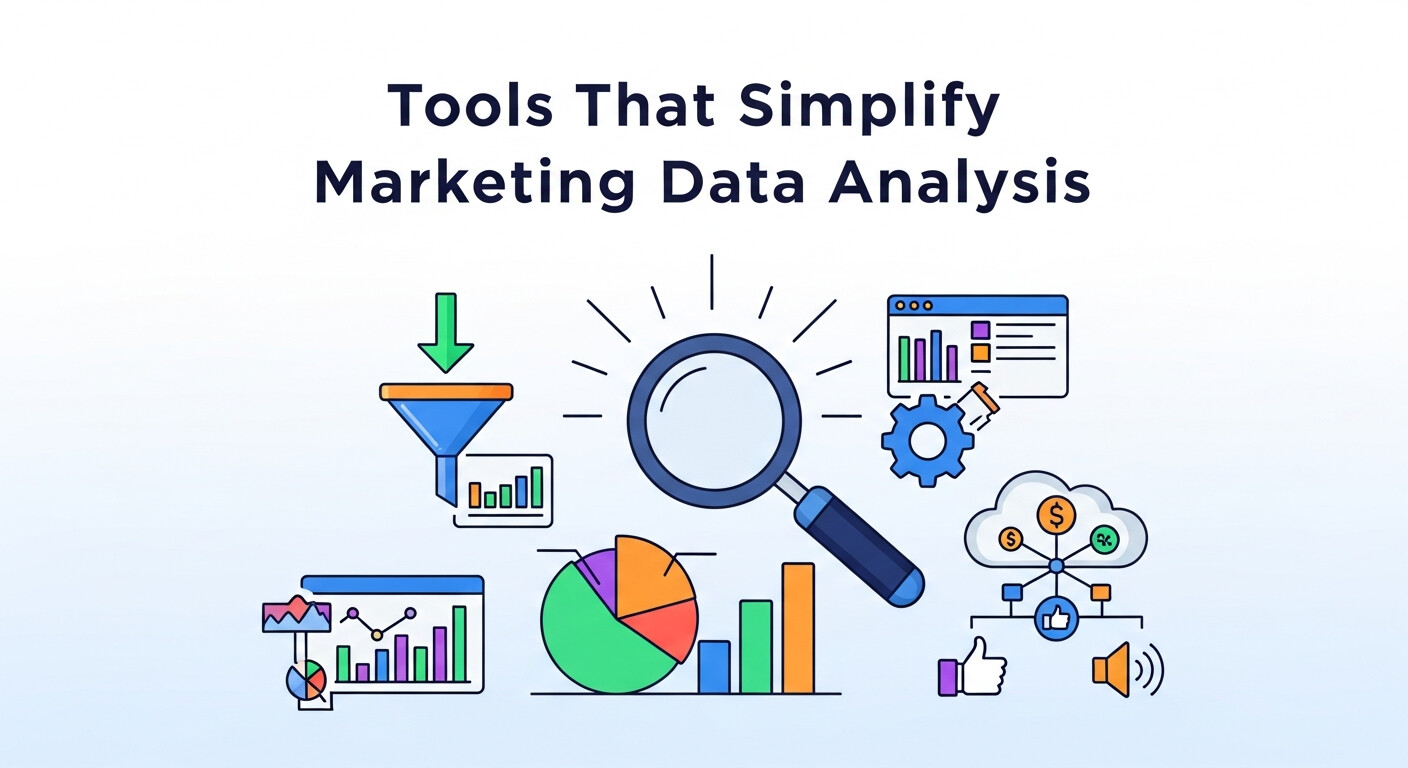
Thankfully, there are plenty of tools designed to make data analysis faster and more insightful. Here are a few of the best ones, tailored by marketing objectives:
For Website Analytics:
- Google Analytics (free): Tracks web traffic, user behavior, and goal completions.
- Crazy Egg (paid): Offers heatmaps and session recordings to visualize user interactions.
For Email Campaigns:
- Mailchimp (free & paid tiers): Provides email performance metrics, including open and click-through rates.
- Campaign Monitor (paid): Advanced automation and segment reporting.
For Social Media:
- Hootsuite Analytics (paid): Schedules posts and tracks performance across platforms.
- Sprout Social (paid): Offers advanced reporting capabilities for social campaigns.
For Paid Advertising:
- Google Ads Reporting (free): Monitors ROI and keyword performance for PPC campaigns.
- Facebook Ads Manager (free): Tracks ad performance across Facebook and Instagram.
For Overall Insights:
- HubSpot (paid): Combines CRM, email automation, and reporting under one roof.
- Klipfolio (paid): Customizable dashboards that aggregate marketing data from multiple sources.
Overcoming Challenges in Marketing Data Analysis
While marketing data analysis provides businesses with valuable insights and helps conduct market research, unlocking growth opportunities, many organizations encounter significant challenges during implementation. Common obstacles include data quality issues, such as incomplete or inconsistent information, which can lead to inaccurate conclusions. Additionally, integrating data from multiple sources can be complex, while the lack of skilled personnel or advanced analytical tools may hinder proper interpretation. Businesses may also struggle with translating insights into actionable strategies, limiting the impact of their efforts. To overcome these challenges, organizations should prioritize data governance, invest in training and analytics tools, streamline data integration processes, and foster cross-functional collaboration. By addressing these barriers proactively, companies can harness the full power of marketing data for better decision-making and measurable results.
Information Overload
- The Challenge: Too much raw data can make it difficult to focus on key metrics.
- The Solution: Define KPIs (key performance indicators) that align with your goals, and focus only on those.
Lack of Expertise
- The Challenge: Not every team has data-savvy individuals.
- The Solution: Invest in training or hire data specialists to transform raw numbers into insights.
Data Silos
- The Challenge: Departments using disconnected systems prevent holistic performance tracking.
- The Solution: Use integrated tools or CRMs like Salesforce to centralize data.
Privacy and Compliance
- The Challenge: Navigating data privacy laws like GDPR and CCPA.
- The Solution: Collaborate with legal experts and prioritize secure, transparent methods for data collection.
Take the Leap Toward Smarter Marketing
Marketing data analysis is enormously valuable for businesses, and it’s not just for big-name industry leaders with massive budgets. When combined with Account-Based Marketing (ABM) strategies, businesses can use targeted insights to focus on high-value accounts. With objectives in hand (and, of course, the tools to help), companies can create more personalized campaigns, make informed decisions, and distinguish themselves from the pack.
Ready to make your marketing data your best business asset? Begin leveraging the power of marketing analysis with ABM today, and see the difference.
Frequently Asked Questions:
1. What is Marketing Data Analysis?
Marketing data analysis is the process of collecting, interpreting, and utilizing data from marketing channels to understand customer behavior, evaluate campaigns, and identify opportunities. By leveraging marketing analytics, businesses can make informed decisions, improve customer engagement, and optimize ROI. It combines qualitative and quantitative insights, turning raw data into actionable strategies for growth and improved marketing performance.
2. Why is Marketing Data Analysis important?
Marketing data analysis is essential because it helps businesses make informed, data-driven decisions. Through marketing analytics, companies can optimize campaigns, improve customer experience, identify trends, and maximize ROI. Without proper analysis, decisions rely on guesswork, risking wasted budgets and missed opportunities. Leveraging marketing data ensures campaigns are targeted, efficient, and aligned with customer preferences for measurable business growth.
3. What types of data are used in Marketing Data Analysis?
Marketing data analysis uses multiple types of data, including website analytics (traffic, session duration, bounce rate), social media metrics (engagement, reach, click-throughs), email performance (open and conversion rates), customer demographics and purchasing patterns, and advertising ROI. By combining these data points, marketing analytics provides a complete picture of customer behavior, campaign efficiency, and market opportunities to drive smarter business strategies.
4. How does Marketing Data Analysis improve campaigns?
Marketing data analysis enhances campaigns by revealing what resonates with your audience. Through marketing analytics, businesses can test different creatives, target the right segments, and optimize messaging. For example, low email open rates can be improved via A/B testing, while high-performing landing pages can guide website adjustments. Insights from data ensure campaigns achieve higher engagement, conversions, and ROI.
5. Can Marketing Data Analysis enhance customer experience?
Yes. Marketing data analysis allows businesses to understand customer preferences, behaviors, and pain points. Marketing analytics helps tailor personalized experiences, such as product recommendations or targeted promotions. By analyzing purchasing patterns and engagement metrics, companies can refine interactions, improve satisfaction, and strengthen loyalty. Ultimately, data-driven insights help create seamless, relevant, and engaging customer journeys.
6. What tools are used for Marketing Data Analysis?
Several tools simplify marketing data analysis. Google Analytics tracks website behavior, Mailchimp monitors email campaigns, Hootsuite and Sprout Social handle social media performance, and Google Ads or Facebook Ads Manager track paid campaigns. HubSpot and Klipfolio offer integrated dashboards for overall marketing analytics. Using these tools, businesses can collect, visualize, and interpret data efficiently for actionable insights.
7. What challenges exist in Marketing Data Analysis?
Challenges include information overload, lack of expertise, data silos, and privacy compliance issues. Marketing analytics can become overwhelming without defined KPIs. Teams may need training or specialists to interpret data correctly. Disconnected systems make it hard to track overall performance, and businesses must comply with GDPR or CCPA laws. Addressing these challenges ensures marketing data analysis is accurate, actionable, and safe.
8. How does Marketing Data Analysis maximize ROI?
Marketing data analysis maximizes ROI by identifying the highest-performing channels and strategies. Through marketing analytics, businesses can allocate budgets efficiently, focusing on campaigns that generate the best returns. For example, if paid search delivers higher ROI than display ads, data-driven insights ensure resources are redirected appropriately, reducing waste and improving overall marketing effectiveness.
9. How can businesses start with Marketing Data Analysis?
To start, define clear goals, collect relevant data, organize it using visualization tools, and analyze trends through marketing analytics. Translate insights into actionable steps, test strategies, and continuously refine campaigns. Small businesses or large enterprises can adopt affordable tools like Google Analytics, Mailchimp, and HubSpot to integrate marketing data analysis into decision-making, improving campaigns, customer experiences, and revenue.