
Predictive customer journey analytics helps brands move from reactive reporting to proactive marketing by using historical data, machine learning, and statistical models to forecast customer behaviors. Unlike traditional analytics, it anticipates next-best actions, reduces churn, optimizes budgets, and enables personalized experiences across all channels.
In today’s data-driven marketing ecosystem, understanding and anticipating customer behavior is no longer a luxury—it’s a necessity. Brands are collecting data at every touchpoint, from social media interactions to on-site engagement, but the ability to turn these data points into predictive insights remains a gap for many teams. Predictive customer journey analytics offers a way to bridge that gap by forecasting future behaviors, recommending next-best actions, and ultimately driving higher returns on marketing investments. In this comprehensive guide, we’ll dive into what predictive customer journey analytics is, explore its benefits, outline how to build an analytics-led strategy, and review best practices for implementation and measurement.
What Is Predictive Customer Journey Analytics?
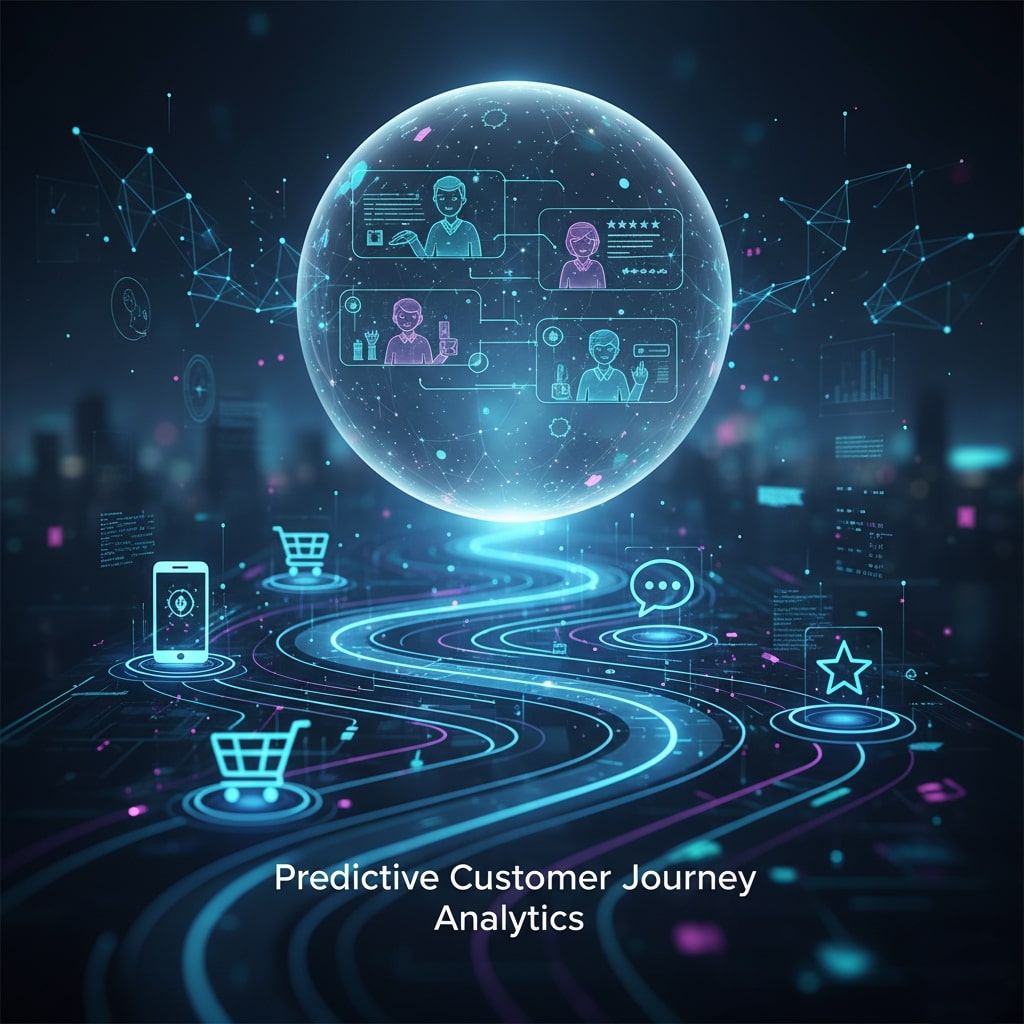
Predictive customer journey analytics combines historical customer data, machine learning models, and statistical techniques to anticipate the next steps a prospect or customer is likely to take. Unlike traditional analytics that focus on reporting past performance, predictive analytics leverages patterns in multi-channel interactions—such as email opens, ad clicks, page visits, and transaction history—to forecast who is most likely to convert, churn, or engage further. This form of analytics maps the customer journey not as a static funnel, but as a dynamic sequence of decision points, allowing marketers to proactively tailor messaging, offers, and experiences for maximum impact.
Key Benefits of Predictive Customer Journey Analytics

- Higher Conversion Rates: By predicting which channels and content will resonate most, you can focus budgets and creative efforts on high-probability audiences.
- Personalized Experiences: Anticipate customer needs and automate personalized touchpoints at exactly the right moment in their journey.
- Reduced Churn: Identify at-risk segments early on and deploy targeted retention campaigns before customers slip away.
- Optimized Budget Allocation: Allocate marketing spend dynamically across channels based on predicted ROI uplift rather than historical averages.
- Faster Time to Insight: Automated modeling pipelines accelerate analysis, turning raw data into actionable insights in hours rather than weeks.
Understanding Customer Journey Mapping

Predictive analytics works best when built on a clear understanding of the customer journey. Customer journey mapping involves visualizing every touchpoint a customer has with your brand, from awareness to purchase and post-purchase engagement. By mapping these interactions, marketers can identify key decision points, friction areas, and opportunities for engagement. Predictive models then use this structured view to analyze patterns in sequential behaviors. For example, understanding that a first-time visitor usually browses three product pages before abandoning a cart allows predictive systems to intervene with personalized nudges. Investing time in journey mapping not only improves model accuracy but also helps teams align messaging, timing, and channel strategy with real customer behavior.
Data Quality and Preparation
High-quality data is the foundation of any predictive analytics initiative. Predictive models are only as good as the data they consume. This involves auditing all data sources for completeness, accuracy, and consistency. Missing, outdated, or duplicate data can skew predictions and reduce campaign effectiveness. Data preparation also includes transforming raw data into usable formats, normalizing values, and creating derived metrics such as engagement scores or product affinity indices. Techniques like feature engineering, aggregation of event sequences, and timestamp alignment are essential for sequential modeling. Investing in data quality upfront reduces model retraining frequency, improves prediction reliability, and ensures actionable insights can be operationalized across marketing systems.
Advanced Modeling Techniques
Once data is prepared, selecting the right modeling techniques is critical. Beyond standard algorithms like logistic regression or random forests, advanced models such as gradient boosting, recurrent neural networks (RNNs), and sequence-to-sequence models can capture temporal and sequential dependencies in customer behavior. For instance, RNNs are well-suited for modeling repeated interactions over time, such as a series of website visits or email opens. Ensemble methods, which combine multiple models, often improve accuracy and reduce bias. Choosing the right technique depends on business objectives, data volume, and computational resources. A well-chosen model can forecast customer intent, segment audiences dynamically, and provide interpretable insights for operational teams.
Operationalizing Predictive Insights
Generating predictions is only part of the equation; embedding them into marketing operations is essential to drive real impact. Operationalizing predictive analytics involves integrating model outputs into ad platforms, marketing automation tools, CRM systems, and personalization engines. This enables teams to act in real time, triggering next-best-action campaigns, personalized messaging, or adaptive website experiences. For example, when a model predicts high churn risk, the CRM can automatically schedule a retention email or discount offer. Automation ensures that predictive insights are not just theoretical but actively improve customer engagement, conversion rates, and loyalty. Cross-team alignment—between data science, marketing operations, and creative—is critical to maximize the benefits of operationalization.
Ethical Considerations and Privacy Compliance
With predictive analytics handling sensitive customer data, ethical and privacy considerations are paramount. Brands must ensure compliance with regulations such as GDPR, CCPA, and other data protection laws. This includes obtaining proper consent, anonymizing personal identifiers where possible, and securing data storage and transmission. Beyond legal compliance, ethical AI practices involve avoiding biased predictions and ensuring transparency in how models influence customer experiences. For example, a model predicting churn should not disproportionately target or exclude specific demographics unless justified by behavioral evidence. Maintaining ethical standards fosters customer trust, protects brand reputation, and ensures sustainable, responsible use of predictive analytics in marketing.
Building Your Predictive Analytics Strategy
Launching a predictive customer journey analytics initiative requires careful planning and cross-functional alignment. First, define your business objectives: is the priority to increase conversions, minimize churn, or grow average order value? Next, inventory your data sources—CRM records, web analytics, email marketing platforms, social media metrics—and assess data quality, completeness, and integration needs. Enlist data engineers to build ETL pipelines that centralize customer events in a unified data warehouse or customer data platform (CDP). Once the data foundation is solid, collaborate with data scientists to select appropriate modeling techniques—such as gradient boosting, random forests, or recurrent neural networks—that can handle sequential event data and provide clear performance metrics.
Equally important is embedding predictive insights into operational workflows. Work with marketing operations to integrate model outputs into ad platforms, marketing automation tools, and CRM systems via APIs or connector apps. This ensures that sales and marketing teams receive real-time recommendations on next-best actions, whether that’s sending a hyper-targeted email, triggering a retargeting ad, or adjusting website experiences through personalization engines.
Implementing Tools and Technologies
Effective predictive customer journey analytics relies on the right blend of tools. Here are key technology categories to consider:
- Customer Data Platforms (CDPs): Platforms like Segment, Tealium, or mParticle unify customer events across channels and create persistent profiles for analysis.
- Data Warehouses & Lakes: Solutions such as Snowflake, BigQuery, or AWS Redshift store large volumes of structured and semi-structured data at scale.
- Machine Learning Frameworks: Leverage Python libraries (scikit-learn, TensorFlow, PyTorch) or automated ML platforms (DataRobot, H2O.ai) to build and test predictive models.
- Marketing Automation & Personalization Engines: Tools like Marketo, HubSpot, or Adobe Campaign can consume model outputs to trigger personalized campaigns.
- Data Visualization & BI: Dashboards in Looker, Tableau, or Power BI help stakeholders explore model forecasts, segment behaviors, and evaluate ROI uplift.
Best Practices for Success
- Ensure Data Governance: Establish clear ownership, privacy compliance, and data retention policies to build trust in your analytics outputs.
- Start Small, Scale Fast: Pilot with one high-impact use case (e.g., cart abandonment recovery) before expanding to the full journey.
- Iterate on Models: Monitor model accuracy and business KPIs regularly, retraining models when performance dips below thresholds.
- Foster Cross-Functional Collaboration: Align data science, marketing operations, creative, and IT teams through regular governance meetings and shared dashboards.
- Measure Incrementally: Use A/B tests or hold-out groups to isolate the impact of predictive recommendations on conversion rates and revenue uplift.
Case Study: Elevating ROI for an E-Commerce Brand
Consider a mid-market e-commerce retailer struggling with a 60% cart abandonment rate and stagnant email click-throughs. By implementing a predictive customer journey analytics solution, the retailer modeled key abandonment events using historical clickstream and purchase data. The data science team trained a gradient boosting model to assign real-time abandonment risk scores to site visitors. When the model flagged a high-risk user, the marketing automation platform triggered a personalized exit-intent pop-up offering a unique discount. Concurrently, segmented email flows were updated to prioritize content based on predicted product affinities, identified through sequential event analysis.
The results were striking. Within three months, cart abandonment fell to 45%, generating a 25% lift in completed transactions. Email click-through rates rose by 18%, and overall marketing ROI increased by 32%. By continually retraining the model on new customer interactions and optimizing discount thresholds, the retailer achieved sustained growth and deeper customer loyalty.
Measuring Performance and Continuous Improvement

A robust measurement framework is essential to prove the value of predictive customer journey analytics. Track both model metrics (precision, recall, ROC AUC) and business KPIs (conversion rate lift, incremental revenue, customer lifetime value). Establish dashboards that compare predicted outcomes against actual performance, and schedule monthly reviews to identify drift or new pattern shifts. Use hold-out cohorts and randomized control trials to quantify incremental gains from your predictive interventions, ensuring that marketing spend is driving measurable impact.
Additionally, solicit qualitative feedback from frontline teams—sales, customer support, and creative—to uncover insights on messaging effectiveness and operational bottlenecks. Integrate these learnings into your model development cycle, reinforcing a test-learn-iterate culture that drives continuous marketing innovation.
Conclusion
Predictive customer journey analytics empowers marketers to move from reactive reporting to proactive optimization, unlocking higher conversion rates, deeper personalization, and improved ROI. By building a strong data foundation, selecting the right tools, and embedding predictive insights into operational workflows, organizations can anticipate customer needs and deliver the right message at the right moment. As competition intensifies, mastering predictive journey analytics will be the key differentiator for brands aiming to drive sustainable growth and customer loyalty. Start small, measure rigorously, and scale quickly—and you’ll transform raw data into a strategic engine for marketing success.
FAQ: Predictive Customer Journey Analytics
1. What is the difference between predictive and traditional analytics?
Traditional analytics focuses on past performance, like reporting website traffic or conversion rates. Predictive analytics uses historical and real-time data to forecast future behaviors, allowing marketers to anticipate actions, reduce churn, and optimize campaigns proactively.
2. Do I need a large dataset to start predictive analytics?
While larger datasets generally improve model accuracy, predictive analytics can begin with smaller, high-quality datasets. Start with one high-impact use case and expand as data volume and quality improve.
3. Which channels can benefit from predictive customer journey analytics?
All channels where customer interactions occur—email, website, mobile apps, social media, paid ads, and in-store touchpoints—can leverage predictive insights to personalize experiences and optimize engagement.
4. How do I measure the success of predictive analytics initiatives?
Success is measured through a combination of model metrics (precision, recall, ROC AUC) and business KPIs (conversion rates, incremental revenue, customer lifetime value). A/B testing and hold-out cohorts can isolate the impact of predictive actions.
5. How often should predictive models be retrained?
Models should be monitored continuously for performance drift. Retraining is recommended whenever accuracy declines below business thresholds or when new customer behavior patterns emerge, typically every few weeks to months depending on data volume.
6. Can predictive analytics help reduce customer churn?
Yes. By identifying at-risk customers early, predictive models can trigger targeted retention campaigns, personalized offers, or proactive outreach, reducing churn before it happens.
7. How can small teams implement predictive analytics without extensive resources?
Start small by focusing on a single use case (like cart abandonment). Use pre-built ML tools or automated platforms to simplify modeling. Scale gradually while continuously measuring results.
8. How does predictive analytics improve personalization?
By forecasting customer behavior, predictive models recommend the right message, offer, or content at the exact moment it’s most relevant, increasing engagement and conversions.
9. Is predictive analytics only for e-commerce businesses?
No. Any industry with customer interactions—financial services, travel, healthcare, telecom, B2B—can benefit from predictive analytics to optimize the customer journey.