
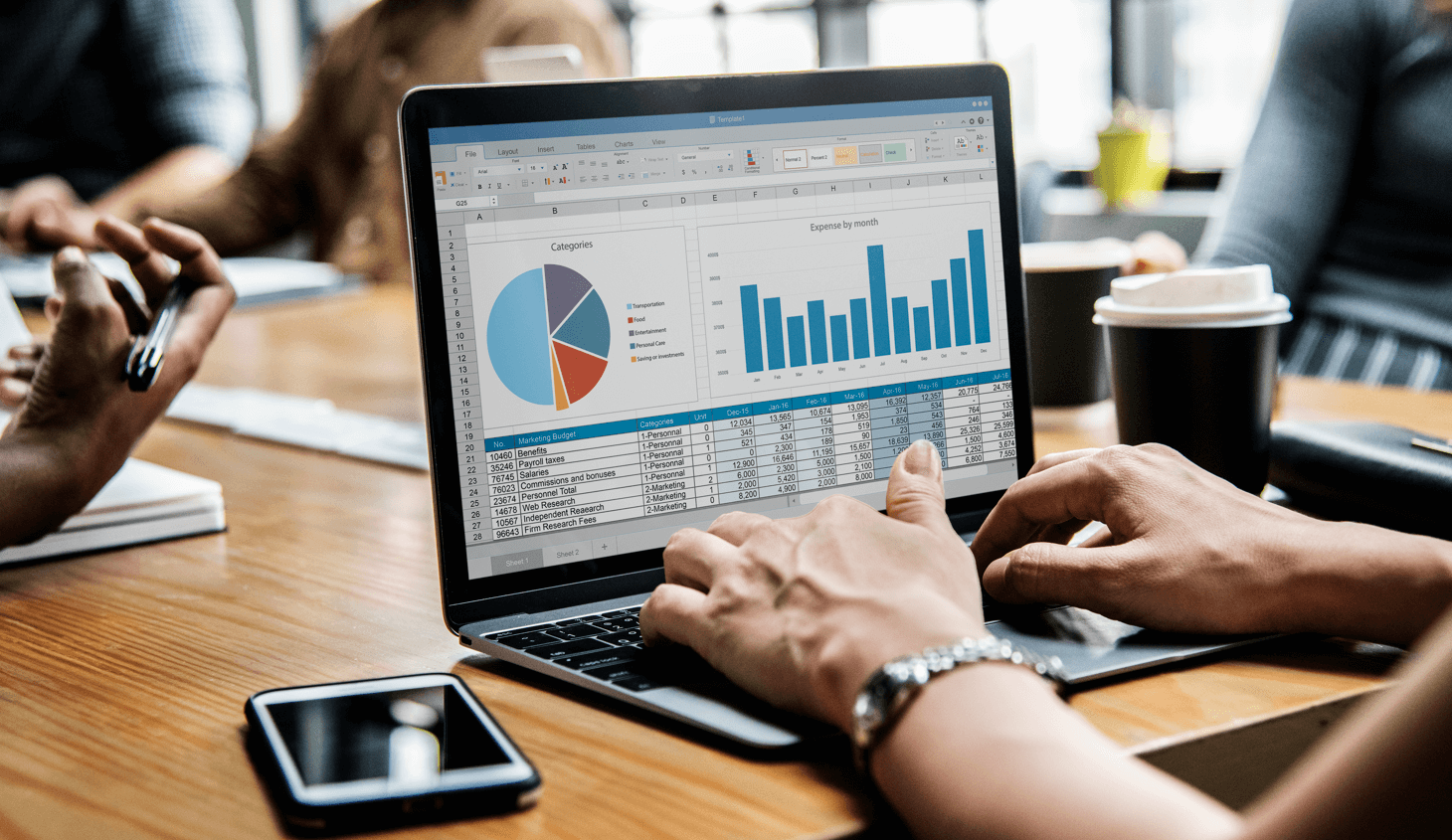
As the marketplace continues to become more competitive, businesses need to be able to be agile and data driven in order to flourish. For marketers and decision makers, questions like “Which campaigns will do best next quarter? or “What will resonate best with specific audience segments?” has never been more critical. Cue predictive analytics—a 21st century tool for accurately predicting marketing trends and outcomes.
Using historical data, advanced algorithms, and machine learning, predictive analytics enables specialists to get ahead of the curve, optimise strategies, and accelerate ROI as never before.
So, what does predictive analytics mean for marketers? Which tools should you use, and what benefits can you expect? This guide will help break it down.
What Is Predictive Analytics in Marketing?
Predictive analytics combines statistics, machine learning, and data modeling to make predictions about future trends based on past data. For marketers, it means using customer behavior, campaign performance, and market data to anticipate what’s next.
Imagine being able to predict:
- Which audience segments are most likely to purchase a product
- What kind of message will resonate most with your customers
- How much budget you should allocate to specific channels
Predictive analytics shifts marketing strategies from reactive to proactive. Rather than waiting for results to understand what doesn’t work, predictive tools provide actionable insights to refine campaigns before implementation.
Key Benefits of Predictive Analytics in Marketing
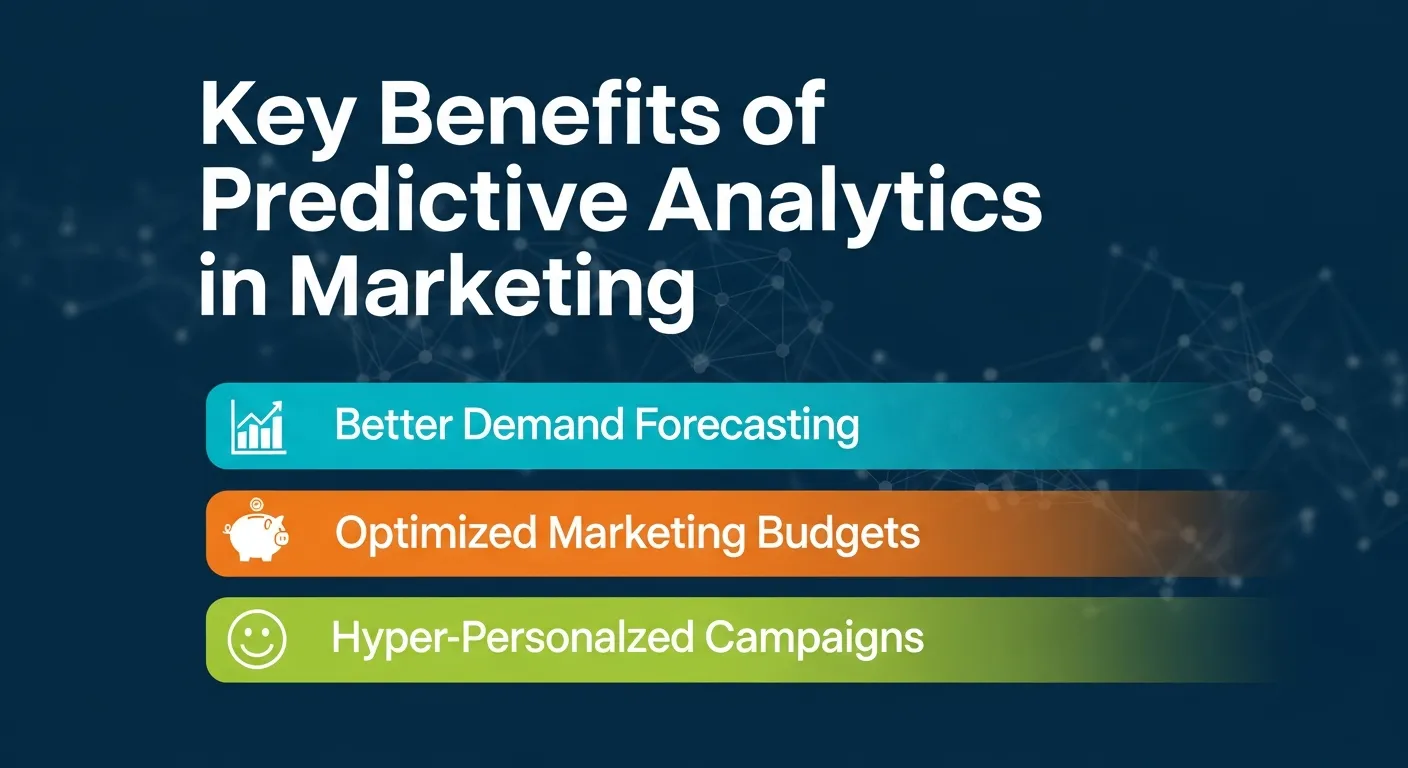
1. Better Demand Forecasting
Understanding future demand is vital for every marketer. Predictive analytics helps estimate future sales volumes, identify emerging trends, and pinpoint seasonal shifts. These actionable forecasts can refine inventory management and ensure supply matches demand.
For example, e-commerce platforms can forecast peak shopping times, ensuring marketing campaigns align with consumer buying patterns.
2. Optimized Marketing Budgets
How many times have you questioned whether your marketing budget is actually deployed correctly? Predictive analytics uses the ROI up to campaign and channel level to tell you where you spend your money for the maximum number of win. These advanced forecasting tools help you in identifying underperforming channels and leaving more budget to the channels with the highest returns.
3. Hyper-Personalized Campaigns
Customers demand personalized experiences. Predictive models study historical customer data to design highly targeted marketing campaigns. Businesses use Customer segmentation based on their behavior, interests, and previous purchases can create Personalized Messaging to share personalized messages, offers, and content that resonate with customers on a deeper level.
Netflix, for instance, applies predictive analytics to provide personalized recommendations of TV shows and movies for individuals based on past preferences, increasing engagement and user satisfaction as a result.
Core Techniques Behind Predictive Analytics
To use predictive analytics effectively, it’s essential to understand the techniques driving it. These methods form the backbone of forecasts and insights.
1. Regression Analysis
Regression identifies relationships between variables—in marketing, this could mean understanding how changing ad spend impacts conversions. Linear regression is often used to establish cause-and-effect relationships, enabling marketers to determine which factors most influence campaign performance.
2. Clustering
Clustering groups customers with similar behaviors, preferences, or demographics. It helps marketers identify specific segments that require different marketing strategies. For instance, luxury brands may target “high spenders” differently than “value-conscious shoppers.”
3. Time Series Analysis
Time series analysis studies data points collected over time, such as weekly website traffic or monthly sales numbers. It’s invaluable for identifying seasonality and predicting future trends. Retailers rely on time series analysis to plan holiday campaigns, ensuring they stock the right products ahead of time.
Real-World Applications of Predictive Analytics
Case Study #1: Starbucks
Starbucks has implemented predictive analytics via its mobile app. Through customer purchase history and location data, the app delivers tailored drink recommendations. The result? Increased engagement and sales through deeper customer personalization.
Case Study #2: Amazon
Amazon sets industry benchmarks with its predictive analytics tools. Using algorithms to analyze browsing habits, purchase history, and wish lists, Amazon recommends products customers are most likely to buy, boosting upselling opportunities.
Case Study #3: Airbnb
Airbnb uses predictive analytics to forecast demand and pricing in various locations. The platform identifies key factors such as booking seasonality and local events to suggest optimal pricing for hosts, maximizing revenue while maintaining competitive rates.
How to Implement Predictive Analytics in Marketing
Implementing predictive analytics doesn’t require you to have a full data science team. Here’s how you can start integrating predictive tools into your strategy.
Step 1: Set Clear Goals
Define the outcomes you want to achieve. Are you trying to improve customer retention, increase ad click-through rates, or boost sales in under-performing regions? Clear goals are the foundation of effective predictive analytics strategies.
Step 2: Collect and Clean Your Data
Strong predictions rely on high-quality data. Pull data from CRM systems, web analytics tools, sales reports, and social media, and ensure it’s accurate, relevant, and complete. Employ data cleaning processes to remove inconsistencies or errors.
Step 3: Leverage AI Tools
Tools like Tableau, Google Analytics 360, and Salesforce provide robust predictive capabilities, allowing marketers without technical expertise to explore predictive analytics. For example:
- HubSpot’s Predictive Lead Scoring helps prioritize leads most likely to convert
- Google Ads Smart Bidding automates bidding strategies based on predictive algorithms
Step 4: Model and Interpret Results
Use models like regression, machine learning, or decision trees to analyze your data. Take the insights these models provide and implement changes to your campaigns. Remember to continuously monitor performance and make iterations for better outcomes.
Step 5: Foster Collaboration
Predictive analytics works best when marketing teams collaborate with data analysts or specialists. This partnership ensures accurate data interpretation and the translation of results into actionable strategies.
Predictive Analytics in Marketing vs Traditional Analytics
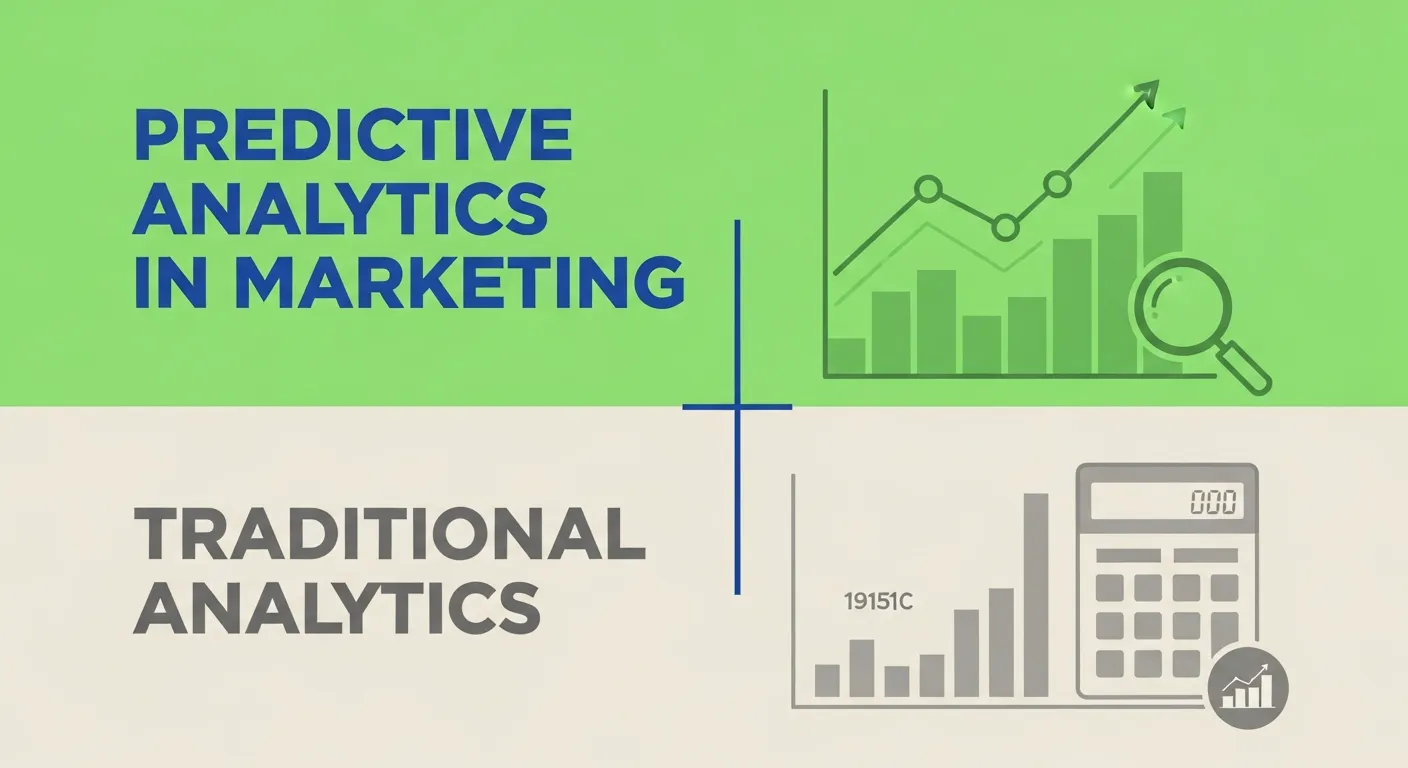
Traditional analytics focuses on understanding what happened in the past, while predictive analytics in marketing answers the more valuable question: what will happen next. Instead of static reports, predictive analytics uses machine learning models and historical patterns to forecast customer behavior, campaign performance, and revenue outcomes.
Traditional analytics helps marketers evaluate performance after a campaign ends. Predictive analytics, however, enables marketers to optimize strategies before launch, reducing risk and improving ROI. This forward-looking approach empowers teams to anticipate demand, personalize experiences, and allocate budgets more efficiently.
As competition increases, relying solely on traditional analytics limits growth. Predictive analytics in marketing provides the strategic advantage businesses need to stay proactive, agile, and data-driven.
Role of AI and Machine Learning in Predictive Analytics
Artificial intelligence (AI) and machine learning are the engines behind predictive analytics in marketing. These technologies analyze massive datasets, identify hidden patterns, and continuously improve predictions over time. Unlike static models, machine learning algorithms adapt as new data becomes available.
AI-driven predictive analytics enables marketers to automate decisions such as lead scoring, ad bidding, and content recommendations. For example, AI can predict which users are most likely to convert or churn, allowing marketers to act in real time.
By integrating AI into predictive analytics in marketing, businesses gain faster insights, improved accuracy, and scalable automation—making advanced forecasting accessible even without deep technical expertise.
How Predictive Analytics Improves Customer Retention
Customer retention is one of the most impactful use cases of predictive analytics in marketing. Instead of reacting after customers disengage, predictive models identify early warning signs of churn. These insights allow marketers to intervene with timely offers, personalized messaging, or loyalty incentives.
Predictive analytics analyzes behavioral signals such as reduced engagement, declining purchase frequency, or changes in browsing patterns. Using these indicators, businesses can forecast churn probability and prioritize retention efforts.
By focusing on proactive retention strategies, predictive analytics in marketing helps reduce customer acquisition costs, increase lifetime value, and build stronger long-term relationships—making it a critical tool for sustainable business growth.
Predictive Analytics in Marketing: Key Metrics to Track
To unlock the full potential of predictive analytics in marketing, businesses must track the right metrics. Predictive models are only as powerful as the data feeding them. Monitoring performance indicators helps marketers validate forecasts, refine strategies, and improve decision accuracy over time.
By focusing on predictive-ready metrics, marketers can anticipate outcomes rather than simply react to past performance.
Essential Metrics for Predictive Marketing Success
- Customer Lifetime Value (CLV): Predicts long-term revenue from individual customers
- Conversion Probability: Estimates the likelihood of a user converting
- Churn Rate: Identifies customers at risk of disengagement
- Customer Acquisition Cost (CAC): Forecasts cost efficiency across channels
- Engagement Score: Measures interaction patterns to predict future behavior
Predictive Analytics Metrics Overview
| Metric Name | What It Predicts | Why It Matters |
|---|---|---|
| Customer Lifetime Value (CLV) | Future customer revenue | Improves budget allocation |
| Conversion Probability | Likelihood of purchase | Boosts campaign efficiency |
| Churn Rate | Customer drop-off risk | Supports retention strategies |
| CAC Forecast | Future acquisition costs | Optimizes marketing spend |
| Engagement Score | User intent & interest | Enhances personalization |
Tracking these metrics ensures predictive analytics in marketing delivers measurable and scalable results.
Predictive Analytics Use Cases Across Marketing Channels
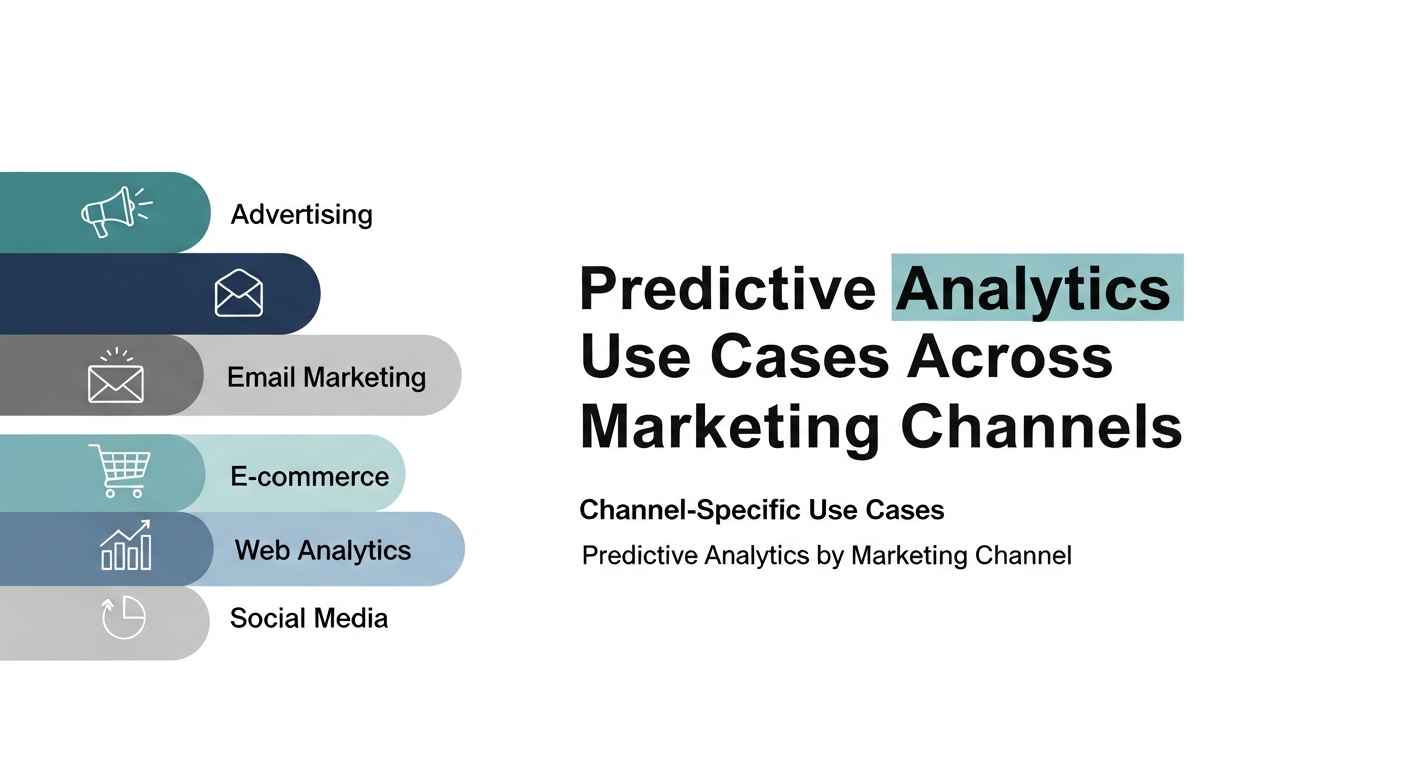
Predictive analytics in marketing is not limited to one channel—it enhances performance across SEO, email, paid ads, social media, and content marketing. Each channel benefits differently from predictive insights, allowing marketers to optimize campaigns holistically.
When predictive models are applied cross-channel, brands gain a unified and forward-looking marketing strategy.
Channel-Specific Use Cases
- SEO: Predict keyword trends and content performance
- Email Marketing: Forecast open rates and optimal send times
- Paid Advertising: Predict ROAS and automate bidding strategies
- Social Media: Identify content formats likely to go viral
- Content Marketing: Estimate engagement and conversion potential
Predictive Analytics by Marketing Channel
| Marketing Channel | Predictive Use Case | Business Impact |
|---|---|---|
| SEO | Keyword trend forecasting | Higher organic visibility |
| Email Marketing | Send-time optimization | Improved open & CTR |
| Paid Ads | Budget & bid prediction | Reduced ad waste |
| Social Media | Engagement prediction | Stronger brand reach |
| Content Marketing | Performance forecasting | Better content ROI |
By applying predictive analytics in marketing across channels, businesses gain clarity, consistency, and competitive advantage.
Challenges in Predictive Analytics and How to Overcome Them
Challenge 1: Data Silos
Data silos across teams or departments limit cohesive predictions. Centralizing data in a unified platform can eliminate this problem. CRM platforms like Salesforce or HubSpot make this integration easy.
Challenge 2: Interpreting Complex Data
Not every marketer is a data scientist. Predictive analytics tools with intuitive dashboards and visualizations make it easier for teams to interpret results without technical skills. Tableau and Power BI are excellent solutions for simplifying data exploration.
Challenge 3: Privacy Regulations
Predictive analytics relies heavily on customer data. Ensure compliance with GDPR or CCPA by collecting explicit user consent and utilizing data anonymization wherever necessary.
The Future of Predictive Analytics in Marketing
What lies ahead for predictive analytics?
- Real-time insights
Advancements in real-time analytics will allow businesses to dynamically adapt campaigns based on live data.
- Integration with IoT
The Internet of Things (IoT) will generate vast amounts of real-time consumer data, expanding predictive capabilities into new fields like retail inventory management.
- AI-Driven Automation
We’ll see a deeper integration of AI technologies, where predictive tools not only recommend actions but automatically execute them using intelligent automation.
For marketing professionals, staying on top of predictive tools and trends will be crucial to maintaining a competitive edge.
Transform Your Marketing with Predictive Analytics
Predictive analytics isn’t just a buzzword; it’s the future of marketing optimization and trend forecasting. By utilizing the right techniques, tools, and strategies, businesses can elevate their campaigns, make informed decisions, and gain a competitive advantage.
At AnalyzeNest, we’re passionate about empowering marketers to harness the full potential of data. Visit us today to explore expert resources and tools to kickstart your predictive analytics journey.
Frequently Asked Questions (FAQs)
1. What is predictive analytics in marketing?
Predictive analytics in marketing uses historical data, machine learning, and statistical models to forecast future customer behavior, campaign performance, and market trends.
2. How does predictive analytics improve marketing ROI?
By identifying high-performing channels and audiences in advance, predictive analytics in marketing helps businesses allocate budgets more effectively and reduce wasted spend.
3. Is predictive analytics useful for small businesses?
Yes. Predictive analytics supports analytics for business success by helping small businesses forecast demand, personalize campaigns, and make data-driven decisions without large teams.
4. What tools are commonly used for predictive analytics in marketing?
Popular tools include Google Analytics 360, HubSpot, Salesforce, Tableau, and Power BI, all of which offer predictive modeling and forecasting features.
5. How does predictive analytics transform modern SEO campaigns?
Analytics transforms modern SEO campaigns by predicting keyword trends, search behavior changes, and content performance before rankings fluctuate.
6. Can predictive analytics help with customer personalization?
Absolutely. Predictive analytics in marketing analyzes user behavior and purchase history to deliver hyper-personalized content, offers, and recommendations.
7. What skills are required for a job in marketing analytics?
A job in marketing analytics typically requires skills in data analysis, statistics, basic machine learning, SQL, Excel, and marketing platforms like Google Analytics or CRM tools.
8. How does predictive analytics support demand forecasting?
Predictive analytics examines historical sales and seasonal patterns to forecast future demand, helping businesses optimize inventory and campaign timing.
9. Are predictive analytics tools compliant with data privacy laws?
Most modern predictive analytics platforms support GDPR and CCPA compliance through data anonymization, consent tracking, and secure data handling.
10. Why does marketing start with smarter analytics today?
Marketing starts with smarter analytics because predictive insights allow brands to move from reactive decisions to proactive strategies that drive sustainable growth.
 Rosemary Barker