
This comprehensive guide explores how leveraging analytics transforms business growth. You will discover the exact strategies, tools, and methodologies top agencies use to outperform competitors. We cover common pitfalls, expert insights, and provide actionable steps to align your marketing efforts with quantifiable metrics for maximum return on investment.
Guessing games cost businesses money. A data driven marketing agency removes the guesswork, using hard numbers to target audiences, optimize campaigns, and scale revenue predictably.
The Evolution of the Data Driven Marketing Agency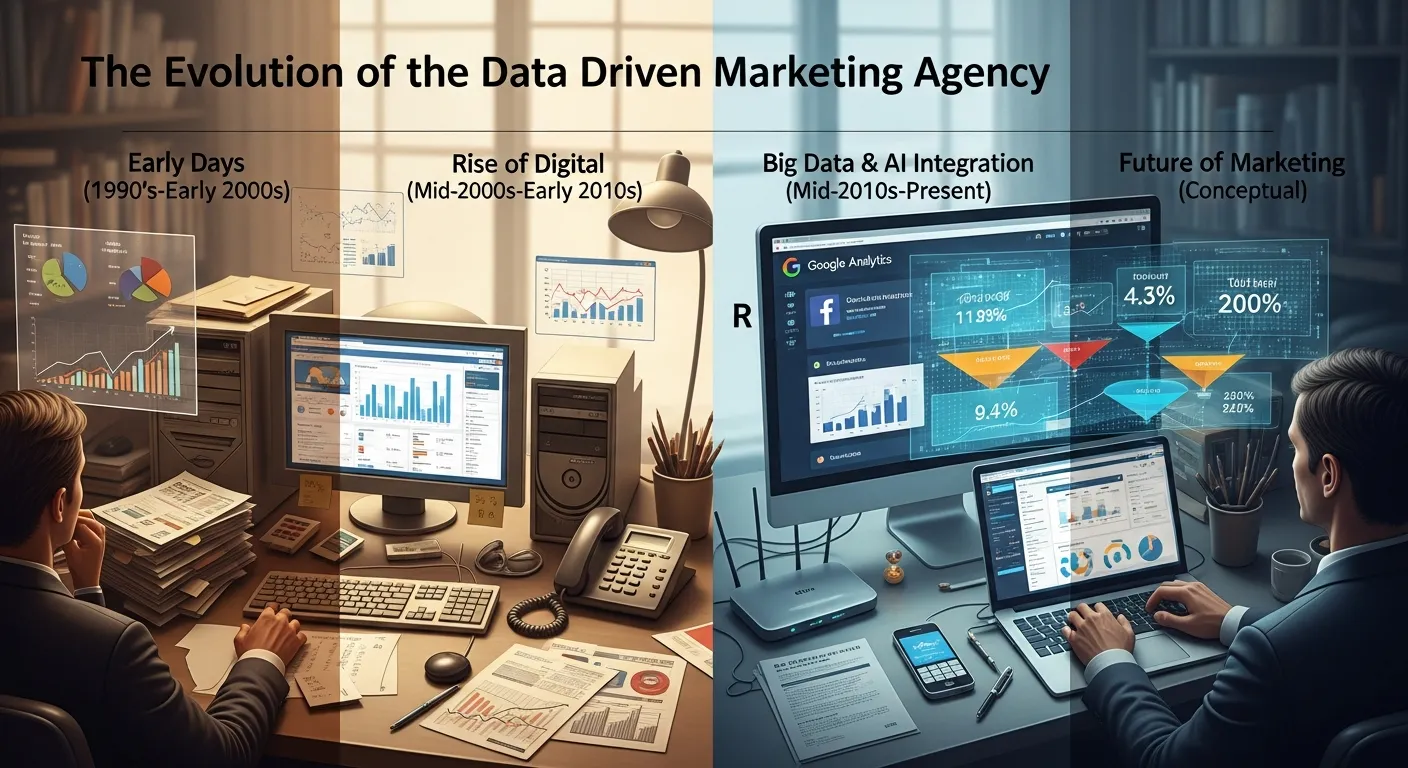
Marketing changes constantly. Billboards and broad television commercials used to dominate the landscape. You paid for reach and hoped the right people saw your message. That method lacks precision. A data driven marketing agency flips this model upside down. Instead of casting a wide net, these agencies use precise behavioral analytics, demographic data, and predictive modeling to put the exact right message in front of the exact right person.
When you hire a data driven marketing agency, you bring on a team of analysts, strategists, and creatives who base every decision on empirical evidence. They track clicks, monitor scroll depth, measure conversion rates, and calculate customer acquisition costs. This relentless focus on numbers means every dollar spent works harder for your business. You stop wasting budget on campaigns that feel good but fail to perform.
Understanding the customer journey requires looking at multiple touchpoints. Your digital marketing funnel represents a complex web of interactions across social media, email, and search engines. An agency equipped with the right analytics tools uncovers where people drop off and where they convert. They fix the leaks in your funnel. They double down on the channels driving the most profitable customers.
Building a Foundation on Analytics
You cannot manage what you do not measure. A successful campaign starts with proper tracking infrastructure. Agencies implement advanced tracking pixels, configure complex Google Analytics 4 properties, and set up custom dashboards. They ensure data flows cleanly from your website to your CRM. Clean data prevents bad decisions.
We see companies struggle because they look at vanity metrics. Likes and shares look nice, but they do not always pay the bills. A proper agency focuses on pipeline velocity, lifetime value, and return on ad spend. They align their key performance indicators directly with your overarching business goals. If your goal is revenue growth, they track the metrics that lead directly to revenue.
Core Strategies of a Data Driven Marketing Agency

Every data driven marketing agency relies on a core set of proven strategies to deliver results. These strategies combine creativity with rigorous testing.
1. Advanced Audience Segmentation
Treating all customers the same hurts your conversion rates. People buy your products for different reasons. An agency segments your audience based on behavior, demographics, and psychographics. They create detailed buyer personas backed by real data, not assumptions.
For example, if you sell software, an agency might segment your audience into small business owners and enterprise executives. The messaging for the small business owner focuses on ease of use and affordability. The messaging for the enterprise executive focuses on security and scalability. Targeted messaging yields higher engagement.
2. Predictive Analytics and Modeling
Anticipating what a customer will do next gives you a massive advantage. Agencies use predictive analytics to forecast future buying behaviors based on historical data. They identify which customers hold the highest risk of churning and intervene before it happens. They pinpoint which leads show the highest intent to purchase and route them directly to your sales team.
3. A/B Testing and Conversion Rate Optimization
Never settle for the first draft. A data driven marketing agency constantly tests different elements of your campaigns. They run A/B tests on email subject lines, landing page headlines, button colors, and ad copy. They let the audience decide what works best.
Over time, these incremental improvements compound. A 1% increase in conversion rate can translate to thousands of extra dollars in revenue. This is why conversion rate optimization remains a staple in any high-performing marketing playbook.
4. Omnichannel Data Integration
Customers interact with your brand across multiple devices and platforms. They might see a Facebook ad on their phone, visit your website on their laptop, and finally purchase through an email link on their tablet. Agencies use customer data platforms to stitch these interactions together into a single, unified profile.
This prevents disjointed experiences. You avoid sending a discount code for a product the customer just purchased at full price. You deliver a seamless, personalized experience that builds loyalty and trust. McKinsey’s research on personalization shows that consumers overwhelmingly demand tailored interactions.
Traditional Marketing vs. Data-Driven Marketing
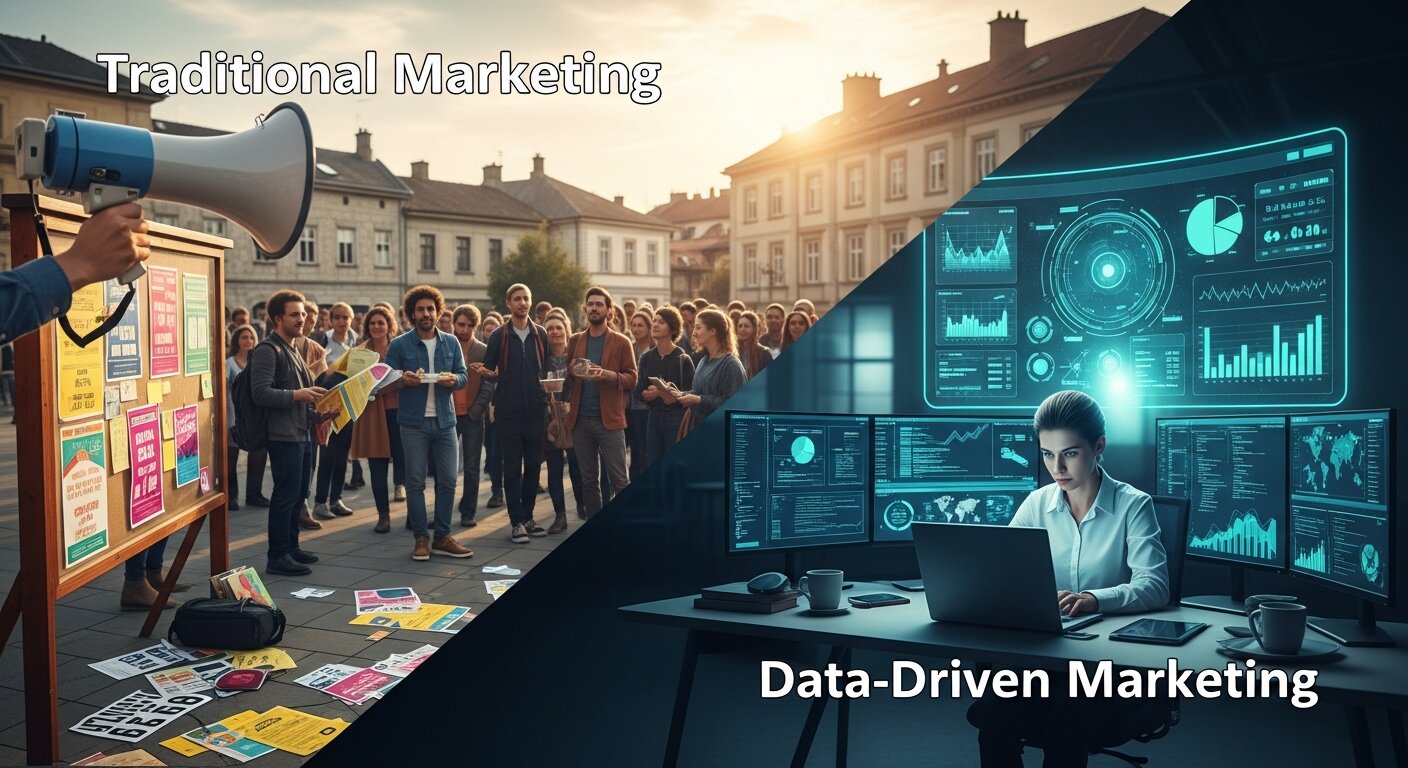
To truly grasp the value of an analytical approach, you must compare it to the old ways of doing things. The table below highlights the stark differences between traditional methods and modern, data-backed strategies.
|
Feature |
Traditional Marketing |
Data-Driven Marketing |
|---|---|---|
|
Decision Making |
Based on intuition, experience, and guesswork |
Based on empirical data, analytics, and testing |
|
Audience Targeting |
Broad demographics (age, location) |
Hyper-specific behavioral and psychographic segments |
|
Performance Tracking |
Difficult to measure exact ROI |
Exact attribution and real-time ROI tracking |
|
Agility |
Slow to change once a campaign launches |
Highly agile, optimized continuously based on real-time data |
|
Customer Experience |
Generic, one-size-fits-all messaging |
Highly personalized and contextually relevant messaging |
Common Mistakes to Avoid in Analytics
Even with the best intentions, companies make critical errors when trying to adopt an analytical approach. A specialized data driven marketing agency helps you avoid these common pitfalls.
Focusing on Vanity Metrics
Do not celebrate high website traffic if nobody buys anything. Traffic without conversions drains your resources. Focus entirely on metrics that impact your bottom line. Track your cost per acquisition and your customer lifetime value. Let the vanity metrics fade into the background.
Working in Data Silos
Marketing data should never live in isolation. If your marketing team does not share data with your sales team, the entire organization suffers. A data driven marketing agency breaks down these silos. They ensure everyone works from the same source of truth, aligning marketing efforts directly with sales outcomes. Implementing proper sales enablement strategies ensures that leads generated by marketing actually turn into closed deals.
Ignoring Data Privacy Laws
Collecting data comes with immense responsibility. You must comply with regulations like GDPR and CCPA. Mishandling customer information destroys trust and results in massive fines. Agencies stay up to date on all compliance requirements, ensuring your data collection methods remain completely legal and ethical.
Pro Tips and Expert Insights
To get the absolute most out of your campaigns, you must think like a scientist. Here are expert insights to elevate your marketing game.
- Clean Your Data Regularly: Bad data leads to bad decisions. Audit your databases frequently to remove duplicates and outdated information.
- Embrace Automation: Do not do manually what a machine can do instantly. Use automation tools to trigger emails based on specific user actions, such as abandoning a cart or downloading a whitepaper.
- Look for the “Why”: Data tells you what is happening. You must figure out why it is happening. Combine quantitative data (numbers) with qualitative data (customer surveys, heatmaps) to get the full picture.
- Invest in Continuous Learning: The digital landscape shifts daily. Platforms change their algorithms. Keep your team educated on the latest Google Analytics updates and industry trends.
How a Data Driven Marketing Agency Optimizes Content

Content remains a critical driver of traffic and engagement. However, creating content without a data-backed strategy guarantees failure. Agencies approach content marketing strategy methodically.
They begin with extensive keyword research. They analyze search volumes, keyword difficulty, and search intent. If someone searches for a broad term, they need informational content. If they search for a specific product comparison, they need transactional content. The agency maps specific content pieces to specific stages of the buyer’s journey.
They also analyze competitor content. They look for content gaps—topics that competitors gloss over but users actively search for. By filling these gaps, you capture highly targeted, low-competition traffic. Furthermore, they track how users interact with the content. They monitor time on page and scroll depth. If users leave a page after five seconds, the agency rewrites the introduction to make it more engaging.
The Role of Link Building
Search engines rely on links to determine authority. A data driven marketing agency tracks backlink profiles meticulously. They identify high-authority websites within your niche and execute targeted outreach campaigns to secure valuable links. They monitor anchor text distribution to ensure it looks natural to search engine algorithms. They also build robust internal linking structures to pass authority between your own pages.
Mastering Paid Advertising with Data
Paid advertising offers the fastest path to targeted traffic, but it burns cash quickly if mismanaged. An agency brings military precision to your ad campaigns.
They utilize custom audiences and lookalike audiences. By uploading a list of your best customers into an advertising platform, the algorithms find new people who share similar characteristics. This drastically lowers your acquisition costs.
Agencies also obsess over bidding strategies. They use automated bidding rules to increase bids on top-performing keywords and decrease bids on underperforming ones. They monitor ad frequency to ensure your audience does not experience ad fatigue. They test different ad formats—video, carousel, static images—to see which format generates the lowest cost per click. Reliable sources like HubSpot’s marketing statistics frequently highlight how data-backed paid campaigns generate substantially higher returns than standard broad-match approaches.
Choosing the Right Partner for Your Business


Not all agencies deliver on their promises. Selecting the right data driven marketing agency requires careful vetting.
First, ask about their reporting process. You need transparent, real-time access to your metrics. If an agency only provides a high-level PDF at the end of the month, look elsewhere. You deserve access to a live dashboard where you can check performance at any time.
Second, examine their case studies. Look for scenarios similar to your own. Did they help a company in your industry scale revenue? Did they improve the specific metrics you want to improve? Ask for references and speak directly with their current clients.
Finally, assess their toolset. A modern agency should use enterprise-level software for SEO, CRM integration, and data visualization. Ask them how they handle data governance and how they plan to integrate with your existing technology stack. The right partner acts as an extension of your own team, sharing your goals and communicating proactively.
Conclusion
Embracing analytics is no longer optional for businesses that want to survive and thrive. A specialized data driven marketing agency provides the expertise, tools, and strategic vision required to turn raw numbers into exponential revenue growth. Stop guessing with your budget. Start measuring your impact, optimize your campaigns continually, and watch your business scale securely. Hire the right agency today and transform your marketing into a predictable growth engine.
FAQs
What exactly does a data driven marketing agency do?
They use customer data, behavioral analytics, and empirical metrics to design, execute, and optimize marketing campaigns. They replace guesswork with scientific testing to maximize your return on investment.
How does data improve marketing ROI?
By tracking which specific campaigns and channels generate revenue, agencies can reallocate your budget away from failing ads and pump it into high-performing strategies, lowering costs and increasing profits.
What tools do analytical agencies use?
Agencies utilize a variety of advanced tools, including Google Analytics 4, customer data platforms (CDPs), CRM systems like Salesforce or HubSpot, heatmapping software, and predictive modeling platforms.
How long does it take to see results from data-driven marketing?
While some paid advertising adjustments yield immediate improvements, a comprehensive strategy involving SEO and complex funnel optimization typically takes three to six months to show significant, compounding results.
Is data-driven marketing only for large enterprises?
No. Small and medium-sized businesses benefit immensely from this approach. In fact, smaller budgets require even stricter data analysis to ensure no money is wasted on ineffective tactics.
How do you handle customer data privacy?
Reputable agencies strictly adhere to international privacy laws like GDPR and CCPA. They use anonymized data, secure explicit consent for tracking, and employ robust cybersecurity measures to protect user information.
What is the difference between qualitative and quantitative data?
Quantitative data involves hard numbers (click-through rates, bounce rates, sales). Qualitative data involves subjective insights (customer feedback, survey responses, usability testing). The best agencies use both to build a complete picture.
How often should an agency report on metrics?
Most high-quality agencies provide 24/7 access to a live reporting dashboard. Additionally, they should conduct bi-weekly or monthly strategy calls to explain the data and outline next steps.
What are predictive analytics in marketing?
Predictive analytics uses historical data and machine learning algorithms to forecast future customer behaviors, such as predicting which users are most likely to purchase or which customers might cancel their subscriptions.
Can a data driven approach help with content creation?
Absolutely. Data dictates which topics your audience actively searches for, what formats they prefer, and how long they engage with the material, allowing you to create highly targeted and effective content.
 Rosemary Barker