

The Marketing Analytics Maturity Model guides organizations from basic data tracking to advanced predictive insights, enabling smarter decisions, optimized campaigns, and measurable ROI through structured analytics growth and capability development.
In today’s digital landscape, businesses rely on data to fuel strategic decisions and demonstrate marketing’s impact on the bottom line. Yet, raw numbers scattered across platforms seldom translate into actionable guidance without a structured approach. The Marketing Analytics Maturity Model provides a clear pathway for organizations aiming to elevate their analytics practice from basic reporting to fully integrated, data-driven optimization. By following this framework, marketing teams can assess current capabilities, identify gaps, and implement best practices that drive measurable growth.
In this article, we explore each phase of the Marketing Analytics Maturity Model, offering practical steps and real-world examples to help you move forward confidently. You’ll learn how to standardize reporting, leverage advanced analytical techniques, deploy predictive and prescriptive models, and ultimately embed continuous optimization in every campaign. We also highlight essential considerations around governance, people, and technology to ensure sustainable progress. With insights drawn from leading institutions such as the MIT analytics lab and data quality guidelines from the U.S. Census Bureau, you’ll be equipped to transform marketing into a strategic growth engine this year (2026). Whether you’re just starting to consolidate fragmented dashboards or ready to automate real-time decisioning, this guide will chart your course toward analytics excellence and improved ROI.
Master the Marketing Analytics Maturity Model
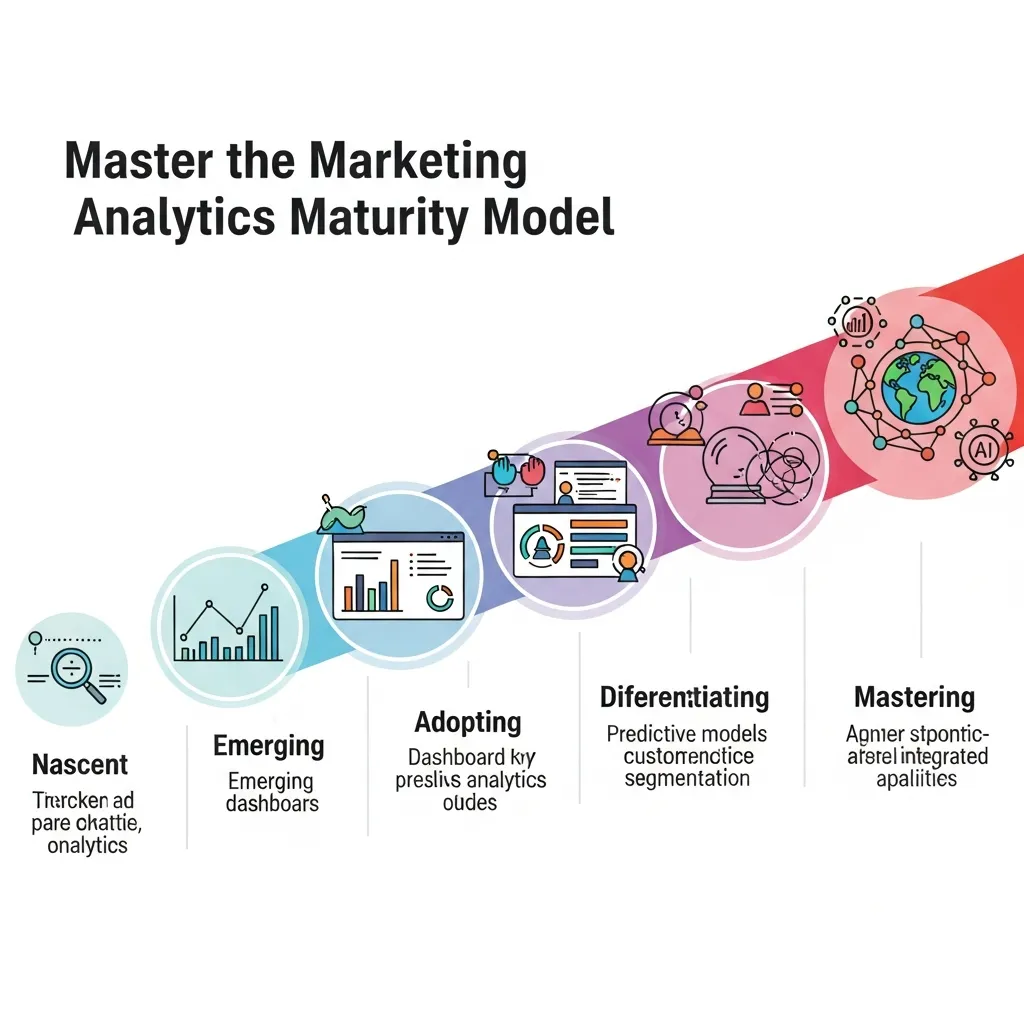
In today’s competitive landscape, Marketing Analytics Maturity is no longer optional—it’s a necessity for driving measurable ROI and sustainable growth. As organizations invest heavily in digital channels, leadership demands clear visibility into how marketing efforts contribute to revenue.
Modern marketing teams are flooded with data from platforms like Google Analytics, CRM systems, social media, and email campaigns. While this data offers immense potential, many businesses struggle to transform it into meaningful insights that guide decision-making.
This is where the Marketing Analytics Maturity Model becomes essential. It provides a step-by-step guide to evolve from basic reporting to advanced-data-analysis and predictive insights. By adopting a structured approach, businesses can unlock the full value of their data and achieve analytics-driven strategic success.
Why Marketing Analytics Maturity Matters
Achieving higher levels of marketing-analytics maturity allows organizations to:
- Gain a unified view of customer behavior across channels
- Improve campaign performance through data-backed decisions
- Enhance personalization and customer targeting
- Optimize budgets for maximum ROI
- Align marketing efforts with business goals
Companies that embrace smarter-analytics are better positioned to stay ahead of competitors and adapt to rapidly changing market trends.
Key Stages of Marketing Analytics Maturity
Understanding where your organization stands is the first step toward growth. The maturity model typically includes the following stages:
1. Descriptive Analytics (What Happened?)
- Basic reporting using tools like dashboards
- Focus on historical data
- Limited insights into performance drivers
2. Diagnostic Analytics (Why It Happened?)
- Deeper analysis of campaign results
- Identification of patterns and trends
- Use of segmentation and comparisons
3. Predictive Analytics (What Will Happen?)
- Forecasting future outcomes using data models
- Identifying high-value customer segments
- Leveraging machine learning insights
4. Prescriptive Analytics (What Should We Do?)
- Actionable recommendations based on data
- Automated decision-making
- Real-time campaign optimization
Challenges in Achieving Maturity
Despite the benefits, many organizations face obstacles such as:
- Data silos across different platforms
- Lack of skilled analysts and data scientists
- Inconsistent data quality
- Difficulty integrating tools and systems
- Limited understanding of marketing-analytics-trends
Overcoming these challenges requires both technological investment and cultural change within the organization.
Additional Section 1: Tools & Technologies for Marketing Analytics Growth
To advance in Marketing Analytics Maturity, organizations must leverage the right tools and technologies.
Essential Tools:
- Web analytics platforms (e.g., Google Analytics)
- Customer Data Platforms (CDPs)
- Business Intelligence (BI) tools
- Marketing automation platforms
- AI and machine learning tools
Key Capabilities:
- Real-time data tracking
- Cross-channel attribution
- Predictive modeling
- Data visualization dashboards
Using these tools effectively supports optimization-with-marketing-analytics and enables better decision-making.
Additional Section 2: Best Practices to Accelerate Analytics Maturity
To move faster along the maturity curve, consider these best practices:
Strategic Actions:
- Define clear KPIs aligned with business goals
- Break down data silos for a unified view
- Invest in training and upskilling teams
- Implement a data governance framework
- Regularly audit and refine analytics processes
Pro Tips:
- Start small and scale gradually
- Focus on actionable insights, not just data collection
- Use affiliate-links-effectively to track performance in campaigns
- Stay updated with evolving marketing-analytics-trends
Understanding the Marketing Analytics Maturity Model
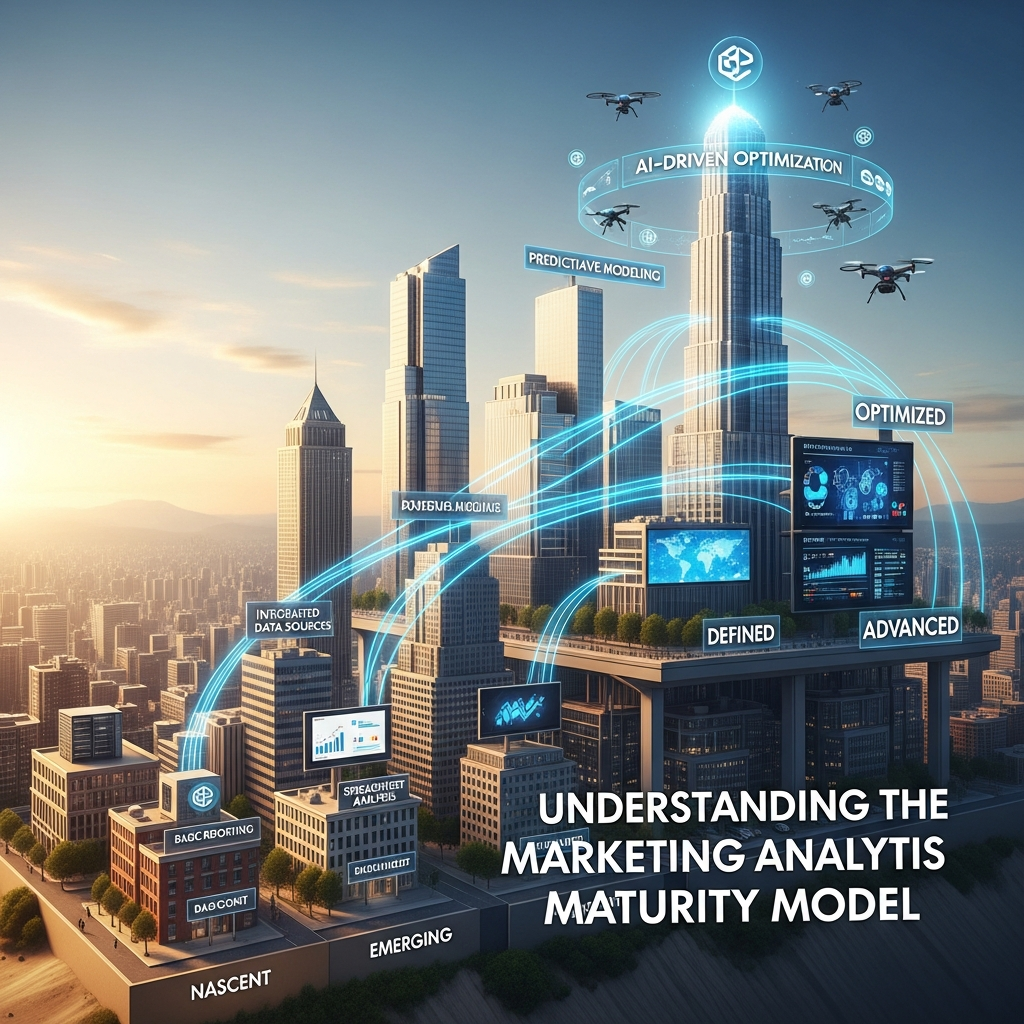
A maturity model is a framework that describes how a business systematically improves its capabilities over time. In the context of marketing analytics, it maps the journey from basic data collection to advanced machine learning and predictive modeling.
Most models break this evolution down into five distinct stages. Progressing through these stages requires investments in technology, shifting team structures, and developing a strong data-driven culture.
Stage 1: The Reactive Phase
Organizations in the first stage operate with fragmented data. Marketing teams look at metrics in silos, pulling numbers directly from individual platforms like Google Analytics, Meta ads, or their email marketing software.
There is little to no integration between these different data sources. Reporting is highly manual, often requiring hours of copying and pasting numbers into spreadsheets. Because the process is so time-consuming, teams only look at data after a campaign has completely finished.
At this level, marketers can answer simple questions about what happened, such as how many clicks an ad received or how many people opened an email. They cannot easily explain why those things happened or how they impacted overall sales.
Stage 2: The Descriptive Phase
As companies advance to the second stage, they begin to centralize their data. Teams implement dashboards and automated reporting tools to pull information from various platforms into a single view.
This stage focuses heavily on descriptive analytics. Marketers establish key performance indicators and track them consistently over time. They start to monitor conversion rates, cost per acquisition, and overall campaign reach on a weekly or daily basis.
While the reporting process is much more efficient, the focus remains primarily on historical data. Teams are highly capable of describing exactly what happened across all marketing channels, but they still rely on human intuition to figure out the underlying causes of those trends.
Stage 3: The Diagnostic Phase
Reaching the third stage marks a major turning point for a marketing organization. Here, the focus shifts from simply reporting the news to actively investigating the “why” behind the numbers.
Teams utilize diagnostic analytics to uncover correlations and identify specific factors driving campaign success or failure. They conduct A/B testing on a regular basis, comparing different subject lines, landing page layouts, and ad creatives to see what resonates best with their audience.
Data integration becomes much deeper at this level. Marketing data is successfully linked with sales data, allowing teams to track a user from their very first website visit all the way through to a closed deal. This creates a clear line of sight into marketing ROI and helps leaders allocate their budgets much more effectively.
Stage 4: The Predictive Phase
Organizations in the fourth stage stop looking backward and start looking forward. Predictive analytics uses historical data and statistical algorithms to forecast future outcomes with a high degree of accuracy.
Marketers at this maturity level can anticipate customer behavior before it happens. They use lead scoring models to identify which prospects are most likely to convert, allowing sales teams to prioritize their outreach efforts. They can also predict customer churn, identifying accounts that are at risk of leaving so account managers can intervene proactively.
Technology plays a massive role here. Machine learning models process vast amounts of data to find subtle patterns that human analysts would easily miss. This allows for highly personalized marketing efforts, where the right message reaches the right person at the exact right time.
Stage 5: The Prescriptive Phase
The final stage represents the pinnacle of marketing analytics. Prescriptive analytics goes beyond predicting what will happen by actively recommending the best course of action to take.
At this level, systems automatically adjust marketing campaigns in real time based on incoming data. Bidding algorithms optimize ad spend across different channels second by second. Content engines automatically serve personalized website experiences tailored to the specific profile of the visitor.
Marketing teams operating in the prescriptive phase act as strategic drivers of business growth. They operate with a clear, undeniable understanding of their ROI and can confidently prove how every marketing initiative impacts the company’s overarching financial goals.
How to Advance Through the Marketing Analytics Maturity Stages
Advancing in Marketing Analytics Maturity is a strategic journey that requires alignment between technology, people, and processes. Organizations must follow a structured, step by step guide approach to transition from basic reporting to advanced data analysis and ultimately achieve analytics drive strategic success.
1. Audit Your Current Capabilities
Before moving forward, you need a clear understanding of your current maturity level in marketing analytics.
Key Areas to Evaluate:
- Data sources (CRM, website, social media, email platforms)
- Tools (e.g., Google Analytics, dashboards, BI tools)
- Reporting processes and automation level
- Team skills in data interpretation and analysis
Action Steps:
- Identify data gaps and inconsistencies
- Analyze time spent on manual reporting
- List unanswered business questions
- Benchmark against marketing analytics trends
This step builds the foundation for smarter-analytics and better decision-making.
2. Invest in the Right Technology
Technology should match your current maturity stage while enabling future growth.
Recommended Technology Stack:
- Data collection tools (analytics platforms, tracking systems)
- Data warehousing solutions
- Visualization dashboards
- AI and machine learning tools (for advanced stages)
Best Practices:
- Avoid over-investing in complex tools too early
- Choose scalable platforms that grow with your needs
- Ensure integration across systems for unified insights
Proper tools enable optimization with marketing analytics and improve efficiency across campaigns.
3. Build a Data-Driven Culture
Technology alone cannot drive success—people and mindset matter equally.
How to Build a Data Culture:
- Train teams in data literacy and interpretation
- Encourage experimentation and A/B testing
- Replace intuition-based decisions with data-backed insights
- Align KPIs with measurable outcomes
Cultural Shifts:
- Promote transparency in reporting
- Reward data-driven decisions
- Use analytics in everyday workflows
A strong culture ensures consistent adoption of marketing analytics practices across teams.
4. Implement Advanced Data Analysis
Once the basics are in place, move toward deeper insights.
Advanced Capabilities:
- Predictive analytics (forecasting trends)
- Customer segmentation and personalization
- Attribution modeling
- Lifetime value (LTV) analysis
Use Cases:
- Improve targeting in campaigns
- Optimize affiliate links effectively
- Enhance personalization in marketing strategies
This stage transforms raw data into actionable insights for growth.
5. Optimize and Scale Continuously
Maturity is not a one-time achievement—it requires ongoing refinement.
Continuous Optimization:
- Monitor KPIs and campaign performance
- Run regular A/B tests
- Update dashboards and reporting frameworks
- Align analytics with evolving business goals
Focus Areas:
- Real-time decision-making
- Automation and AI integration
- Cross-channel performance tracking
Continuous improvement drives long-term ROI and supports analytics drive strategic success.
Marketing Analytics Maturity Roadmap Table
| Stage | Focus Area | Tools & Techniques | Business Outcome |
|---|---|---|---|
| Initial (Descriptive) | Basic data tracking | Google Analytics, reports | Visibility into performance |
| Intermediate (Diagnostic) | Understanding performance | Dashboards, BI tools | Identify strengths & weaknesses |
| Advanced (Predictive) | Forecasting & insights | AI, machine learning models | Better decision-making |
| Expert (Prescriptive) | Strategic optimization | Automation, advanced analytics tools | Maximum ROI & efficiency |
Key Takeaways
- Start with a clear audit before investing in tools
- Align technology with your current maturity level
- Build a strong data-driven culture across teams
- Leverage advanced-data-analysis for deeper insights
- Continuously optimize for sustained growth
Frequently Asked Questions About Marketing Analytics
1. What is the Marketing Analytics Maturity Model?
The Marketing Analytics Maturity model is a framework that helps businesses progress from basic data tracking to advanced insights, enabling better decision-making and improved ROI.
2. Why is Marketing Analytics Maturity important?
It allows organizations to move toward smarter-analytics, improve campaign performance, and achieve analytics drive strategic success through data-driven decisions.
3. What are the stages of Marketing Analytics Maturity?
Typically, stages include:
- Descriptive analytics (basic reporting)
- Diagnostic analytics (understanding why)
- Predictive analytics (forecasting trends)
- Prescriptive analytics (data-driven actions)
4. How does Google Analytics support marketing analytics maturity?
Tools like Google Analytics help track user behavior, measure campaign performance, and provide insights essential for advancing analytics maturity.
5. What role does advanced data analysis play?
Advanced data analysis enables deeper insights, predictive modeling, and better customer understanding, helping businesses optimize marketing strategies and outcomes.
6. How can businesses improve their analytics maturity level?
Organizations can:
- Invest in analytics tools
- Train teams in data interpretation
- Integrate data sources
- Follow a step by step guide approach
7. What are common challenges in achieving analytics maturity?
Challenges include:
- Data silos
- Lack of skilled professionals
- Poor data quality
- Limited use of marketing analytics trends
8. How does marketing analytics improve ROI?
Through optimization with marketing analytics, businesses can identify high-performing channels, reduce wasted spend, and improve targeting for better returns.
9. Can marketing analytics be used in affiliate marketing?
Yes, analytics helps track performance and optimize affiliate links , ensuring better conversions and campaign efficiency.
10. What are the latest trends in marketing analytics?
Current marketing trends include:
- AI-powered analytics
- Real-time data processing
- Customer journey mapping
- Privacy-focused measurement solutions
 Donald Abel