
Marketing analytics has undergone a dramatic transformation. What once required weeks of manual data crunching can now be accomplished in minutes. Teams that struggled to make sense of customer behavior patterns now have AI-powered tools that reveal insights automatically.
This shift isn’t just about faster processing—it’s about fundamentally changing how businesses understand and respond to their customers. AI and machine learning are turning marketing analytics from a reactive reporting function into a predictive powerhouse that drives strategic decisions.
The Evolution of Marketing Analytics
Traditional marketing analytics relied heavily on historical data and basic reporting. Marketers would pull monthly reports, create charts, and make educated guesses about future performance. The process was time-consuming and often revealed insights too late to be actionable.
Machine learning has changed this dynamic entirely. Instead of waiting for reports, marketers now receive real-time insights that predict customer behavior, identify emerging trends, and recommend specific actions. The technology processes vast amounts of data from multiple sources simultaneously, uncovering patterns that would be impossible for humans to detect.
Real-Time Customer Behavior Analysis
One of the most significant advances in marketing analytics is the ability to analyze customer behavior as it happens. AI algorithms track user interactions across websites, social media, email campaigns, and mobile apps, creating comprehensive customer profiles that update continuously.
These systems can identify micro-moments when customers are most likely to make purchasing decisions. For example, machine learning models can detect when a website visitor’s browsing pattern indicates high purchase intent, triggering personalized offers or retargeting campaigns instantly.
The speed of this analysis enables marketers to respond to customer needs immediately rather than days or weeks later. This responsiveness has become crucial for maintaining a competitive advantage in fast-moving markets.
Customer Journey Mapping with AI
AI enhances customer journey mapping by continuously analyzing interactions across multiple channels. By tracking touchpoints from awareness to conversion, machine learning models can identify patterns in behavior, preferences, and engagement. Marketers gain insights into where users drop off, which campaigns drive conversions, and how different segments respond to messaging. Real-time updates allow businesses to adjust strategies instantly, creating seamless experiences that increase retention and loyalty. With AI, customer journey mapping evolves from static diagrams into dynamic, data-driven pathways, empowering marketers to optimize every stage of the funnel and maximize ROI.
AI-Driven Content Strategy
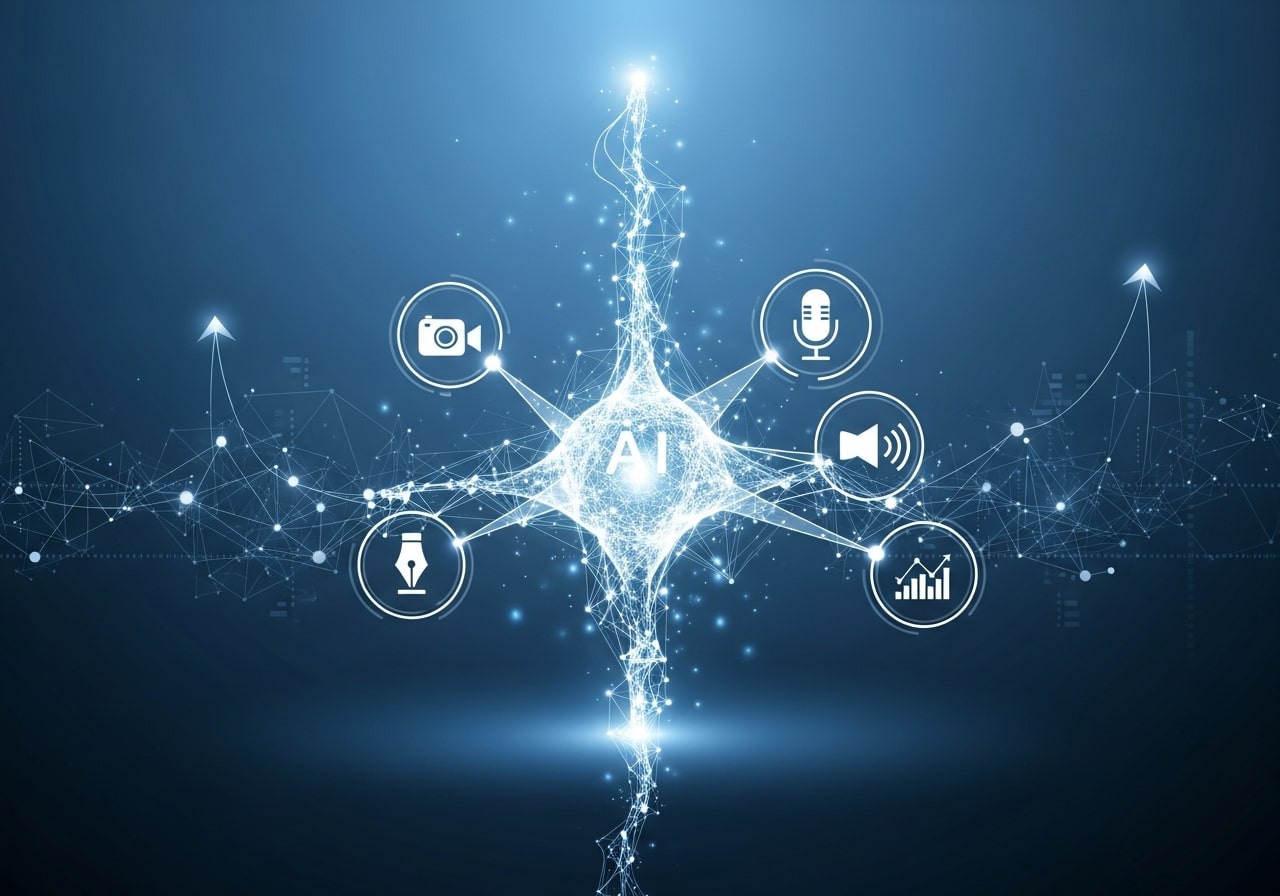
AI can guide content strategy by analyzing audience engagement, trending topics, and competitor activity. Machine learning algorithms identify the types of content that resonate most with specific segments, predicting which formats, tones, or messaging will drive clicks, shares, and conversions. Beyond creation, AI can suggest optimal publishing times, platforms, and hashtags for maximum reach. This approach reduces guesswork, allowing marketers to focus on creativity while ensuring data-backed decisions. By continuously learning from performance metrics, AI ensures content strategies remain adaptive, relevant, and highly effective, improving engagement rates and boosting brand visibility in crowded digital spaces.
Marketing ROI Attribution with AI
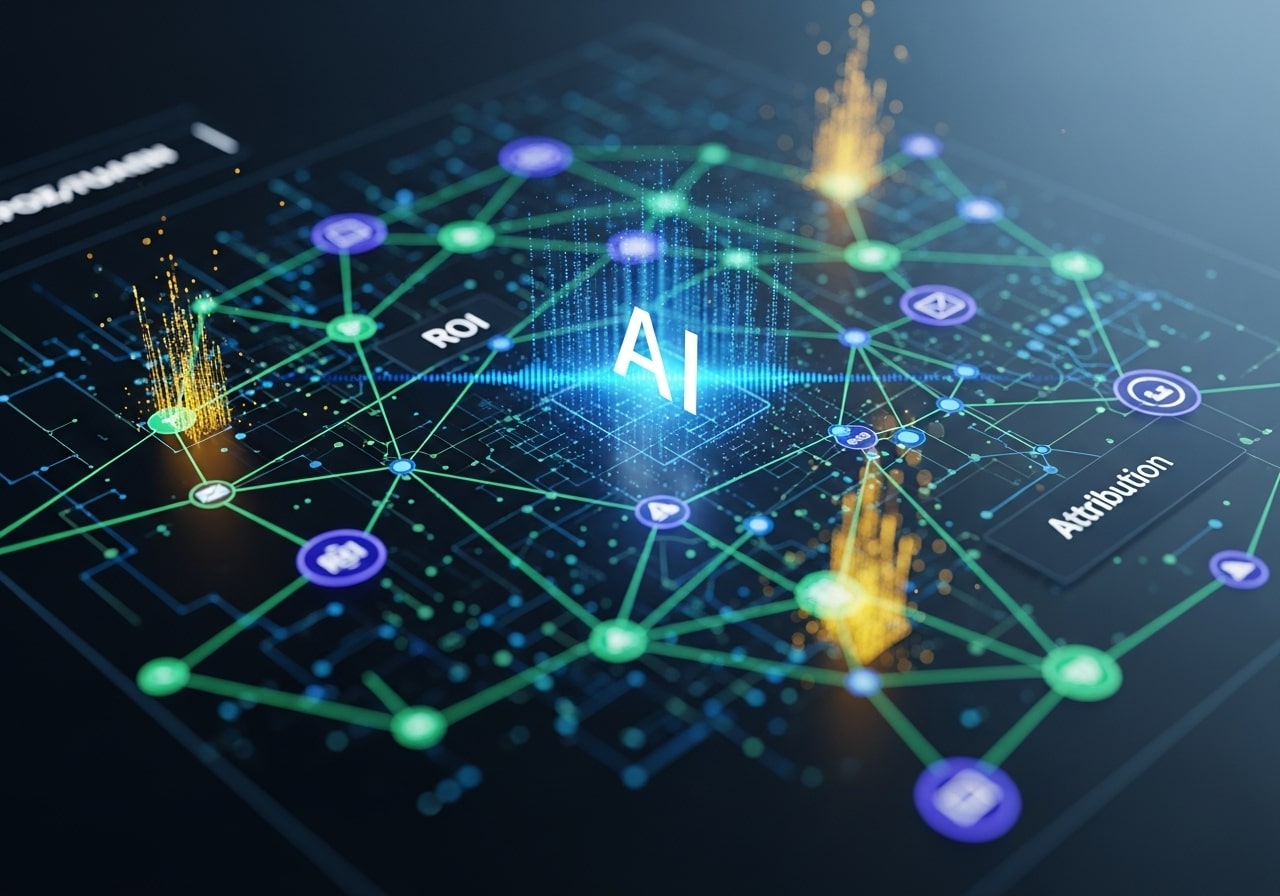
AI improves ROI attribution by evaluating the impact of every marketing touchpoint. Traditional methods often struggle to assign credit accurately across channels like email, social media, paid ads, and organic search. AI-powered analytics track complex multi-channel journeys, measuring how each interaction contributes to conversions. Machine learning models provide precise attribution insights, enabling marketers to allocate budgets efficiently and invest in high-performing campaigns. By understanding the true drivers of ROI, businesses can optimize resource allocation, improve profitability, and refine marketing strategies. AI transforms attribution from a static report into a dynamic tool for maximizing revenue.
Ethical AI and Data Governance in Marketing

As AI becomes integral to marketing analytics, ethical considerations and data governance are essential. Organizations must ensure transparency in AI decision-making, protect consumer privacy, and comply with regulations like GDPR and CCPA. Implementing robust data governance policies ensures data accuracy, consistency, and security, which is critical for reliable insights. Ethical AI also addresses biases in algorithms that could distort predictions or customer targeting. Marketers must combine technology with responsible practices, maintaining trust while leveraging AI capabilities. Prioritizing ethics and governance safeguards brand reputation and enables sustainable, compliant, and effective AI-driven marketing strategies.
Predictive Analytics and Forecasting
Machine learning excels at predicting future outcomes based on historical patterns. Marketing teams now use these capabilities to forecast customer lifetime value, predict churn risk, and estimate campaign performance before launch.
Predictive models analyze factors like purchase history, engagement levels, demographic data, and seasonal trends to generate accurate forecasts. These predictions help businesses allocate marketing budgets more effectively and identify high-value customer segments.
Advanced algorithms can also predict which products customers are likely to purchase next, enabling proactive cross-selling and upselling strategies. This predictive capability transforms marketing from a reactive discipline into a proactive growth driver.
Personalization at Scale
AI has made large-scale personalization possible for businesses of all sizes. Machine learning algorithms analyze individual customer preferences, behaviors, and purchase history to create personalized experiences for thousands or millions of customers simultaneously.
This personalization extends beyond simple product recommendations. AI can customize email send times, website content, ad creative, and even pricing strategies for individual customers. The result is marketing that feels tailored to each person while remaining efficient and scalable.
Dynamic content optimization represents another breakthrough in personalized marketing. AI systems test different versions of content, images, and messaging for different customer segments, automatically optimizing for the highest engagement rates.
Advanced Segmentation and Targeting
Traditional customer segmentation relied on basic demographics and purchase history. Machine learning has revolutionized this approach by identifying complex behavioral patterns and creating micro-segments based on subtle customer characteristics.
AI algorithms can process hundreds of variables simultaneously, creating customer segments that are far more precise than traditional methods. These segments might be based on browsing patterns, response to previous campaigns, social media engagement, or combinations of factors that humans couldn’t effectively analyze.
This enhanced segmentation enables more targeted messaging and campaign strategies. Marketers can create highly specific campaigns for narrow customer segments, improving relevance and conversion rates while reducing wasted ad spend.
Automated Campaign Optimization
Machine learning systems can automatically optimize marketing campaigns while they’re running. These systems analyze performance data in real-time, adjusting targeting, bidding, and creative elements to improve results continuously.
Automated optimization extends to budget allocation across different channels and campaigns. AI algorithms can shift spending toward the highest-performing initiatives automatically, maximizing return on investment without constant manual intervention.
This automation frees marketing teams to focus on strategy and creative development rather than routine optimization tasks. The result is more efficient campaigns and better resource utilization across marketing departments.
Data Integration and Unified Analytics
AI excels at combining data from multiple sources into unified customer profiles. Marketing analytics platforms now integrate information from CRM systems, social media, email marketing tools, website analytics, and offline sales data.
This integration creates a complete view of customer interactions across all touchpoints. Marketers can see how customers move between channels, which combinations of marketing activities drive the best results, and where gaps exist in the customer journey.
Unified analytics enable attribution modeling that accurately credits different marketing activities for their contribution to conversions. This insight helps businesses understand which marketing investments generate the highest returns.
Challenges and Considerations
Despite its benefits, implementing AI in marketing analytics presents several challenges. Data quality remains critical—machine learning models are only as good as the data they analyze. Poor data quality can lead to inaccurate insights and misguided decisions.
Privacy regulations like GDPR and CCPA have also created new constraints on data collection and usage. Marketing teams must balance the desire for comprehensive customer insights with respect for privacy and compliance requirements.
The complexity of AI systems can create a “black box” problem where marketers don’t understand how the technology reaches its conclusions. This lack of transparency can make it difficult to trust and act on AI-generated insights.
The Future of AI-Powered Marketing Analytics
Looking ahead, AI and machine learning will continue to transform marketing analytics in exciting ways. Natural language processing will make it easier for marketers to query data and receive insights in plain English. Computer vision will enable analysis of visual content and brand mentions across images and videos.
The integration of AI with emerging technologies like augmented reality and voice assistants will create new opportunities for customer engagement and data collection. Marketing analytics will become even more predictive and prescriptive, not just showing what happened but recommending specific actions to take.
Embracing the AI Revolution in Marketing
The transformation of marketing analytics through AI and machine learning represents a fundamental shift in how businesses understand and engage with customers. Organizations that embrace these technologies gain significant competitive advantages through better insights, more effective campaigns, and improved customer experiences.
Success requires more than just adopting new tools—it demands a commitment to data quality, ongoing learning, and strategic thinking about how AI can support broader business objectives. The future belongs to marketing teams that combine human creativity with AI-powered insights to create truly exceptional customer experiences.
Frequently Asked Questions (FAQ)
1. What is AI-powered marketing analytics?
AI-powered marketing analytics uses artificial intelligence and machine learning to collect, process, and analyze large volumes of marketing data. It transforms raw data into actionable insights, enabling marketers to predict customer behavior, optimize campaigns in real time, personalize content at scale, and make data-driven decisions efficiently. Unlike traditional analytics, AI systems can detect patterns, forecast outcomes, and recommend specific strategies automatically, helping businesses respond faster to customer needs and improve overall ROI.
2. How does AI improve predictive analytics in marketing?
AI enhances predictive analytics by using historical data and behavioral patterns to forecast future customer actions. It can estimate churn risk, predict customer lifetime value, anticipate product preferences, and optimize campaign outcomes. These insights allow marketers to allocate budgets effectively, target high-value segments, and proactively deliver personalized experiences. Unlike manual predictions, AI models continuously learn and improve over time, ensuring more accurate forecasts that drive strategic marketing decisions.
3. What is personalization at scale?
Personalization at scale uses AI to deliver individualized marketing experiences to thousands or millions of customers simultaneously. AI analyzes behaviors, preferences, and purchase histories to customize content, offers, emails, and even website elements. Dynamic content optimization tests variations for different segments, automatically improving engagement. This allows businesses to maintain relevance with every customer while efficiently managing large audiences, enhancing loyalty, conversion rates, and customer satisfaction across multiple channels.
4. How does AI enhance segmentation and targeting?
AI enables advanced segmentation by analyzing hundreds of variables, including browsing behavior, past purchases, engagement patterns, and demographic data. It identifies micro-segments that are far more precise than traditional demographic-based groups. Marketers can target campaigns to these specific segments, improving relevance and effectiveness. This leads to higher conversion rates, better engagement, and optimized ad spend, while also uncovering new growth opportunities that would be impossible to detect manually.
5. Can AI automate campaign optimization?
Yes. AI can continuously monitor marketing campaigns and automatically adjust targeting, bidding, budget allocation, and creative elements in real time. It identifies high-performing channels and reallocates resources to maximize ROI without manual intervention. This automation allows marketers to focus on strategy and creative development while ensuring campaigns remain efficient, responsive, and performance-driven. Continuous optimization reduces wasted ad spend and improves overall marketing effectiveness.
6. How does AI integrate data for unified analytics?
AI can combine data from multiple sources—CRM, social media, email marketing, website analytics, and offline sales—into unified customer profiles. This provides a complete view of customer interactions across all touchpoints, enabling accurate attribution modeling and insights into which activities drive conversions. Unified analytics help marketers identify gaps in the customer journey, optimize campaigns, and make better decisions based on a comprehensive understanding of audience behavior and marketing effectiveness.
7. What are the main challenges of AI in marketing analytics?
Key challenges include data quality, privacy compliance, and algorithm transparency. Poor-quality data can lead to inaccurate insights, while regulations like GDPR and CCPA require careful handling of customer information. Additionally, complex AI models can act as a “black box,” making it difficult to understand how conclusions are reached. Businesses must ensure ethical use, maintain high-quality data, and invest in training to trust and fully leverage AI insights responsibly.
8. What is the future of AI in marketing analytics?
The future includes predictive, prescriptive, and real-time insights powered by AI. Emerging technologies like natural language processing, computer vision, augmented reality, and voice assistants will further enhance data collection and analysis. AI will not only show what happened but also recommend specific actions to drive outcomes. Marketers who combine human creativity with AI insights will gain a competitive edge, delivering personalized, efficient, and highly effective campaigns in a rapidly evolving digital landscape.